Rick Gallagher's MPLS Training Guide: Building Multi-Protocol Label Switching Networks
Chapter 2: MPLS Label Distribution

Introduction

In Chapter 1, we discussed both data flow and foundational concepts of MPLS networks. In this chapter, we introduce the concepts and applications of MPLS label distribution, and we take a good look at MPLS signaling. You will also have the opportunity to exercise and expand your working knowledge with both hands-on exercises and vendor examples.

The Early Days of Switching

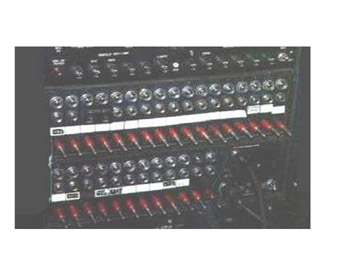
Circuit switching by label is not a new practice. A quick review of telephony shows us how signaling was done in the old days. In the early days of telephone systems, telephone switchboard had patch cables and jacks; each jack was numbered to identify its location. When a call came in, an operator would plug a patch cord into the properly numbered jack. This is a relatively simple concept.

Recalling those days, we find that, although the process seemed simple enough, it was really hard work (see Figure 2.1). Telephone operators would attend school for weeks and go through an apprenticeship period before qualifying to operate a switchboard, because the rules for connecting, disconnecting, and prioritizing calls were complex and varied from company to company.


Figure 2.1: Label Switching in the Early Days

Here are some rules of switching:

  • Never disconnect the red jacks; these are permanent connections.

  • Connect only the company executives to the jacks labeled for long distance.

  • Never connect an executive to a noisy circuit.

  • If there are not enough jacks when an executive needs to make a call, disconnect the lower-priority calls.

  • When the...

UNLIMITED FREE
ACCESS
TO THE WORLD'S BEST IDEAS

SUBMIT
Already a GlobalSpec user? Log in.

This is embarrasing...

An error occurred while processing the form. Please try again in a few minutes.

Customize Your GlobalSpec Experience

Category: Phone Jacks and Plugs
Finish!
Privacy Policy

This is embarrasing...

An error occurred while processing the form. Please try again in a few minutes.