3G Wireless Demystified
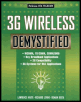
Telecom experts provide the big picture of 3rd Generation universal mobile telecommunication systems (UMTS).
 TABLE OF CONTENTS
 At the beginning of 2001, more than one out of 10 people in the world (over 680 million customers) had a mobile telephone [[1]]. Over the past 15 years, wireless telephony end-user equipment size, weight, and costs have dropped over 20% per year. This incredible industry growth can be attributed to advancements in wireless communications technologies.
Mobile wireless technology and products have evolved through multiple generations. First generation (1G) technology was analog (many analog systems are being eliminated now). Second generation (2G) technology is digital (these systems will likely remain operational until 2010). Third generation (3G) technology integrates mobile wireless communications with services traditionally offered by wired telecommunications systems.
The use of the radio spectrum can be divided into licensed and unlicensed frequency bands. Licensed frequency bands require that the user (or service provider) apply for the right to transmit radio energy. Unlicensed frequency bands allow users (or service providers) to communicate without applying for a license. Unlicensed radio transmission must conform, however, to pre-established regulations that specify the frequency bands and amount of radio energy that can be used. Unlicensed users typically have very limited (or none at all) rights when they experience radio interference.
The ability to transmit information through the air is considered a natural resource and is, therefore, regulated by national government agencies. Frequency bands that are used by wireless communication devices are assigned by the International Telecommunications Union (ITU). The ITU is part of the United Nations. Although the ITU coordinates the general...