3G Wireless Demystified
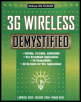
Telecom experts provide the big picture of 3rd Generation universal mobile telecommunication systems (UMTS).
 TABLE OF CONTENTS
 EDGE compact is a version of EDGE that allows the close packing of GSM radio channel frequencies (frequency reuse of three) to allow an overlay of GSM technology into other systems (such as IS-136 TDMA) with a minimum loss of existing channel frequencies. Because EDGE compact reuses frequencies in nearby cells, the average interference level for each time slot is higher. Although it is acceptable to discard data packets that experience high levels of interference, discarding packets that contain control messages (such as handoff or packet data paging messages) is unacceptable. To help ensure most control messages reach their destination, EDGE compact reduces interference to control packets by inhibiting the transmission of messages on the same frequency and time slot in nearby cell sites.
EDGE compact systems are expected to be converted back to use standard EDGE technology (unscheduled channels) as more channels are made available for EDGE/GPRS/GSM transmission. This is expected to occur when customers are converted from the other system (e.g., IS-136 TDMA) to EDGE/GPRS/GSM. As the existing IS-136 radio channels become lightly loaded, they can be removed from service and replaced with EDGE transceivers. This allows the gradual conversion from one technology to compatible GSM/GPRS/EDGE technology. The plan for integration of EDGE into existing IS-136 networks is sometimes named EDGE compact.
In a cell without GSM voice support, but one that supports IS-136 voice together with EDGE compact, a subscriber with a suitable dual-mode, voice-data handset can engage in a voice call and receive notification...