Urban Transportation Systems: Choices for Communities
All the chapters of this book are devoted to single and separate urban transportation modes, describing their capabilities and defining their actual roles in different types of communities. Yet, many reminders are included that several, if not many, modes are needed in every place to cover the mobility needs that exist locally and to provide access to the various urban activities. These modes have to act together, frequently supporting each other, to enable residents, workers, and visitors to operate within their own urban environments.
This coming together is expressed through transfer possibilities between modes, which may be as simple as motorists becoming train riders through regular park-and-ride lots to elaborate terminal structures where a multitude of patrons arrive and depart by diverse modes and can freely interchange among them.
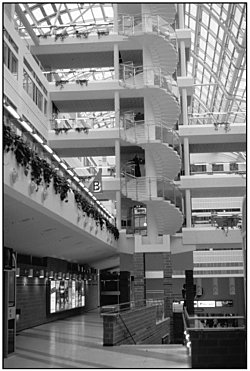
The concept of the intermodal terminal thus becomes a convenient instrument to emphasize the need for system integration and to explore how this desirable state of coordination can best be achieved. The structure and all its associated access facilities will become a very visible service complex because of its centrality and role as the prime node of the entire metropolitan transportation system. Such a project has probably consumed quite a notice- able amount of public resources and has received well-publicized design and review attention within the community. This is where operational, safety, or efficiency problems within the larger network are likely to become most apparent.
The significance...