Relay Lenses
Featured Product from Avantier Inc.
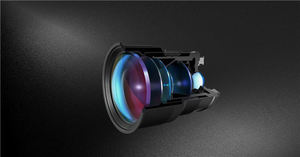
Relay Lenses – High-Precision Optical Relay Lens Systems
Avantier designs and manufactures relay lenses that transfer an image plane and/or pupil plane from one point to another with high resolution and minimal distortion. Unlike conventional imaging lenses, relay lenses offer precise control over pupil position, optical path length, and beam geometry, making them a fit for complex optical assemblies that require extended image paths, beam redirection, or integration with scanning or steering mirrors.
Designed for stability and high image fidelity, relay lenses maintain consistent magnification and preserve image quality across long optical paths, suiting applications that call for precise beam steering, wide-area inspection, or intermediate imaging stages:
Microscopy — relaying intermediate images between objective and eyepiece or camera planes
Endoscopy — transferring images along long, narrow optical paths inside the instrument
Machine Vision — maintaining image fidelity over extended working distances in inspection systems
Laser scanning — placing pupils at scanning or steering mirrors for stable beam positioning
Metrology — preserving magnification accuracy for precise dimensional measurement
Use Case: Large-Field 1X Relay Lens System
Avantier has developed a high-performance, large-field 1X pupil relay lens featuring an externally accessible pupil. This non-focal, wide-field lens architecture allows scanning mirrors or fast steering mirrors to be placed directly at both the entrance and exit pupils, enabling rapid field switching, wide-angle scanning, and exceptional stability across the full scan range.
Key Specifications
| Operating Wavelength | Near-infrared band |
| Field of View: | ≥ 40° |
| Magnification | 1X |
| Entrance Pupil Diameter | ≥ φ10mm |
| Optical Performance | Diffraction-limited |
| Wavefront Error | ≤ 0.02λ @ 632.8 nm |
This highly specialized relay lens system is designed for high-precision, large-area NIR scanning applications, offering exceptional image quality and minimal aberrations even at wide scan angles.
Related Content
What are laser optics used for?
Laser Beam Expander Case Study
Case Study: Optical System Design Optimization