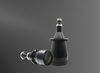
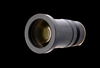
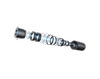
High Resolution Custom Microscope Objective Lenses
Featured Product from Avantier Inc.
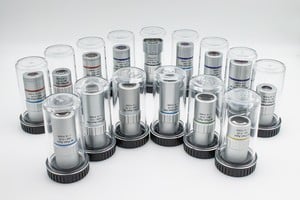
Types of Objectives
Based on aberration correction
- Achromatic objective lenses are the most cost-effective lenses, designed to correct chromatic aberration (color distortion) in two wavelengths (blue and red) and spherical aberration (blurring) in one (green). Achromatic lenses are ideal for general microscopy and provide better image quality when used with a green interference filter.
- Plan Achromatic Objective Lenses correct for flat-field aberration, ensuring a more uniform focus across the entire field of view. These lenses are great for applications requiring clearer and more precise imaging.
- Semi-apochromat lenses offer higher quality than plan achromats by correcting additional spherical aberrations, improving numerical aperture (NA). This allows for better resolution, making them ideal for more demanding microscopy applications.
- Apochromatic Lenses are the most sophisticated microscope objective lenses available and include the most aberration corrections. Their high resolving power means they are a good choice for research applications in which color photomicrography is required, and can be designed with a higher numerical aperture.
Based on system
- Reflective Objective Lenses are microscope objectives that use two or more mirrors instead of traditional lens elements. They offer zero chromatic aberration and long working distances, making them ideal for FTIR spectroscopy and high-precision imaging where aberration-free performance is essential.
- Refractive Objective Lenses are microscope lenses made of transparent materials like glass. They use refraction to focus light, correcting for optical aberrations and providing clear, sharp images. Refractive lenses are versatile and suitable for most standard microscopy needs.
Based on immersion medium
- Oil-immersion Objective Lenses, while most lenses are designed to work with air between the objective and cover glass, a higher numerical aperture can sometimes be achieved with other substances such as special oil with a specific refractive index.
- Water immersion Objective Lenses use water as the immersion medium between the objective and cover glass. This allows for a higher numerical aperture, improving resolution and image quality in microscopy applications.
- Air immersion Objective Lenses are designed to work with air as the medium between the objective and cover glass. They are commonly used in standard microscopy setups and provide good resolution and image clarity.
- Glycerol immersion objective lenses utilize glycerol, a viscous liquid, as the immersion medium. Glycerol has a refractive index close to that of glass, enabling improved light collection and resolution. It is commonly used in specialized microscopy techniques where high-resolution imaging is required.
Custom Microscope Objectives Solutions – UV, NUV, VISIBLE & NIR REGION
Avantier continues to redefine precision microscopy with its cutting-edge NIR, NUV, and UV Infinity Corrected Objectives. Engineered for accuracy and clarity, these objectives elevate research and analysis across near-infrared (NIR), near-ultraviolet (NUV), and ultraviolet (UV) spectra. With advanced optical coatings, aberration correction, and infinity-corrected designs, researchers can explore samples with unmatched clarity and fidelity. These objectives are pivotal for applications ranging from material science to life sciences, enabling scientists to delve deeper into the microscopic world with confidence. Avantier once again proves its commitment to excellence by delivering tools that empower scientific discovery and innovation.
To learn more about in-stock Microscope Objective Lenses, please visit our ‘Stock – Microscope Objective‘ page.
Related Content
Case Study: Small Objective Lenses in Medical Optical Systems
Case Study – 20X Objective Lens For Observing Blood
Objective Lenses: Designing and Assembling for Microscopes
Objective Lenses: A Guide to Aberration Correction
Optics for Aerospace and Defense