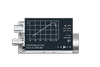
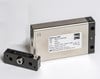
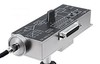
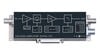
FEMTO's New OE-200-BPR Balanced Photoreceiver
Featured Product from Electro Optical Components, Inc.

The OE-200-BPR is unique:
- It has switchable AC coupling and an exceptionally wide differential intensity range, spanning from the mW down to the fW level.
- For very slow applications, a switchable 10 Hz low-pass filter is available, enabling measurements down into the low fW range.
- The OE-200-BPR offers significantly higher gain and the best CMRR (Common Mode Rejection Ratio).
- The OE-200 is the best choice when maximum performance is required—particularly when both the frequency and the total intensity are low.
- The OE-200 is unique because of its switchable AC coupling and an exceptionally wide differential intensity range, spanning from the mW down to the fW level.
- The OE-200-BPR can also be operated like a conventional photoreceiver simply by shielding one of the photodiodes from incident light with only slightly higher noise level than the Single Channel OE-200 series.
The OE-200-BPR is ideally suited like all the FEMTO amplifiers for use with our new USB data acquisition and digital control system, LUCI-M.
A Balanced Photoreceiver is an optical detector that measures the difference between two optical input signals, rather than merely detecting the absolute power of a single beam. Its primary function is to extract out extremely weak signals from a noisy background.
It has two nearly identical photodiodes that are electrically interconnected in such a way that their photocurrents are subtracted from one another using a signal beam and a reference beam from the same source. Intensity fluctuations of the light source (e.g., laser noise) that are present equally in both beams are eliminated by this subtraction process. This capability is referred to as Common Mode Rejection Ratio (CMRR) and is specified in decibels (dB). The OE-200-BPR has an excellent CMRR of 50 dB or more.
Typical applications in the low-frequency range include:
- Absorption Spectroscopy: One beam passes through a sample, while the other serves as a reference. This enables the measurement of even the slightest degrees of absorption without laser fluctuations distorting the results. Gas Measurement / TDLAS: Absorption spectroscopy using tunable diode lasers (TDLAS) frequently employs modulation in the range of 10 kHz to 500 kHz.
- Fiber-Optic Sensors: Measurement of slow mechanical strains or temperature changes using interferometry.
- Polarization-Dependent Measurements: Electro-optic modulators periodically modulate the orientation of light polarization. Typically, this results in only very minor changes in the sample's reflection or absorption. Balanced photodetectors contribute to an improved signal-to-noise ratio (SNR) in such applications.