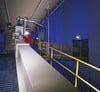
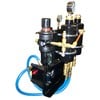
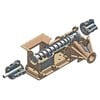
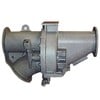
Docksider™ Opti-Vac high-efficiency nozzle
Featured Product from FLSmidth
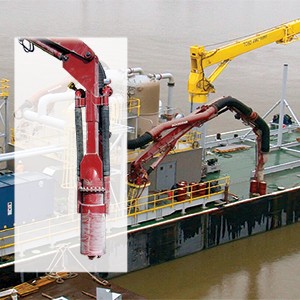
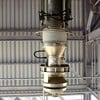
FLSmidth’s Opti-Vac nozzle for Docksider™ unloaders decreases unloading time and reduces dusting. Actual data-logging of a Docksider barge unloader shows an increase in conveying rate of up to 25% and a reduction in dust emissions of up to 50%. Our Opti-Vac nozzle has become standard equipment on all new Docksider shipunloaders with static nozzles and can be retrofitted for all existing barge unloaders with static nozzles.
Available for retrofit and standard on all new Docksider unloaders, FLSmidth's Opti-Vac high efficiency nozzle is designed to increase the efficiency of the Docksider unloader via the nozzle.
Two control valves are used to help regulate the pressure within the system based off the pressure transmitters within the kettles. The valves are mounted near the top of the vacuum arm’s stinger section and through a series of hoses and pipes are hermetically sealed to the existing air intake snorkels. During operation the valves remain closed until a preset vacuum level is reached, allowing the primary valve to begin the modulating process. As the vacuum continues to rise, the secondary valve remains closed until a preset vacuum level is reached based on the main vacuum vent valve (VVV) setting.
The secondary snorkel arrangement features ports allowing for further optimization of the airflow should it be required. Opti-Vac operation is monitored by the main control system, allowing operators to make adjustments for varying conditions and permitting manual override of the system.
Opti-Vac technology facilitates high flow through the nozzle for the clean-up process by forcing all of the air through the nozzle tip. During the free dig process the system helps to increase operating efficiency by smoothing out the pressure fluctuations that may result from operator inconsistency. At high vacuum levels and before hitting the main VVV, most if not all of the material in the arm will enter the kettle before the main VVV opens, bringing the system to atmospheric pressure.