Low-CTE High-Thermal AlSiC Composite
Featured Product from Fountyl Technologies Pte. Ltd.
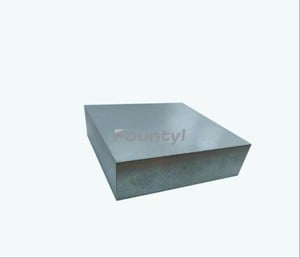
Why Engineers Choose AlSiC Composite Materials
In high-power electronics, aerospace structures, and precision instruments, engineers constantly face the same challenge: how to manage heat without sacrificing strength, weight, or dimensional stability.
Aluminum Silicon Carbide (AlSiC) was developed exactly to solve this problem.
By combining the thermal conductivity of metals with the low thermal expansion of ceramics, AlSiC delivers a rare balance of mechanical and thermal performance that traditional aluminum or steel simply can’t achieve.
Key Performance Advantages:
-
Low Thermal Expansion (CTE): Closely matches electronic and optical components, reducing thermal stress and deformation
-
High Thermal Conductivity: Efficient heat dissipation for high-power electronic devices and heat sinks
-
High Specific Strength & Stiffness: Stronger than pure aluminum while being significantly lighter
-
Low Density: Only about one-third the density of steel, enabling lightweight system design
-
Excellent Dimensional Stability: Maintains precision under temperature cycling
-
Wear, Fatigue & Micro-Yield Resistance: Designed for long service life in demanding environments
Designed for High-End Applications:
-
Aerospace & Defense: Structural parts, satellite components, fighter aircraft skins, optical mirrors
-
Automotive & New Energy Vehicles: Power modules, motor controllers, thermal management systems
-
Electronics & Optics: Heat sinks, electronic housings, laser mirrors, optical brackets
-
Precision Instruments: Inertial navigation systems, scanning mirrors, telescope components
A Material Built for the Next Generation
AlSiC is more than a material upgrade—it represents a shift toward multi-functional structural materials. As systems become more compact, powerful, and thermally sensitive, AlSiC has emerged as a preferred choice for engineers designing the next generation of high-power and high-precision devices.