How to Select a Cooling Fan
Featured Product from Pelonis Technologies, Inc.
How to Select the Right Cooling Fan
In many devices and systems, the buildup of heat can lead to reduced performance, prematurely deteriorated components and materials, and increased safety risks. For these reasons, many pieces of equipment utilize cooling fans to dissipate heat buildup and avoid these potentially costly consequences.
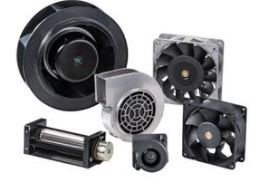
Since cooling fans are used in a wide range of products, they are available in a variety of designs and configurations to suit different application requirements and restrictions. While this broad selection makes it possible for product designers and engineers to find a component that meets their exact needs, it can also make it more challenging to find the right one. The following article serves as a helpful selection guide for readers, outlining the steps to follow when choosing a cooling fan for a particular application.
The Cooling Fan Selection Process
Step 1: Perform a Thermal Analysis
The first step in the cooling fan selection process is performing a thermal analysis. A thermal analysis determines the amount of heat generated inside a particular piece of equipment or during a particular process. The result can be used to calculate the volume of air needed to cool the device or system.
Thermal analysis operations use sensors and other instruments to determine the source(s) of heat and the amount of heat generated by each source. The heaviest consumers of power and, consequently, the biggest contributors to heat dissipation are often components like microcontrollers, processors, FPGAs, and MOSFETs. Once the necessary information is obtained, the amount of airflow required to cool the device or system can be calculated. Afterward, the cooling air path can be mapped using sensors and software to ensure that all major heat sources receive the air needed to cool them sufficiently.
Step 2: Determine the System Impedance
After the thermal analysis is performed and the required air volume is calculated, the next step in the cooling fan selection process is determining the system impedance. System impedance refers to the sum of the pressure drop experienced as air travels between the fan’s inlet vents and exhaust vents. If a system has multiple air paths, the individual impedance values are added. The value(s) can be measured for different rates of airflow with pressure sensors or by placing the system in an air chamber.