
Infrared / Spectral Filters Thermal Imagers
Last Updated: April 1, 2025
Description
Infrared/Spectral Filters Thermal Imagers are devices designed to detect and visualize thermal energy emitted by objects. They operate by capturing infrared radiation, which is not visible to the human eye, and converting it into a visual image that represents temperature variations across the observed scene.
Working Principle
Infrared thermal imagers work by detecting the infrared radiation emitted by objects. Every object with a temperature above absolute zero emits infrared radiation, which is proportional to its temperature. The imager uses a lens to focus this radiation onto a detector element, which converts the radiation into an electrical signal. This signal is then processed to create a thermal image. These devices are useful because they allow for non-contact temperature measurement, providing a visual representation of temperature distribution, which is crucial for identifying heat patterns and anomalies.
Applications
Thermal imagers have a wide range of applications. In industrial settings, they are used for nondestructive testing, such as inspecting CNC lathes for overheating bearings. In the medical field, they help detect abnormalities through localized skin temperature variations. They are also invaluable in nuclear power plants for identifying thermal leaks in cooling systems. Additionally, thermal imagers are used in border control and security to detect unauthorized activities by visualizing heat signatures.
Advantages over other Sensing - Humidity Measurement
Infrared thermal imagers offer advantages over traditional humidity measurement methods by providing a visual representation of temperature distribution, which can indirectly indicate humidity levels. For example, in environments where humidity affects temperature distribution, thermal imagers can help identify areas of concern more quickly and accurately than conventional humidity sensors.
Limitations
One limitation of infrared thermal imagers is their dependency on the emissivity of the materials being observed. Different materials emit infrared energy at different levels, which can affect the accuracy of temperature readings. Additionally, these devices can be affected by environmental conditions such as dust, smoke, or fog, which can obscure the infrared radiation and lead to inaccurate measurements.
Considerations
When considering the use of infrared thermal imagers, several factors should be taken into account. Initial costs can be high, depending on the resolution and features of the device. Operating expenses may include regular calibration and maintenance to ensure accuracy. Durability is generally good, but the devices must be handled carefully to avoid damage to sensitive components. Accuracy can vary based on the device's specifications and the conditions in which it is used. Replacement and maintenance costs should also be considered, as these devices may require periodic servicing to maintain optimal performance.
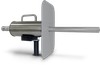
from LumaSense Technologies, Inc., An Advanced Energy Company
Built for mobile use, BoilerSpection-MB utilizes special mid-wave infrared detectors to see through flames. This unique feature means BoilerSpection-MB can provide the clearest and most stable through-flame images in boilers, furnaces, kilns or incinerators. With BoilerSpection-MB plant operators... [See More]
- Features & Options: Infrared / Spectral Filters
- Spectral Range: 3.9
- Measurement Range: 500 to 1600
- Detector Type: Array
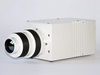
from JENOPTIK Optical Systems, Inc.
High resolution spectral selective temperature measurement in MWIR. With a bandwidth of 2 - 5 microns the new VarioTHERM ® InSb camera covers a wide spectral range ideally suited for spectral selective measurements in R &D, for example on glasses, flames or polymers. An integrated filter... [See More]
- Features & Options: Infrared / Spectral Filters
- Accuracy: 2
- Spectral Range: 2 to 5
- Temperature Resolution: 0.0020

from OX Creek Energy Associates, Inc.
The CoroCAM 8 VMI is intended for use in fixed mounted applications. The fixed mounting can be to a vehicle mounting kit or a wall bracket. Vehicle mounting is useful in conditions where the environment is not conducive to handheld camera inspection, i.e. deserts, snowy terrain or high voltage... [See More]
- Features & Options: Infrared / Spectral Filters
from ANVS, Inc.
Viewer comes with soft case and IR filter, 30 ° field of view [See More]
- Features & Options: Infrared / Spectral Filters
- Cooling: Uncooled
- Spectral Range: 0.3500 to 1.55
- Portable: Portable; Battery Powered
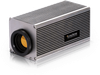
from LumaSense Technologies, Inc., An Advanced Energy Company
Measurement through flames and hot gases in flame heated furnaces at temperatures between 200...800 °C (MC320F, MC320FE) and 400...1600 °C (MC320FHT, MC320FHTE). Key Features. High performance, cost-effective complete monitoring solution. Advanced maintenance-free electronics and industrial... [See More]
- Features & Options: Infrared / Spectral Filters
- Spectral Range: 3 to 5
- Measurement Range: 200 to 1600
- Accuracy: 2
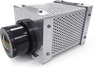
from LumaSense Technologies, Inc., An Advanced Energy Company
High Performance Infrared Camera for Demanding Imaging Applications. The camera detects temperatures in ranges between -40 and 1600 °C. Key Features. Designed to operate in harsh environments. High resolution 640 x 480 pixel thermal imager for process control and monitoring. Measures temperature... [See More]
- Features & Options: Infrared / Spectral Filters
- Accuracy: 2
- Measurement Range: -40 to 1600
- Temperature Resolution: 2
from LumaSense Technologies, Inc., An Advanced Energy Company
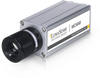
Fixed installation thermal imaging system for high-temperature applications e.g. on metal surfaces. The camera detects temperatures in ranges between 600 and 3000 °C. Moreover, the camera features a 1000 Mbit/s Gigabit Ethernet for data transmission. As an option, the camera can be integrated... [See More]
- Features & Options: Infrared / Spectral Filters
- Spectral Range: 0.7500 to 3
- Measurement Range: 600 to 3000
- Accuracy: 0.5000