
Line Scanning Thermal Imagers
Last Updated: April 1, 2025
Description
Line scanning thermal imagers are devices designed to produce high-resolution thermal images by scanning a line across a target area. They are particularly effective in capturing detailed temperature profiles of moving objects or processes, providing continuous and precise thermal data.
Working Principle
Line scanning thermal imagers operate by detecting infrared radiation emitted from objects along a specific line. Each scan line consists of numerous individual measuring points, allowing the device to generate an accurate temperature profile. With the capability to perform up to 150 lines per second, these imagers can capture up to 150,000 measuring points per second, making them highly effective for fast-moving processes. The technology is similar to that of visual cameras, using a Focal Plane Array (FPA) detector to capture thermal data, which is then processed to create a comprehensive thermal image. This capability is crucial for ensuring homogeneity in temperature distribution, which is vital in processes with tight temperature tolerances.
Applications
Line scanning thermal imagers are used in various industrial applications. For example, in the cement manufacturing industry, they are employed to monitor the temperature of materials on a conveyor belt, detecting hot spots that could indicate potential issues. They are also used in rolling processes to ensure accurate and continuous measurement of temperature distribution, which is essential for maintaining product quality and preventing defects.
Advantages over other Sensing - Humidity Measurement
Line scanning thermal imagers offer significant advantages over traditional humidity measurement techniques, particularly in applications where precise temperature profiling is critical. Unlike humidity sensors, which provide indirect temperature data, line scanning thermal imagers deliver direct and highly accurate temperature measurements. This precision is essential in processes where even minor temperature variations can lead to significant quality issues, such as in the production of sensitive materials or components.
Limitations
One limitation of line scanning thermal imagers is their reliance on the accuracy of individual camera pixels. Variations in pixel accuracy can lead to measurement deviations, potentially affecting the overall accuracy of the thermal image. Additionally, the initial cost of these devices can be high, which may be a barrier for some applications.
Considerations
When considering the implementation of line scanning thermal imagers, it is important to evaluate the initial costs, which can be substantial. However, the investment can be justified by the high level of accuracy and the ability to prevent costly defects in production processes. Operating expenses are generally low, as these devices require minimal maintenance. Durability is another factor to consider, as these imagers are designed to withstand harsh industrial environments. Accuracy is a key advantage, although it is important to ensure regular calibration to maintain performance. Replacement and maintenance costs are typically low, making line scanning thermal imagers a cost-effective solution for long-term use.

from Advantech
UCAM-220TT/TB is capable of discovering and tracking people with higher body temperature among the crowded public area. It can be widely used in places such as customs, airport, school and hospital for inspection and quarantine. 160 x 120 resolution in thermal channel, high sensitivity sensor. [See More]
- Detector Type: Line Scanning
- Temperature Resolution: 0.5000
- Measurement Range: ? to 45
from LAND
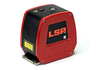
Glass Tempering Furnace System meets the challenge of accurately measuring glass temperatures for plants running multiple glass types – even using a variety of coatings, including low-emissivity surfaces. [See More]
- Detector Type: Line Scanning
- Spectral Range: 5
- Measurement Range: 150 to 1100
- Ambient Temperature Range: 32 to 158
from LAND
Designed for industrial environments, the fixed-focus HotSpotIR high-speed scanning system detects small hot inclusions on a moving conveyor before they can cause a fire. Reliable alarm processing is achieved without software or computer requirements. [See More]
- Detector Type: Line Scanning
- Spectral Range: 3 to 5
- Measurement Range: 20 to 600
- Cooling: Uncooled
from LAND
At the end of the tap the levels of slag and steel rapidly reverse. Quick termination of the tap after the alarm has been triggered is necessary to prevent excessive levels of slag in the ladle. SDS uses a high-resolution thermal imaging camera to detect the transition between steel and slag. The... [See More]
- Detector Type: Line Scanning
- Spectral Range: 3.9
- Measurement Range: 500 to 1800
- Accuracy: 1

from KPM Analytics
The Process Sensors Corporation (PSC) Surveryor camera series offers a comprehensive range of imaging and line scanning camera systems to continuously monitor and control industrial processes. These state of the art camera systems provide real-time thermography with an astonishing 128 Hz frame rate. [See More]
- Detector Type: Line Scanning
- Spectral Range: 7.5 to 13
- Measurement Range: -20 to 1500
- Accuracy: 2