
Biaxial Vibration Sensors
Description
Biaxial vibration sensors are devices designed to measure vibrations along two axes. These sensors provide data on the magnitude and frequency of vibrations, which can be crucial for monitoring the health and performance of machinery and structures.
Working Principle
Biaxial vibration sensors operate by detecting changes in acceleration along two perpendicular axes. They typically use piezoelectric materials, which generate an electrical charge in response to mechanical stress. This charge is proportional to the acceleration experienced by the sensor. By analyzing the output signals, users can determine the vibration characteristics of the monitored object. These sensors are useful because they provide precise and continuous data, allowing for early detection of potential mechanical failures.
Applications
Biaxial vibration sensors are commonly used in machinery health monitoring. For example, they are employed in aluminum plants to ensure the smooth operation of machinery by detecting any unusual vibrations that might indicate wear or failure. They are also used in automotive applications, such as monitoring the vibrations in engines and other critical components to prevent breakdowns.
Advantages over other Process - Web Handling Equipment
Biaxial vibration sensors offer several advantages over traditional web handling equipment. They provide continuous, real-time monitoring, which allows for immediate detection of issues, reducing downtime and maintenance costs. Unlike single-axis sensors, biaxial sensors can detect complex vibration patterns, providing a more comprehensive analysis of machinery health.
Limitations
One limitation of biaxial vibration sensors is their sensitivity to only two axes, which might not capture all vibration data in systems where three-dimensional monitoring is necessary. Additionally, these sensors can be affected by environmental factors such as temperature and humidity, which may impact their accuracy.
Considerations
When considering biaxial vibration sensors, it is important to evaluate the initial costs, which can vary depending on the sensor's specifications and features. Operating expenses are generally low, as these sensors require minimal power. However, durability and accuracy can be affected by harsh environmental conditions, necessitating regular calibration and maintenance. Replacement and maintenance costs should also be considered, as these can add to the overall expense of using biaxial vibration sensors in long-term applications.
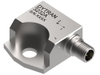
from Hottinger Brüel & Kjær A/S
The Dytran series 3232 is a biaxial IEPE piezoelectric accelerometer, designed for use in Health and Usage Monitoring Systems (HUMS) as well as Active Vibration Control (AVC) applications typically found on commercial and military aircraft. Units are offered with sensitivities ranging from 10- 100... [See More]
- Measurement Axes: Biaxial
- Frequency Range: 0.3300 to 2500
- Acceleration: 500
- Sensor Mounting: Center bolt mounting

from MachineSaver, Inc.
Machine Saver's is proud to manufacture the industry leading 3 axis digital TriVibe vibration and temperature sensor. Capable of 50,000+ vibration Samples per second, which makes it an excellent addition to gather data for analytical vibration software and Machine Learning AI Applications. This is... [See More]
- Measurement Axes: Single; Biaxial; Triaxial
- Device Category: Sensor / Transducer
- Frequency Range: 1.5 to 8000
- Sensor Outputs: Displacement; Temperature

from Columbia Research Labs, Inc.
The Columbia Model VM-300 Vibration Meter is a general-purpose vibration measuring instrument for periodic routine vibration checks of industrial machinery and general field use where portability and ease of use are required. This hand-held device is the ideal preventive maintenance tool. Model... [See More]
- Measurement Axes: Biaxial
- Frequency Range: 10 to 500
- Acceleration: 50
- Accuracy: 5.00

from SignalQuest, Inc.
0.005 - 1.7 g RMS vibration; analog, serial and trigger outputs. Description The vibration sensor module performs calibrated averaging (root mean squared) vibration measurement with analog voltage and digital serial outputs. Because acceleration signals are extremely fast by nature, they require... [See More]
- Measurement Axes: Biaxial
- Frequency Range: 1 to 500
- Acceleration: 0.0050 to 2
- Accuracy: 15.00