
Internet-of-Things (IoT) Vibration Sensors
Description
Internet-of-Things (IoT) vibration sensors are devices designed to continuously monitor and measure vibration levels in machinery and equipment. These sensors are capable of detecting changes in vibration patterns, which can indicate potential issues or failures in the equipment being monitored. By providing real-time data, IoT vibration sensors help in maintaining the operational efficiency of machinery and reducing unexpected downtimes.
Working Principle
IoT vibration sensors work by detecting and measuring the vibration and temperature parameters of machinery. They utilize low-power sensors that can communicate data over long distances using reliable digital communication protocols such as Modbus RS485 RTU. The data collected by these sensors is often stored in the cloud, allowing for continuous monitoring and analysis. This enables early detection of anomalies, which can be crucial for preventive maintenance and fault diagnosis. The integration of these sensors into a broader monitoring system allows for comprehensive process control and optimization.
Applications
IoT vibration sensors are widely used in various industrial applications. For example, in the plastic manufacturing industry, smart vibration sensors like the WISE-2460 are used to detect abnormal vibrations early, allowing for timely intervention and reducing production downtime. In centrifugal pumps, continuous vibration monitoring helps in preventing unscheduled shutdowns by providing early alarms and facilitating the scheduling and purchasing of parts to minimize cooling process downtime.
Advantages over other Process - Web Handling Equipment
IoT vibration sensors offer several advantages over traditional web handling equipment. They provide real-time monitoring and early detection of potential issues, which can significantly reduce maintenance costs and downtime. The ability to customize alarm thresholds and detection ranges allows for tailored monitoring solutions that meet specific operational requirements. Additionally, the integration of vibration monitoring into an overall process monitoring system enhances the ability to achieve comprehensive process control.
Limitations
One of the limitations of IoT vibration sensors is their dependency on reliable communication networks for data transmission. In environments with poor connectivity, the effectiveness of these sensors may be compromised. Additionally, while they provide valuable data for preventive maintenance, the initial setup and integration into existing systems can be complex and require specialized knowledge.
Considerations
When considering the implementation of IoT vibration sensors, several factors should be taken into account. Initial costs can be significant, especially if extensive integration with existing systems is required. Operating expenses may include costs related to data storage and communication services. Durability and accuracy are critical, as sensors must withstand harsh industrial environments while providing precise measurements. Replacement and maintenance costs should also be considered, as regular calibration and potential sensor replacements can impact long-term operational budgets.
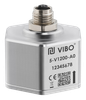
from Tronics Microsystems
VIBO ® is a digital MEMS accelerometer that enables a continuous monitoring of machine vibrations. Embedded in spindle, motor, pump, fan, gearbox, compressor or generator, VIBO ® detects early signs of failure such as unbalance, misalignment, bearing or gearing issue. Besides delivering raw... [See More]
- Features: IoT
- Frequency Range: 0.5000 to 20000
- Acceleration: 64
- Measurement Axes: Single

from MachineSaver, Inc.
Machine Saver's is proud to manufacture the industry leading 3 axis digital TriVibe vibration and temperature sensor. Capable of 50,000+ vibration Samples per second, which makes it an excellent addition to gather data for analytical vibration software and Machine Learning AI Applications. This is... [See More]
- Features: IoT
- Measurement Axes: Single; Biaxial; Triaxial
- Frequency Range: 1.5 to 8000
- Device Category: Sensor / Transducer

from NSXe Co. LTD.
It ’s Wireless, Magnet-Mounted and easy to set up!. One computer can control up to 100 units. Connect multiple computers to control hundreds of conanairs at the same time. The patrol-monitoring system allows your technicians to focus more on planned maintenance tasks. Freeing up time, reducing... [See More]
- Features: Battery Powered; IoT; Wireless
- Frequency Range: 10 to 1000
- Acceleration: -16 to 16
- Measurement Axes: Triaxial