
Type I Card PCMCIA Cards and Accessories
Last Updated: April 1, 2025
Description
Type I PCMCIA cards are designed to expand the memory capacity of devices. They are primarily used as memory cards, including RAM, ROM, and Flash RAM, providing additional storage and memory capabilities to host devices.
Working Principle
Type I PCMCIA cards operate by interfacing with a host device through a 68-pin connector, which allows for data transfer and communication. These cards are 54 mm x 85.4 mm in size and can be up to 3.3 mm thick. They are useful because they provide a standardized form factor for memory expansion, allowing for easy upgrades and compatibility across different devices.
Applications
Type I PCMCIA cards are commonly used in devices that require additional memory capacity. Specific examples include their use in older laptops and portable computing devices where they serve as an expansion for RAM or storage. They are also used in some industrial equipment and legacy systems that rely on PCMCIA slots for memory upgrades.
Advantages over other PCMCIA Cards and Accessories
Type I cards have the advantage of being the thinnest among the PCMCIA card types, which makes them suitable for devices with limited space. Their primary advantage is in applications where only memory expansion is needed, without the additional functionality provided by thicker Type II or Type III cards, such as I/O or hard drive capabilities.
Limitations
One of the main limitations of Type I PCMCIA cards is their limited functionality compared to other types of PCMCIA cards. They are primarily used for memory expansion and do not support the additional features like networking or modem capabilities found in Type II or Type III cards. Additionally, the technology has been largely superseded by newer standards like USB and ExpressCard, limiting their use in modern devices.
Considerations
When considering the use of Type I PCMCIA cards, it is important to evaluate the initial cost and availability, as they may be harder to find due to their obsolescence. Operating expenses are generally low, as they do not require additional power beyond what is supplied by the host device. However, durability can be a concern, as older cards may be prone to wear and tear. Replacement and maintenance costs should also be considered, especially if the host device is no longer supported by the manufacturer.
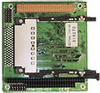
from VersaLogic Corporation
PC/104-Plus interface module with 1 built-in PCMCIA card slot, stackable [See More]
- Card Form Factor: Type I card; Type II card; Type III Card
- Technology: PC Card Standard 95; CardBus
- PCMCIA Product: Bus Interface / Adapter / Controller
- Operating Temperature: -4 to 158