
Left Hand Thread Ball Screws
Description
Left Hand Thread Ball Screws are mechanical components designed to convert rotational motion into linear motion. They feature a helical raceway for ball bearings, which allows for smooth and efficient movement. The left-hand thread indicates that the direction of the threads on the screw shaft causes the ball nut to travel in the opposite direction compared to a right-hand thread when rotated.
Working Principle
Left Hand Thread Ball Screws operate by utilizing ball bearings that roll between the screw and the nut. This rolling action minimizes friction and wear, allowing for high efficiency in motion transfer. The left-hand threading is particularly useful in applications where the application of pressure would cause a right-hand threaded screw to loosen. This design ensures that the screw remains securely in place under specific conditions, providing reliable performance in specialized applications.
Applications
Left Hand Thread Ball Screws are used in applications where the direction of force or motion could cause a right-hand threaded screw to loosen. Specific examples include:
- Automotive Industry: Certain tire bolts are reverse threaded to prevent them from loosening due to torque.
- Plumbing and Heating: Pipes may use left-hand threads to prevent leaks by providing an additional layer of security.
- Safety Equipment: Gas-supply valves often use left-hand threads to differentiate them from oxygen control valves, ensuring safety in handling.
Advantages over other Ball Screws
Left Hand Thread Ball Screws offer specific advantages in applications where reverse threading is necessary to prevent loosening under pressure. This feature is particularly beneficial in safety-critical applications where maintaining secure connections is paramount.
Limitations
One limitation of Left Hand Thread Ball Screws is their specialized nature, which makes them less common and potentially more expensive than standard right-hand threaded screws. Additionally, they may require specific handling and installation procedures to ensure proper function.
Considerations
When considering Left Hand Thread Ball Screws, it is important to evaluate the initial costs, which may be higher due to their specialized nature. Operating expenses could be influenced by the need for specific maintenance practices to ensure durability and accuracy. Replacement and maintenance costs should also be considered, as these screws may not be as readily available as their right-hand counterparts, potentially leading to longer lead times and higher costs for replacement parts.
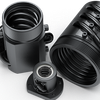
from Rockford Ball Screw
Inch Ball Nuts [See More]
- Design Features: Left Hand Thread
- Screw O.D.: 0.6310
- Design: English Design Arrangement
- Screw Lead: 0.2000
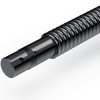
from Rockford Ball Screw
Inch Ball Screws [See More]
- Design Features: Left Hand Thread
- Screw O.D.: 0.6310
- Design: English Design Arrangement
- Screw Lead: 0.2000

from Rockford Ball Screw
Inch Preloaded Ball Nuts [See More]
- Design Features: Left Hand Thread
- Screw O.D.: 0.6310
- Design: English Design Arrangement
- Screw Lead: 0.2000
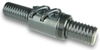
from Nook Industries, Inc.
Lead accuracy of: ± 0.004 in/ft - Standard Rolled (SRT). ± 0.001 in/ft - Precision Rolled (XPR). ± 0.0005 in/ft - Precision Ground (SGT). Standard diameters from 3/8" to 4". (larger diameters up to 14"). Standard leads from 0.125" to 1.875". Alloy and Stainless Steel Screws [See More]
- Design Features: Left Hand Thread
- Manufacturing Process: Ground Thread
- Component Type: Screw Assembly
- Design: English Design Arrangement

from Joyce/Dayton Corp.
Joyce/Dayton offers Ball screw and ball nut assemblies in a variety of screw leads and in diameters ranging from .631" to 4.000". Ball nuts and steel flanges are available for each screw size and lead. Choose the ball nut capacity that meets your application requirements. Several ball screws are... [See More]
- Design Features: Left Hand Thread
- Design: English Design Arrangement
- Component Type: Screw Only
- Screw Lead: 0.2000