
Built-in or Self Calibration Stroboscope Instruments
Last Updated: April 1, 2025
Description
Built-in or self-calibration stroboscope instruments are designed to provide precise and reliable measurements by automatically calibrating themselves. These instruments are equipped with features that allow them to maintain accuracy over time without the need for manual calibration, ensuring consistent performance in various settings.
Working Principle
Stroboscope instruments work by emitting flashes of light at specific intervals, which can be adjusted to match the frequency of a moving object. This creates the illusion of the object being stationary, allowing for detailed observation and analysis. The built-in or self-calibration feature ensures that the stroboscope maintains its accuracy by automatically adjusting its settings to compensate for any drift or changes in environmental conditions. This makes them particularly useful for applications requiring high precision and reliability.
Applications
Stroboscopes with built-in or self-calibration are used in a variety of applications. They are commonly employed in high-speed packaging systems where precise timing is crucial. Additionally, they are used in vibration analysis to provide phase studies and operational deflection shape analysis, aiding in dynamic balancing and maintenance tasks. These instruments are also valuable in quality assurance processes, offering real-time information in a safe and repeatable manner.
Advantages over other Stroboscope Instruments
One of the primary advantages of built-in or self-calibration stroboscopes is their ability to maintain accuracy without manual intervention. This reduces the need for frequent recalibration, saving time and reducing the potential for human error. Additionally, these instruments often come with advanced features such as digital RPM readouts and the ability to lock onto vibration sensors, providing more comprehensive data for analysis.
Limitations
While built-in or self-calibration stroboscopes offer significant benefits, they may also have limitations. The initial cost of these advanced instruments can be higher compared to standard stroboscopes. Additionally, their complexity might require more specialized training for operators to fully utilize their capabilities.
Considerations
When considering the purchase of a built-in or self-calibration stroboscope, it is important to evaluate the initial costs against the long-term savings in maintenance and calibration expenses. These instruments are generally more durable and offer higher accuracy, but they may also incur higher replacement and maintenance costs due to their advanced features. It is crucial to assess the specific needs of your application to determine if the benefits of self-calibration justify the investment.
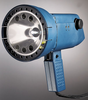
from OMEGA Engineering, Inc.
The new HHT30 digital stroboscope employs exclusive microprocessor technology to provide reliable and accurate speed measurements and stop motion diagnostic inspection. The unit includes a rotary encoder to enable quick and precise frequency setting from 30 to 14,000 flashes per minute. The crystal... [See More]
- Instrument Type: Handheld; Portable
- Flash Rate Resolution: 0.1000
- Flash Rate Range: 30 to 14000
- Flash Duration: 50
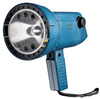
from OMEGA Engineering, Inc.
The HHT digital stroboscopes provides reliable and accurate speed measurements as well as stop-motion diagnostic inspection. A rotary encoder enables quick, precise frequency setting from 30 to 20,000 flashes per minute. The crystal-controlled circuitry eliminates drift and allows readings accurate... [See More]
- Instrument Type: Handheld; Portable
- Flash Rate Resolution: 0.1000
- Flash Rate Range: 30 to 20000
- Flash Duration: 50

from OMEGA Engineering, Inc.
OMEGA's HHT41B set the industrial standard for high-intensity, multifunction, ultra-compact, xenon stroboscopes. It features a removable, rechargeable battery pack. Stop-action and slowmotion inspections are made easy with the one-touch, joystick-type tuning button. Additional features include rapid... [See More]
- Instrument Type: Handheld; Portable
- Flash Rate Resolution: 0.1000
- Flash Rate Range: 100 to 12500
- Flash Duration: 30