
Single Roller Web Tension Sensors
Description
Single Roller Web Tension Sensors are devices used to measure the tension of a web, which is a continuous sheet of material, as it passes over a single roller. These sensors are crucial in ensuring that the web maintains the correct tension throughout its processing, which is vital for maintaining product quality and preventing material damage.
Working Principle
Single Roller Web Tension Sensors operate by allowing the web to wrap around a single roller. The tension in the web causes a deflection in the roller, which is detected by the sensor mechanism. Typically, strain gauges or variable inductors are used to measure this deflection. The mechanical deflection is converted into an electrical signal that is proportional to the web tension. This signal can then be used to monitor and control the tension in real-time, ensuring consistent processing conditions. These sensors are useful because they provide a direct and accurate measurement of web tension, which is critical for maintaining the quality and efficiency of web processing operations.
Applications
Single Roller Web Tension Sensors are commonly used in industries where precise tension control is essential. Specific examples include:
- Paper and Plastic Film Converting: These sensors are used in applications such as winders, unwinders, and slitters to control how paper or film is wound and tensioned on the primary roll.
- Flexographic Printing Machines: They help in maintaining the correct tension during the printing process to ensure high-quality print results.
Advantages over other Web Tension Sensors
Single Roller Web Tension Sensors offer several advantages over other types of web tension sensors:
- Simplicity: With only one roller involved, the setup is simpler compared to multiple roller systems, reducing the complexity of the installation and maintenance.
- Direct Measurement: They provide a direct measurement of tension, which can be more accurate than indirect methods that infer tension from other parameters.
Limitations
Despite their advantages, Single Roller Web Tension Sensors have some limitations:
- Limited to Single Roller Applications: They are not suitable for applications that require tension measurement across multiple rollers or complex web paths.
- Potential for Mechanical Wear: The mechanical components, such as the roller and bearings, can wear over time, potentially affecting accuracy and requiring maintenance.
Considerations
When considering the use of Single Roller Web Tension Sensors, several factors should be taken into account:
- Initial Costs: The cost of purchasing and installing these sensors can vary depending on the specific requirements of the application.
- Operating Expense: While generally low, operating expenses can include periodic calibration and maintenance to ensure accuracy.
- Durability: The durability of the sensor depends on the quality of the materials used and the operating environment. Harsh conditions may require more robust designs.
- Accuracy: These sensors are known for their high accuracy, which is crucial for applications where precise tension control is necessary.
- Replacement and Maintenance Costs: Over time, components such as strain gauges or rollers may need replacement, and regular maintenance is required to ensure continued performance.
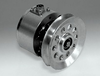
from FMS USA, Inc.
The force measuring rollers of the CR 208, CR 210 and CR 212 Series are ideal devises to measure tensions in wires, cables and narrow flat materials. Features. Advantages. 10 times overload protection. No recalibration required. 20:1 force measuring range. Wide measuring range at high resolution. [See More]
- Configuration: Single Roller
- Accuracy: 0.5000
- Tension Range: 225
- Display: None (No Display)

from FMS USA, Inc.
FMS force measuring rollers of the RMGZ800 series are used to measure the tension in ropes, cables, wires and narrow web materials - made for higher forces and stability. Features. Advantages. Medium to high tension force (100-8000 N). Wide material processing range. 10 times overload protection. [See More]
- Configuration: Single Roller
- Accuracy: 0.5000
- Tension Range: 22.48
- Display: None (No Display)