
Pillow block or pillow block base Web Tension Sensors
Description
Pillow block or pillow block base web tension sensors are devices designed to measure the tension in a web, which is a continuous sheet of material. These sensors are typically mounted between pillow blocks or use cantilevered brackets to secure them in place. They are essential for ensuring that the tension in the web is maintained at optimal levels during processing.
Working Principle
Pillow block base web tension sensors work by detecting the force exerted by the web on a roller. The sensors can be configured with a single roller, multiple rollers, or a roller with an integrated sensor. They are capable of sensing tension on both powered (live) and non-powered (dead) shafts. The sensors provide feedback on the tension levels, which can be displayed through analog meters, digital readouts, or video displays. This feedback is crucial for maintaining consistent tension, which is important for the quality and efficiency of the web processing.
Applications
Web tension sensors are used in various industries where precise tension control is critical. For example, in the paper manufacturing industry, these sensors help maintain the correct tension to prevent tearing or wrinkling of the paper. In the textile industry, they ensure that fabrics are processed without distortion. Additionally, in the printing industry, maintaining proper tension is essential for accurate color registration and print quality.
Advantages over other Web Tension Sensors
Pillow block base web tension sensors offer several advantages over other types of tension sensors. They can be mounted in various configurations, providing flexibility in installation. Their ability to work with both live and dead shafts makes them versatile for different applications. Additionally, they often include features such as controller functions and temperature compensation, enhancing their performance in varying environmental conditions.
Limitations
One limitation of pillow block base web tension sensors is their potential complexity in installation, especially when dealing with multiple rollers or integrated sensor configurations. This can lead to higher initial setup costs and require more time for proper alignment and calibration.
Considerations
When selecting pillow block base web tension sensors, several factors should be considered. Initial costs can vary depending on the complexity of the sensor configuration and the specific application requirements. Operating expenses may include regular calibration and maintenance to ensure accuracy and reliability. Durability is generally high, but the sensors must be chosen based on the environmental conditions they will be exposed to, such as temperature and humidity. Replacement and maintenance costs should also be factored in, as these can impact the overall cost-effectiveness of the sensor system.

from FMS USA, Inc.
These force sensors are perfect for difficult ambient conditions, e.g. cooling water, wet paperpulp, high temperatures, humidity, acids and bases. They can be used in virtually any wet environment. Features. Advantages. Overload protection, 10-times nominal measuring force. No recalibration... [See More]
- Mounting: Pillow block or pillow block base
- Accuracy: 0.5000
- Tension Range: 450 to 4496
- Display: None (No Display)

from Montalvo Corporation
The Montalvo LCR Load Cell / Roll Assembly continuously measures tension in your moving web and is ideal for low start-up inertia. Featuring the best tension sensing technology available today, low drag, maintenance free bearings and 3-D dynamic balancing for speeds up to 1500 fpm are options that... [See More]
- Mounting: Pillow block or pillow block base
- Application: "Live" Shaft Applications
- Configuration: Roller with Integrated Sensor
- Computer Interface: Computer Interface

from Leister USA
The reliable and handy air pressure test manometer from Leister is the perfect solution for testing the integrity of dual track seams with test channel. It is suitable on construction sites for civil engineering, tunneling and landfills. [See More]
- Mounting: Pillow block or pillow block base
- Local Interface: Digital Front Panel
- Tension Range: ? to 899
- Display: Digital Readouts
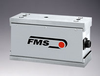
from FMS USA, Inc.
The UMGZ force measuring blocks are ruggedly constructed, accurate and very reliable. They are used in normal and dry ambient conditions. Features. Advantages. Overload protection, 10-times nominal measuring force. No recalibration required. Nominal forces of 0,5-100 kN. Nominal forces suitable for... [See More]
- Mounting: Pillow block or pillow block base
- Accuracy: 0.5000
- Tension Range: 112 to 450
- Display: None (No Display)