
RS232 Frequency Counters
Last Updated: April 1, 2025
Description
RS232 Frequency Counters are electronic devices designed to measure the frequency of an input signal. They provide a digital output, often through interfaces like RS232, which allows for easy integration with computers and other digital systems. These counters are capable of displaying the frequency of the signal in a digital format, making them useful for precise frequency measurement tasks.
Working Principle
RS232 Frequency Counters operate on the principle of gated-pulse counting. This method involves counting the number of pulses of the input signal that occur within a predetermined time interval. The frequency is then calculated by dividing the number of counted pulses by the duration of the time interval. This technique allows for highly accurate frequency measurements, as the error can be minimized to the inverse of the counting interval. The RS232 interface provides a means to transmit the measured frequency data to other devices for further processing or display.
Applications
RS232 Frequency Counters are widely used in various industries for tasks that require precise frequency measurements. For example, they are employed in the calibration of RF signal generators, which do not have built-in displays. They are also used in research and development settings to characterize the frequency of transmitters and receivers, ensuring compliance with regulatory standards.
Advantages over other Frequency Counters
One of the key advantages of RS232 Frequency Counters is their ability to provide digital output through the RS232 interface, which facilitates easy data logging and integration with computer systems. This feature is particularly beneficial in automated testing environments where data needs to be collected and analyzed efficiently. Additionally, the use of gated-pulse counting allows for more accurate frequency measurements compared to older frequency-to-voltage conversion methods.
Limitations
Despite their advantages, RS232 Frequency Counters have some limitations. They may not be suitable for measuring frequencies in environments with high levels of electromagnetic interference, which can affect the accuracy of the measurements. Additionally, the precision of the frequency measurement is dependent on the stability and accuracy of the internal time base used by the counter.
Considerations
When selecting an RS232 Frequency Counter, several factors should be considered. Initial costs can vary depending on the frequency range and resolution required. Operating expenses are generally low, but users should consider the potential need for periodic calibration to maintain accuracy. Durability is an important factor, especially in industrial environments, and users should ensure that the device is robust enough to withstand the conditions in which it will be used. Accuracy is a critical consideration, and users should verify that the counter meets the necessary specifications for their application. Replacement and maintenance costs are typically minimal, but it is important to ensure that the device is supported by the manufacturer for any necessary repairs or parts replacement.

from Red Pitaya, d.o.o.
SDRlab 122-16 External clock is based on the SDRlab 122-16 model that is modified to be used with an external clock oscillator, which is important especially for RF applications that operate at other frequencies, require better quality clock or clock synchronization. [See More]
- Output Interface: Universal Serial Bus; RS232; I2C, SPI, UART, WiFi, Ethernet
- Frequency Range: 1 to 6.25E7
- Form Factor: Bench top; Rack mount (optional feature); Handheld (optional feature); Computer Board
- Max Channels: 4

from Red Pitaya, d.o.o.
SDRlab 122-16 was developed specifically for software-defined radio and more demanding RF applications. [See More]
- Output Interface: Universal Serial Bus; RS232; I2C, SPI, UART, WiFi, Ethernet
- Frequency Range: 1 to 6.25E7
- Form Factor: Bench top; Rack mount (optional feature); Handheld (optional feature); Computer Board
- Max Channels: 4

from Red Pitaya, d.o.o.
SIGNALlab 250-12 is most sophisticated Red Pitaya product, built for more demanding industrial applications and research, where robustness and performance matter more than cost. [See More]
- Output Interface: Universal Serial Bus; RS232; I2C, SPI, UART, WiFi, Ethernet
- Frequency Range: 1 to 6.25E7
- Form Factor: Bench top; Rack mount (optional feature); Handheld (optional feature); Computer Board
- Max Channels: 4

from Red Pitaya, d.o.o.
STEMlab 125-14 4 Inputs is based on STEMlab 125-14 board, but instead of 2 inputs and 2 output channels offers 4 Input channels that with improved performance. [See More]
- Output Interface: Universal Serial Bus; RS232; I2C, SPI, UART, WiFi, Ethernet
- Frequency Range: 1 to 6.25E7
- Form Factor: Bench top; Rack mount (optional feature); Handheld (optional feature); Computer Board
- Max Channels: 4

from Red Pitaya, d.o.o.
STEMlab 125-14 is our most versatile and popular product, which was introduced to the market in 2013 when Red Pitaya was established. Since then it has been used in a wide variety of contexts, from hobbyists and ham radio operators to industry, research, and space applications. [See More]
- Output Interface: Universal Serial Bus; RS232; I2C, SPI, UART, WiFi, Ethernet
- Frequency Range: 1 to 6.25E7
- Form Factor: Bench top; Rack mount (optional feature); Handheld (optional feature); Computer Board
- Max Channels: 4

from Red Pitaya, d.o.o.
STEMlab 125-14 is our most versatile and popular product, which was introduced to the market in 2013 when Red Pitaya was established. Since then it has been used in wide variety of contexts, from hobbyists and ham radio operators to industry, research and space applications. [See More]
- Output Interface: Universal Serial Bus; RS232; I2C, SPI, UART, WiFi, Ethernet
- Frequency Range: 1 to 6.25E7
- Form Factor: Bench top; Rack mount (optional feature); Handheld (optional feature); Computer Board
- Max Channels: 4

from Red Pitaya, d.o.o.
STEMlab 125-14 Edu Pack is based on Red Pitaya's best-selling DAQ platform and with the chosen accessories a perfect fit for educational purposes. [See More]
- Output Interface: Universal Serial Bus; RS232; I2C, SPI, UART, WiFi, Ethernet
- Frequency Range: 1 to 6.25E7
- Form Factor: Bench top; Rack mount (optional feature); Handheld (optional feature); Computer Board
- Max Channels: 4

from Red Pitaya, d.o.o.
STEMlab 125-14 External clock is based on the STEMlab 125-14 model that is modified to be used with an external clock oscillator, which is important especially for RF applications that operate at other frequencies, require better quality clock or clock synchronization. With this modification, users... [See More]
- Output Interface: Universal Serial Bus; RS232; I2C, SPI, UART, WiFi, Ethernet
- Frequency Range: 1 to 6.25E7
- Form Factor: Bench top; Rack mount (optional feature); Handheld (optional feature); Computer Board
- Max Channels: 4

from Red Pitaya, d.o.o.
Based on the STEMlab 125-14 Starter kit and it comes with individual ISO17025 certificate. [See More]
- Output Interface: Universal Serial Bus; RS232; I2C, SPI, UART, WiFi, Ethernet
- Frequency Range: 1 to 6.25E7
- Form Factor: Bench top; Rack mount (optional feature); Handheld (optional feature); Computer Board
- Max Channels: 4

from Red Pitaya, d.o.o.
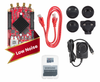
STEMlab 125-14 Low Noise Bare OEM is the ultimate solution for customization and adaptability in your electronic project. This board, which comes without the usual connectors, provides unparalleled freedom and versatility to tailor your designs according to your specific needs. [See More]
- Output Interface: Universal Serial Bus; RS232; I2C, SPI, UART, WiFi, Ethernet
- Frequency Range: 1 to 6.25E7
- Form Factor: Bench top; Rack mount (optional feature); Handheld (optional feature); Computer Board
- Max Channels: 4
from Red Pitaya, d.o.o.
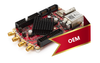
STEMlab 125-14 Low Noise is based on a STEMlab 125-14 board that is populated with additional linear analog power for analog power supplies to reduce RF inputs and outputs noise and consequently increase ENOB. [See More]
- Output Interface: Universal Serial Bus; RS232; I2C, SPI, UART, WiFi, Ethernet
- Frequency Range: 1 to 6.25E7
- Form Factor: Bench top; Rack mount (optional feature); Handheld (optional feature); Computer Board
- Max Channels: 4
from Red Pitaya, d.o.o.
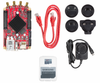
We are setting the industry standard in product quality and customer support, our STEMlab OEM boards are easy to integrate and available in multiple hardware and software configurations. [See More]
- Output Interface: Universal Serial Bus; RS232; I2C, SPI, UART, WiFi, Ethernet
- Frequency Range: 1 to 6.25E7
- Form Factor: Bench top; Rack mount (optional feature); Handheld (optional feature); Computer Board
- Max Channels: 4
from Red Pitaya, d.o.o.
STEMlab 125-14 is our most versatile and popular product, which was introduced to the market in 2013 when Red Pitaya was established. Since then it has been used in wide variety of contexts, from hobbyists and ham radio operators to industry, research and space applications. [See More]
- Output Interface: Universal Serial Bus; RS232; I2C, SPI, UART, WiFi, Ethernet
- Frequency Range: 1 to 6.25E7
- Form Factor: Bench top; Rack mount (optional feature); Handheld (optional feature); Computer Board
- Max Channels: 4

from Red Pitaya, d.o.o.
STEMlab 125-14 is our most versatile and popular product, which was introduced to the market in 2013 when Red Pitaya was established. Since then it has been used in wide variety of contexts, from hobbyists and ham radio operators to industry, research and space applications. [See More]
- Output Interface: Universal Serial Bus; RS232; I2C, SPI, UART, WiFi, Ethernet
- Frequency Range: 1 to 6.25E7
- Form Factor: Bench top; Rack mount (optional feature); Handheld (optional feature); Computer Board
- Max Channels: 4

from Red Pitaya, d.o.o.
STEMlab 125-14 X-Channel System is designed for applications that require multi-channel RF signal acquisition and generation. It enables the user to stream analog and digital signals from/to the client's PC. X-Channel System consists of multiple STEMlab 125-14 devices that are modified and comes... [See More]
- Output Interface: Universal Serial Bus; RS232; I2C, SPI, UART, WiFi, Ethernet
- Frequency Range: 1 to 6.25E7
- Form Factor: Bench top; Rack mount (optional feature); Handheld (optional feature); Computer Board
- Max Channels: 4
from Red Pitaya, d.o.o.
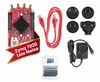
STEMlab 125-14Z7020 Low Noise is based on a STEMlab 125-14 Z7020 board that is populated with additional linear analog power for analog power supplies to reduce RF inputs and outputs noise and consequently increase ENOB. [See More]
- Output Interface: Universal Serial Bus; RS232; I2C, SPI, UART, WiFi, Ethernet
- Frequency Range: 1 to 6.25E7
- Form Factor: Bench top; Rack mount (optional feature); Handheld (optional feature); Computer Board
- Max Channels: 4
from Red Pitaya, d.o.o.
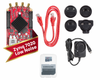
STEMlab 125-14Z7020 Low Noise is based on a STEMlab 125-14 Z7020 board that is populated with additional linear analog power for analog power supplies to reduce RF inputs and outputs noise and consequently increase ENOB. [See More]
- Output Interface: Universal Serial Bus; RS232; I2C, SPI, UART, WiFi, Ethernet
- Frequency Range: 1 to 6.25E7
- Form Factor: Bench top; Rack mount (optional feature); Handheld (optional feature); Computer Board
- Max Channels: 4