
Carbon Steel Precision Shafting
Last Updated: April 1, 2025
Description
Carbon steel precision shafting is a type of shafting made from carbon steel, which is a commercial iron containing carbon as an essential alloying constituent. This shafting is characterized by its precision in terms of roundness, straightness, and surface finish, making it suitable for applications requiring high accuracy and reliability. The shafts are typically available in various diameters and lengths, and they can be manufactured to meet specific customer requirements.
Working Principle
Carbon steel precision shafting operates by providing a hard, smooth, and straight surface that facilitates linear or rotary motion. The precision in manufacturing ensures that the shaft maintains a consistent diameter and straightness, which is crucial for minimizing friction and wear in mechanical systems. The hard surface of the shaft is achieved through processes such as hardening and grinding, which enhance its durability and performance. These shafts are useful because they improve the efficiency and lifespan of the systems they are integrated into by reducing maintenance needs and enhancing load capacity.
Applications
Carbon steel precision shafting is used in a wide range of applications, particularly where high precision and durability are required. Specific examples include:
- Linear Motion Systems: Used in machinery that requires precise linear movement, such as CNC machines and automated assembly lines.
- Rotary Motion Systems: Employed in applications like motors and gearboxes where rotational accuracy is critical.
- Bearing Applications: Utilized in the manufacturing of bearings where a hard surface is necessary for optimal ball contact and load distribution.
Advantages over other Precision Shafting
Carbon steel precision shafting offers several advantages over other types of precision shafting:
- Hardness and Strength: Carbon steel can be hardened to provide a robust surface that withstands wear and tear better than some other materials.
- Cost-Effectiveness: Compared to stainless steel, carbon steel is generally more affordable while still offering excellent performance in many applications.
- Versatility: The ability to add various alloys to carbon steel allows for customization of properties such as corrosion resistance and hardness, making it suitable for diverse applications.
Limitations
Despite its advantages, carbon steel precision shafting has some limitations:
- Corrosion Susceptibility: Carbon steel is prone to rust and corrosion if not properly coated or maintained, which can limit its use in environments with high moisture or corrosive substances.
- Ductility: High carbon steel, while strong, is less ductile, which can make it more susceptible to cracking under certain conditions.
Considerations
When selecting carbon steel precision shafting, several factors should be considered:
- Initial Costs: Carbon steel shafting is generally more cost-effective than other materials like stainless steel, but costs can vary based on the specific grade and additional treatments.
- Operating Expenses: Maintenance costs can be higher if the shafting is used in corrosive environments without adequate protection.
- Durability and Accuracy: The precision manufacturing process ensures high durability and accuracy, reducing the need for frequent replacements.
- Replacement and Maintenance Costs: While carbon steel shafting is durable, it may require coatings or treatments to prevent corrosion, which can add to maintenance costs over time.
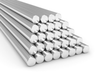
from Isotech, Inc.
Precision Hardened & Ground Carbon Steel [See More]
- Shaft Material: Carbon Steel
- Max. Available Length: 5994
- Diameter: 15.87
- Weight: 1.04
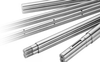
from NB Corporation of America
The NB Linear Shaft can be used in a wide range of applications as a mechanical component from straight shaft to spindle shaft. Benefits and Features At-a-Glance. NB has invested in advanced machining technology — including CNC lathes, cylindrical grinding machines, boring and milling... [See More]
- Shaft Material: Carbon Steel; Stainless Steel
- Max. Available Length: 6000
- Diameter: 150
- Weight: 93.4
from Stock Drive Products & Sterling Instrument - SDP/SI
Shafts are mechanical components, typically cylindrical in shape, used to transmit motion, torque, and/or power in any combination. They are also subject to lateral loads. These can be constant or fluctuating. The sizing of shafts, therefore, is usually determined as a function of... [See More]
- Shaft Material: Carbon Steel; C1060 Carbon Steel
- Max. Available Length: 1000
- Diameter: 10
- Hardness: Case Hardened (RC60-63)
from Stock Drive Products & Sterling Instrument - SDP/SI
Shafts are mechanical components, typically cylindrical in shape, used to transmit motion, torque, and/or power in any combination. They are also subject to lateral loads. These can be constant or fluctuating. The sizing of shafts, therefore, is usually determined as a function of... [See More]
- Shaft Material: Carbon Steel; AISI 1566 Carbon Steel
- Max. Available Length: 305
- Diameter: 38.1
- Hardness: Solid Case Hardened (Rc 60)