
Stainless Steel Precision Shafting
Last Updated: April 1, 2025
Description
Stainless Steel Precision Shafting is designed to provide a high degree of accuracy and reliability in various engineering applications. These shafts are manufactured to precise dimensions and tolerances, ensuring a consistent and smooth performance. They are typically made from stainless steel, which offers excellent corrosion resistance and durability, making them suitable for demanding environments.
Working Principle
Stainless Steel Precision Shafting operates by providing a smooth and straight surface for components to move along or rotate around. The precision in manufacturing ensures that the shaft maintains a consistent diameter and straightness, which is crucial for minimizing friction and wear in mechanical systems. The high-quality surface finish and material hardness contribute to the shaft's ability to support loads and maintain alignment, thereby enhancing the performance and lifespan of the system it is integrated into.
Applications
Stainless Steel Precision Shafting is used in a variety of specific applications, including:
- Linear Motion Systems: These shafts are integral to linear motion systems where precise movement is required, such as in CNC machines and automated assembly lines.
- Rotary Systems: They are used in rotary applications where components need to rotate smoothly and accurately, such as in motors and gearboxes.
- Medical Devices: Due to their corrosion resistance and precision, they are used in medical equipment that requires high reliability and hygiene standards.
Advantages over other Precision Shafting
Stainless Steel Precision Shafting offers several advantages over other types of precision shafting:
- Corrosion Resistance: Stainless steel provides superior resistance to corrosion, making it ideal for use in harsh environments or where exposure to moisture is a concern.
- Durability: The material's inherent strength and hardness contribute to a longer lifespan and reduced maintenance needs compared to softer materials.
- Versatility: Stainless steel shafts can be used with a variety of bearings, including polymer and plain-style bearings, which offer additional benefits like self-lubrication and enhanced corrosion resistance .
Limitations
Despite its advantages, Stainless Steel Precision Shafting has some limitations:
- Cost: Stainless steel can be more expensive than other materials, which may increase the initial cost of the shafting.
- Weight: Stainless steel is denser than some alternative materials, which can be a disadvantage in applications where weight is a critical factor.
Considerations
When selecting Stainless Steel Precision Shafting, several factors should be considered:
- Initial Costs: The higher cost of stainless steel may be offset by its durability and reduced maintenance needs over time.
- Operating Expense: The material's resistance to wear and corrosion can lower operating expenses by reducing the frequency of replacements and repairs.
- Durability and Accuracy: The precision manufacturing process ensures high accuracy and long-term durability, which are crucial for maintaining system performance.
- Replacement and Maintenance Costs: While the initial investment may be higher, the long-term savings in maintenance and replacement costs can be significant due to the material's longevity and reliability.
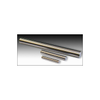
from Stock Drive Products & Sterling Instrument - SDP/SI
Shafts are mechanical components, typically cylindrical in shape, used to transmit motion, torque, and/or power in any combination. They are also subject to lateral loads. These can be constant or fluctuating. The sizing of shafts, therefore, is usually determined as a function of... [See More]
- Shaft Material: Stainless Steel; 420 Stainless Steel
- Max. Available Length: 254
- Diameter: 9.52
- Hardness: Case Hardened (Rc 52-56); Case Hardened
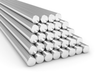
from Isotech, Inc.
Precision Hardened & Ground Stainless Steel [See More]
- Shaft Material: Stainless Steel
- Max. Available Length: 5994
- Diameter: 15.87
- Weight: 1.04
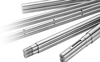
from NB Corporation of America
The NB Linear Shaft can be used in a wide range of applications as a mechanical component from straight shaft to spindle shaft. Benefits and Features At-a-Glance. NB has invested in advanced machining technology — including CNC lathes, cylindrical grinding machines, boring and milling... [See More]
- Shaft Material: Carbon Steel; Stainless Steel
- Max. Available Length: 6000
- Diameter: 150
- Weight: 93.4
from Stock Drive Products & Sterling Instrument - SDP/SI
Shafts are mechanical components, typically cylindrical in shape, used to transmit motion, torque, and/or power in any combination. They are also subject to lateral loads. These can be constant or fluctuating. The sizing of shafts, therefore, is usually determined as a function of... [See More]
- Shaft Material: Stainless Steel; 303 Stainless Steel
- Max. Available Length: 150
- Diameter: 10
- Hardness: Not Hardened

from Nook Industries, Inc.
For optimum performance, PowerTrax ™ ILBB Instrument Bearings should be matched with PowerTrax ™ HG “ISL ” instrument shafting. Material: 440C stainless steel. Hardness: Rc 55-60. Diameter Tolerance: .0001" for shafts thru 6" long. Finish: 2-4 microinch (rms). Straightness:... [See More]
- Shaft Material: Stainless Steel
- Diameter: 3.17
- Precision Grade: Precision Shaft
- Max. Available Length: 305

from W.M. Berg
Spur Gears are the most recognized style of gear. Spur Gears are used exclusively to transmit rotary motion between parallel shafts, while maintaining uniform speed and torque. The involute tooth form, being the simplest to generate, permits high manufacturing tolerances to be attained. Pitch: 12 to... [See More]
- Shaft Material: Stainless Steel

from Ondrives.US Corporation, formerly Rino Mechanical
Ondrives.US designs, engineers, and manufactures instrument quality, precision ground shafts. Our 303 stainless steel, nominal diameter shafts are available in inch and metric diameters and lengths up to 60". [See More]
- Shaft Material: Stainless Steel; 303, 316, 17-4PH, 12L14
- Additional Operations: Chamfered End

from W.M. Berg
Best choice of gearing when high drive reduction is required. Worm Wheels resemble spur gears with the addition of a throat cut into the O.D. of wheel. The throat permits the worm wheel to fully envelope the threads of the worm. Threads, not teeth are cut on the worm, and by adjusting the number of... [See More]
- Shaft Material: Stainless Steel