
Nut Mount Feedthroughs
Last Updated: April 1, 2025
Description
Nut mount feedthroughs are components designed to transmit signals, fluids, or mechanical motion through a barrier or wall. They are specifically mounted using a nut, which secures the feedthrough in place by threading onto the component through a hole in the barrier.
Working Principle
Nut mount feedthroughs operate by being inserted through a pre-drilled hole in a barrier, such as a chamber wall, and then secured with a nut. This mounting style ensures a stable and secure connection, allowing the feedthrough to effectively transmit the desired medium—be it electrical signals, fluids, or mechanical motion—across the barrier. The nut mount design is particularly useful for applications requiring a robust and reliable seal, as it provides a straightforward yet effective means of securing the feedthrough.
Applications
Nut mount feedthroughs are used in a variety of applications where a secure and reliable transmission through a barrier is necessary. Specific examples include vacuum systems where mechanical motion needs to be transmitted without compromising the vacuum seal, and in electrical systems where signals must pass through a shielded enclosure without interference.
Advantages over other Feedthroughs
One of the primary advantages of nut mount feedthroughs is their ease of installation and removal, which can be more straightforward compared to other mounting styles like flange mounts. This can be particularly beneficial in applications where frequent maintenance or reconfiguration is required. Additionally, the nut mount design can offer a more compact solution, which is advantageous in space-constrained environments.
Limitations
A limitation of nut mount feedthroughs is that they may not provide as robust a seal as flange-mounted feedthroughs in high-pressure or high-vacuum applications. The reliance on a single nut for securing the feedthrough can also mean that it is less suitable for environments subject to significant mechanical stress or vibration, which could potentially loosen the nut over time.
Considerations
When selecting nut mount feedthroughs, considerations should include the initial cost, which can vary depending on the materials and specifications required for the application. Operating expenses may be lower due to the ease of installation and maintenance, but durability and accuracy should be evaluated based on the specific environmental conditions they will be exposed to. Replacement and maintenance costs are generally manageable, but it is important to ensure that the nut remains securely fastened to prevent potential failures.
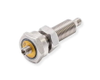
from Douglas Electrical Components
Coaxial feedthroughs are designed to transmit signals and data in vacuum and pressurized environments including vacuum chambers, control cabinets, and gloveboxes. Coaxial feedthroughs feature two conductors sharing a common axis. The inner conductor carries small signals and the outer conductor... [See More]
- Feedthrough Mount: Flange; Nut
- Feedthrough Type: Electrical

from Conax Technologies
This assembly consists of a stainless steel tubing swaged over bundled 24 AWG, solid, Teflon ® coated thermocouple grade wires and/or copper wires. The feedthrough is furnished with 24 inches of leadwire on each end. Longer wire lengths can be furnished as required. Features: NO EPOXY - NO... [See More]
- Feedthrough Mount: Nut
- Temperature Range: -80 to 120
- Feedthrough Type: Electrical

from Qnnect, formerly Hermetic Solutions Group
Withstanding high pressure alone is a challenge - one that becomes more complex when elevated temperatures are added to the mix. Increased exposure time to these hostile environments adds yet a further complication. Qnnect, formerly Hermetic Solutions Group patented hydrophobic diamond-like ceramic... [See More]
- Feedthrough Mount: Flange; Threaded; Nut
- Temperature Range: -65 to 300
- Feedthrough Type: Electrical
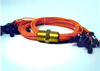
from Columbia Research Labs, Inc.
Fiber Optic Pressure Seals are designed to provide a safe, convenient, reliable method of exiting fiber optic data lines through a structure while preserving the integrity of either a pressure or vacuum environment. [See More]
- Feedthrough Mount: Nut
- Mounting Diameter: 1.38
- Feedthrough Type: Fiber Optic
- Temperature Range: 10 to 80
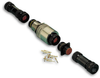
from OMEGA Engineering, Inc.
•. Thermocouple Alloy or Copper Pins. •. Fast Positive Connections. •. Fully Compatible with OMEGA ® "MTC" Series Connectors. •. 100% Inspected and Tested [See More]
- Feedthrough Mount: Nut
- Vacuum Rating: 1.00E-8
- Feedthrough Type: Pressure feedthrough
- Temperature Range: -40 to 120

from RAFI GmbH & Co. KG
The RAFIX 22 FS+ control component series is distinguished by its diversity and modularity. That results in almost unlimited combination and individualization options. Different actuating and indicator elements ensure ideal operation of your machine or device. A modern and variable design concept... [See More]
- Feedthrough Mount: Nut
- Mounting Diameter: 0.8780
- Feedthrough Type: Electrical
- Temperature Range: -25 to 70
from KENT Systems, LLC
Collection 1 shut-off bulkhead [See More]
- Feedthrough Mount: Flange; Nut
- Mounting Diameter: 0.6250
- Feedthrough Type: Fluid
- Vacuum Rating: 517