
Superficial Hardness Testers
Description
Superficial hardness testers are devices used to measure the hardness of materials by determining the resistance of the material to deformation. These testers are specifically designed to evaluate the hardness of thin materials or surface layers without affecting the underlying material.
Working Principle
Superficial hardness testers operate by applying a known load to an indenter, which is then pressed into the material's surface. The depth or size of the indentation is measured to determine the material's hardness. This method is particularly useful because it allows for the assessment of surface treatments, coatings, and thin materials without causing significant damage to the sample. The Rockwell test method, for example, measures the permanent depth of indentation produced by a force on an indenter, making it a widely used and accurate method for hardness testing .
Applications
Superficial hardness testers are used in a variety of applications, including testing the hardness of coatings such as paint, sealants, and adhesives. They are also employed in evaluating the hardness of thin films and surface layers, such as vapor deposits, CVD/PVD deposits, and plated layers .
Advantages over other Hardness Testers
One of the main advantages of superficial hardness testers is their ability to test very small-sized samples without extensive preparation, except for surface polishing. This makes them ideal for testing surface treatments and coatings where conventional tensile test pieces cannot be removed easily . Additionally, the Rockwell method is generally easier to perform and more accurate than other types of hardness testing, making it a preferred choice in many scenarios .
Limitations
Superficial hardness testers may not be suitable for all materials or conditions. For instance, they may not be effective on materials where the test metal structure or surface conditions introduce too much variation, or where the indentations would be too large for the application .
Considerations
When selecting a superficial hardness tester, several factors should be considered, including initial costs, operating expenses, and durability. The accuracy of the tester is crucial, as is the cost of replacement and maintenance. It's important to choose a tester that meets the specific needs of the application while considering the long-term costs associated with its use.

from Tinius Olsen, Inc.
The model Evotech 1010 combines today ’s load application technology with a top class depth measuring system. Rockwell, Superficial Rockwell & Brinell scales are part of the machine ’s capabilities. High accurate test results and fast operation make it the best in its class today. [See More]
- Test Method: Superficial
- Test Load: 1 to 250
- Test: Brinell; Rockwell

from ZwickRoell LP
Robust and versatile - the key characteristics of the DuraJet. Through electronic load application and a load range of 9.8 N to 2,450 N (1 kg to 250 kg), this hardness testing machine covers the complete Rockwell hardness range. But that's not all, this hardness tester can do even more: Plastics and... [See More]
- Test Method: Superficial; Micro; Macro
- Mounting: Handheld or Portable
- Test: Brinell; Rockwell; Vickers / Knoop; Super Rockwell, Plastics Testing, Carbon Testing
from Johnson and Allen, Ltd.
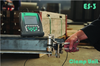
The ES3 (Equostat 3) is a hardness tester designed with thin and small test objects in mind. Hardness test results are negatively affected by thin and small volume materials unless they are compensated for. The ES3 achieves this by using Proceq's patented and pre-installed software package in... [See More]
- Test Method: Superficial
- Mounting: Handheld or Portable
- Test: Rockwell
- Test Load: 1.02 to 5.1

from Tinius Olsen, Inc.
The model Evotech 1310 is a new generation of hardness testing instrument with protruding nose design. This long nose design allows you to reach as far as 150mm inside a bore or just on flat material similar to any other Rockwell hardness tester. A twin scale Rockwell machine that also provides... [See More]
- Test Method: Superficial
- Test Load: 150
- Test: Brinell; Rockwell

from ZwickRoell LP
The ZHU/zwickiLine+ universal hardness testing machine is based on the zwickiLine+ materials testing machine. It can be used both for traditional hardness testing methods such as Rockwell, Vickers, Brinell and ball-indentation, and for the innovative instrumented indentation test method for... [See More]
- Test Method: Superficial
- Mounting: Fixtured or Permanent
- Test: Brinell; Rockwell; Vickers / Knoop; IIT
from Tinius Olsen, Inc.
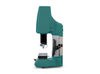
The model Evotech 1610 features Load cell, force feedback, closed loop system, fully automatic, servo motor driven. The test forces can range from 3kgf to 150kgf and can perform Rockwell, Superficial Rockwell and Brinell Hardness tests. System control is managed via a simple-to-use 6.5 ” color... [See More]
- Test Method: Superficial
- Test Load: 3
- Test: Brinell; Rockwell
from ZwickRoell LP
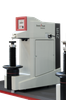
The various hardness testers in the Rockwell product group perform classical Rockwell methods (load: 60 - 150 kg), superficial Rockwell methods (load: 15 - 45 kg) and combinations of Rockwell and superficial Rockwell methods (load: 15 - 150 kg). [See More]
- Test Method: Superficial
- Mounting: Fixtured or Permanent
- Test: Rockwell; Superficial Rockwell

from Tinius Olsen, Inc.
The model Evotech 1620 features Load cell, force feedback, closed loop system, fully automatic, servo motor driven. The test forces can range from 3kgf to 150kgf and can perform Rockwell, Superficial Rockwell and Brinell Hardness tests. This fully integrated windows controller, SSD hard disk,... [See More]
- Test Method: Superficial
- Test Load: 3
- Test: Brinell; Rockwell