
Nanoindentation Hardness Testers
Description
Nanoindentation hardness testers are specialized instruments designed to measure the hardness of materials at the nanoscale. They achieve this by pressing a very small indenter into the surface of a material and recording the response. These testers are capable of providing detailed information about the mechanical properties of materials, such as hardness and elastic modulus, by analyzing the indentation depth and the applied force.
Working Principle
Nanoindentation hardness testers operate by using a three-sided pyramid diamond indenter, which is loaded onto the sample surface to a specified maximum force. The indenter is then held at this force for a brief period before being unloaded. Throughout this process, the indentation depth is measured using a capacitive displacement sensor. The hardness is calculated as a function of the indentation depth, and the elasticity is determined from the slope of the unloading curve, which is proportional to the material's stiffness .
Applications
Nanoindentation is particularly useful in applications where it is critical to measure the hardness of coatings without the influence of the substrate. For example, it is used to characterize the hardness of coatings on weight-bearing medical implants, where traditional methods might not provide accurate results due to the composite nature of the coating and substrate .
Advantages over other Hardness Testers
One of the main advantages of nanoindentation testers is their ability to measure hardness at very low loads, which allows for the assessment of thin films and coatings without interference from the substrate. This is in contrast to traditional Vickers testers, which often produce a composite hardness value due to higher test loads. Nanoindentation testers also eliminate user error by automatically calculating hardness from online monitoring of penetration depth .
Limitations
A specific limitation of nanoindentation is the size dependence of the results on plastic deformation, which is not accounted for in conventional local plasticity theories. This size effect can complicate the interpretation of results and requires the use of non-local theories to model accurately .
Considerations
When considering the use of nanoindentation hardness testers, several factors should be taken into account. Initial costs can be high due to the precision and technology involved. Operating expenses may include maintenance of the sensitive equipment and calibration to ensure accuracy. Durability is generally high, but the precision components require careful handling and regular maintenance to prevent wear and ensure consistent performance. Accuracy is a significant advantage of these testers, as they provide detailed measurements that are less prone to user error compared to traditional methods .
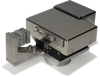
from ZwickRoell LP
The ZHN/SEM nano indenter for installation in a scanning electron microscope (SEM) enables micromechanical experiments to be performed while observing the specimen at maximum resolution. It possesses the largest measuring range currently available, with a maximum displacement measurement of 200 µm... [See More]
- Test: Nano
- Mounting: Fixtured or Permanent

from ZwickRoell LP
The ZHN nano indenter is used for comprehensive, mechanical characterization of thin layers or small surface areas with the necessary force and travel resolution. This includes measuring indentation hardness, indentation modulus, and Martens hardness to ISO 14577 (instrumented indentation testing). [See More]
- Test: Nano
- Mounting: Fixtured or Permanent