
Dynamic Rebound Hardness Testers
Description
Dynamic Rebound Hardness Testers are devices used to measure the hardness of a material by assessing the rebound height or velocity change of a hammer or diamond-tipped probe after it impacts the material's surface. The rebound height increases with the material's hardness, providing a hardness reading that is less destructive than conventional static indentation tests.
Working Principle
Dynamic Rebound Hardness Testers operate based on the Leeb principle, where a spring-loaded impact body is thrust onto the test surface, causing it to rebound. The speed of both the initial thrust and the rebound is measured in a non-contact mode. This measurement is then calculated as a Leeb hardness value and can be automatically converted to other hardness scales such as Rockwell, Brinell, Vickers, and Shore. These testers are particularly useful because they provide quick, easy, and accurate results, making them ideal for portable hardness testing.
Applications
Dynamic Rebound Hardness Testers are applied in situations where minimal surface indentation is crucial. For example, they are used on forged rolls for printing, where even a small indent cannot be tolerated. They are also functional for testing structural steel, heat-treated steel, case-hardened materials, non-ferrous metals, and large samples.
Advantages over other Hardness Testers
Dynamic Rebound Hardness Testers offer several advantages over traditional hardness testers. They are less destructive, making them suitable for applications where surface integrity is critical. They provide quick results, with an average test time of approximately 10 seconds for five tests, compared to other methods that may take longer. Additionally, they offer automatic test procedures and direct hardness value readings, which can be converted across different hardness scales.
Limitations
One limitation of Dynamic Rebound Hardness Testers is their restriction on small and thin samples. They are not ideal for testing small samples unless proper scales are used, and they are restricted in testing thin samples. Additionally, while they are functional on curved or round surfaces, there may be limitations in accuracy compared to other methods.
Considerations
When considering Dynamic Rebound Hardness Testers, it is important to evaluate initial costs, operating expenses, and maintenance requirements. These testers are generally portable and provide quick results, which can reduce operating expenses. However, the accuracy of the results may vary depending on the surface conditions and sample size. Durability and maintenance costs should also be considered, as regular calibration and potential replacement of impact bodies may be necessary to ensure consistent performance.
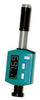
from Johnson and Allen, Ltd.
Johnson and Allen supply Proceq's EQ1000-B2 (Proceq Bambino) and EQ1000-P2 (Proceq Piccolo) portable pen type hardness testers. These instruments are ideal for quick verification of material hardness. For customers requiring hardness results from components under 5kg and with sections thinner than... [See More]
- Test: Brinell; Dynamic Rebound; Rockwell; Vickers / Knoop
- Mounting: Handheld or Portable (optional feature); Fixtured or Permanent (optional feature)
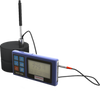
from Foundrax Engineering Products, Ltd.
Accurate, reliable, and portable, the DHT100 Leeb hardness tester uses the rebound principle to calculate the hardness value and conforms to ASTM A 956. General Specifications: Technique. Dynamic Leeb Hardness Test. Hardness Scales. HL with conversion to HRC, HRB, HV, HB, HS. Materials. Steel and... [See More]
- Test: Dynamic Rebound
- Mounting: Handheld or Portable