
Hardened Steel Worms and Worm Gears
Description
Hardened steel worms and worm gears are mechanical components used in gear systems to transmit motion and power between non-parallel shafts. The worm is a helical threaded shaft, while the worm gear is a cylindrical gear that meshes with the worm. These components are specifically designed to handle high torque and provide a significant reduction in speed.
Working Principle
The working principle of hardened steel worms and worm gears involves the meshing of the worm's helical threads with the teeth of the worm gear. This interaction reduces the rotational speed of the worm gear relative to the worm, achieving a high reduction ratio. The unique design of the worm gear system allows for a compact right-angle configuration, making it ideal for applications where space is limited. Additionally, the self-locking feature of worm gears prevents reverse driving, which is useful for maintaining the position of loads without additional braking mechanisms.
Applications
Hardened steel worms and worm gears are widely used in various industrial and mechanical applications. They are particularly suitable for scenarios requiring high torque output and low-speed rotation. Specific examples include lifting heavy loads in material handling equipment, driving conveyor systems in manufacturing plants, and operating rotary tables in machining centers.
Advantages over other Worms and Worm Gears
Hardened steel worms and worm gears offer several advantages over other types of worm gear systems. They provide a high reduction ratio, which is beneficial for applications requiring significant torque. Their compact design allows for efficient use of space, and the self-locking capability enhances safety by preventing reverse motion. Additionally, these gears are known for their quiet operation, making them suitable for environments where noise reduction is important.
Limitations
Despite their advantages, hardened steel worms and worm gears have some limitations. They tend to have lower mechanical efficiency compared to other gear types, which can result in higher energy consumption. The non-reversible nature of the worm gear system can also be a drawback in applications where bidirectional movement is required. Furthermore, the high bearing loads associated with worm gears can lead to increased wear and maintenance requirements.
Considerations
When considering the use of hardened steel worms and worm gears, several factors should be taken into account. Initial costs may be higher due to the specialized materials and manufacturing processes involved. Operating expenses can also be significant, particularly if the system's efficiency is not optimized. However, the durability of hardened steel components can offset some of these costs by reducing the frequency of replacements. Maintenance costs should be considered, as accessibility for maintenance can be challenging due to the compact design. Ensuring proper lubrication is crucial to minimize wear and extend the lifespan of the gear system.
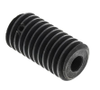
from RS Components, Ltd.
RS PRO SWB08/1R Worm Gear [See More]
- Material: Hardened; Steel
- Design: Metric
- Gear Type: Worm
- PD: 14

from Renold Canada
Holroyd Tooth Form. The Holroyd Toothform corresponds to the recommendations of British Standard 721 but, in addition, has an exclusive feature which consists principally of important modifications to the worm thread and wheel tooth. These alterations confer additional valuable properties to gear... [See More]
- Material: Hardened
- Design: English; Metric
- Gear Type: Worm
- OD: 88