
Fluoroelastomer (FKM - Viton®, Fluorel®, etc.) Exclusion Seals
Last Updated: February 12, 2025
Description
Fluoroelastomer (FKM) exclusion seals are specialized sealing components made from fluorocarbon-based elastomers. These seals are designed to provide a robust barrier against the ingress of fluids and gases, maintaining the integrity of the systems they protect. They are known for their exceptional resistance to high temperatures, chemicals, and environmental factors, ensuring reliable performance in demanding conditions.
Working Principle
FKM exclusion seals operate by utilizing the unique properties of fluorocarbon elastomers, which include high chemical inertness and thermal stability. The seals maintain their structural integrity and sealing capabilities even when exposed to aggressive substances and extreme temperatures. This makes them particularly useful in environments where other materials might degrade or fail. The seals' ability to resist swelling and volume changes when in contact with fluids ensures a consistent and reliable seal over time.
Applications
FKM exclusion seals are employed in a variety of industries due to their versatile properties. In the automotive sector, they are used in fuel systems and engine oil systems, where they must withstand a wide range of temperatures and exposure to fuels and lubricants . In the aerospace industry, these seals are critical for maintaining system integrity under extreme conditions . Additionally, they are utilized in chemical processing and oil and gas industries, where resistance to aggressive chemicals and high temperatures is essential .
Advantages over other Exclusion Seals
Compared to other exclusion seals, FKM seals offer superior thermal and chemical resistance, making them ideal for applications involving high temperatures and aggressive media . Their low gas permeability and excellent mechanical properties provide an edge in maintaining long-term sealing performance . Furthermore, FKM seals exhibit minimal swelling and volume change, ensuring dimensional stability and reducing the risk of seal failure .
Limitations
Despite their advantages, FKM exclusion seals have limitations. They are not suitable for use with certain chemicals, such as amines, esters with low molecular weight, and hot hydrofluoric acids . Additionally, they may not perform well in alkaline environments due to the potential for dehydrofluorination, which can compromise the seal's integrity .
Considerations
When considering FKM exclusion seals, it is important to evaluate the initial costs, which can be higher than other sealing materials due to their specialized properties. However, their durability and resistance to harsh conditions can lead to lower operating expenses and maintenance costs over time. The seals' long service life and reliability in extreme environments can offset the initial investment, making them a cost-effective choice for critical applications .

from Precision Polymer Engineering Ltd.
Wiper seals are typically used in conjunction with other sealing elements. A wiper seals primary function is to provide a physical barrier to limit the ingress of moisture, dirt and other contaminants into the primary sealing system, preventing damage to hardware and seals. Wiper seals require a... [See More]
- Sealing Element or Lip Material (ASTM Abbreviation): Fluoroelastomer (FKM) Nitrile (NBR) (optional feature) Highly Saturated Nitrile (HNBR) (optional feature)
- Seal Construction: Rubber / Polymer
- Seal Type: Wiper; Scraper

from FTL Technology
Wiper seals or scrapers are axial seals which maintain sealing contact with the piston rod, while allowing the reciprocating motion of the rod to pass through the inner bore of the seal. Installed in the sealing configurations of pneumatic cylinders to scrape dirt, foreign particles, chips or... [See More]
- Sealing Element or Lip Material (ASTM Abbreviation): Fluoroelastomer (FKM) Nitrile (NBR) Polytetrafluoroethylene (PTFE) Polyurethane
- Speed: 197
- Seal Type: Wiper
- Pressure: 14.5

from Trelleborg Sealing Solutions Germany GmbH
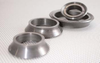
The double-acting Turcon ® AQ Seal ® 5 incorporates an elastomer Quad-Ring ® and is energized by two O-Rings to improve sealing behavior. It demonstrates excellent results in applications requiring media separation, e.g fluid/fluid or fluid/gas. Works well in higher pressure applications... [See More]
- Sealing Element or Lip Material (ASTM Abbreviation): Fluoroelastomer (FKM) Nitrile (NBR) Polytetrafluoroethylene (PTFE)
- Shaft I.D. or Seal O.D.: 1.57 to 23.62
- Design Units: Metric
- Axial X-section: 0.0701 to 0.2098
from Palmetto, Inc.
The Palmetto CHEKSEAL ™ is a self-adjusting, shaft-mounted, axial lip seal designed as an exclusion device, deflecting and excluding contaminants such as dust, dirt, mud and water. The CHEKSEAL also functions as a “retainer ” seal, preventing the loss of viscous lubricants such as... [See More]
- Sealing Element or Lip Material (ASTM Abbreviation): Fluoroelastomer (FKM) Nitrile (NBR); EPR; Fluoraz

from SKF/North America
Whenever a shaft rotates, it needs a bearing arrangement for smooth and effective operation. Wherever there is a bearing, you will always find a seal helping it to reach its maximum service life and reliability. The most common types of seals used in bearing arrangements, are radial shaft seals for... [See More]
- Sealing Element or Lip Material (ASTM Abbreviation): Fluoroelastomer (FKM) Nitrile (NBR)
- Seal Construction: Single Metal Case
- Seal Type: V-ring
- Design Units: Metric

from SKF/Global
For added protection in extremely contaminated applications, in addition to our standard V-ring; SKF also offers the type MVR. The MVR seal also seals axially and functions by combining positive lip contact with centrifugal slinging action. However, the MVR seal is different in that the rubber... [See More]
- Sealing Element or Lip Material (ASTM Abbreviation): Fluoroelastomer (FKM) Nitrile (NBR)
- Seal Construction: Single Metal Case
- Seal Type: V-ring
- Design Units: Metric
from Trelleborg Sealing Solutions Germany GmbH
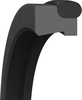
The Turcon ® Excluder ® 2 is a double-acting O-Ring energized scraper that has two functions: a) to scrape contaminants from the retracting piston rod to prevent soiling of the system and b) to hold back the residual oil film on the extending piston rod on the medium side. The O-Ring... [See More]
- Sealing Element or Lip Material (ASTM Abbreviation): Fluoroelastomer (FKM) Nitrile (NBR) Polytetrafluoroethylene (PTFE)
- Design Units: Metric
- Seal Type: Scraper
- Shaft I.D. or Seal O.D.: 0.3937 to 9.45

from SKF/Global
SKF's family of large diameter seals has been joined by the CR HDL seal, which provides improved sealing for large bearings in applications where it is critical to retain bearing lubricants and exclude contaminants. As well as providing superior sealing performance, the HDL seal compensates for... [See More]
- Sealing Element or Lip Material (ASTM Abbreviation): Fluoroelastomer (FKM) Nitrile (NBR)
- Seal Construction: Single Metal Case
- Seal Type: V-ring
- Design Units: Metric

from Trelleborg Sealing Solutions Germany GmbH
Double-acting O-Ring energized scraper with two O-Rings that has two functions: a) to scrape contaminants from the retracting piston rod to prevent soiling of the system and b) to hold back the residual oil film on the extending piston rod on the medium side. Excluder F is recommended for use in... [See More]
- Sealing Element or Lip Material (ASTM Abbreviation): Fluoroelastomer (FKM) Nitrile (NBR) Polytetrafluoroethylene (PTFE)
- Design Units: Metric
- Seal Type: Scraper
- Shaft I.D. or Seal O.D.: 0.3150 to 7.83