
Horizontal Variable Transmissions
Description
Horizontal Variable Transmissions are systems designed to transmit power from a driving source to a driven component. They are characterized by their ability to adjust the speed and torque output continuously, providing a range of speed ratios without interruption. These transmissions typically feature a horizontal shaft orientation, which can be configured in various ways, such as in-line, offset parallel, or right angle, depending on the specific design and application requirements.
Working Principle
Horizontal Variable Transmissions operate by varying the speed and torque output through a continuously adjustable mechanism. This allows for smooth transitions between different speed ratios, unlike traditional transmissions that offer only a few discrete settings. The ability to continuously vary the output makes these transmissions particularly useful in applications where precise control over speed and torque is necessary. The horizontal orientation of the shaft can influence the lubrication requirements and overall design of the transmission system.
Applications
Horizontal Variable Transmissions are used in a variety of industrial and mechanical applications. For example, they can be found in machinery that requires precise speed control, such as conveyor systems, where the ability to adjust speed smoothly is crucial for maintaining consistent product flow. They are also used in applications like testing equipment, where precise control over movement and force is necessary to ensure accurate results.
Advantages over other Variable Transmissions
One of the key advantages of Horizontal Variable Transmissions is their ability to provide a continuous range of speed ratios, which allows for more precise control compared to transmissions with fixed gear ratios. This can lead to improved efficiency and performance in applications where variable speed is essential. Additionally, the horizontal orientation can offer design flexibility, making it easier to integrate into existing systems without significant modifications.
Limitations
Despite their advantages, Horizontal Variable Transmissions can have limitations. The complexity of their design can lead to higher initial costs compared to simpler transmission systems. Additionally, the need for precise components and mechanisms can result in increased maintenance requirements and potential for wear over time, especially in demanding applications.
Considerations
When considering the implementation of Horizontal Variable Transmissions, several factors should be taken into account. Initial costs can be higher due to the complexity of the system, but this may be offset by the benefits of improved performance and efficiency. Operating expenses should also be considered, as the need for regular maintenance and potential replacement of components can impact long-term costs. Durability and accuracy are critical factors, especially in applications where precise control is necessary. Finally, the costs associated with replacement and maintenance should be evaluated to ensure that the system remains cost-effective over its operational life.
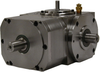
from Conic Systems
Conic's RA is a patented speed adjusting and phase shifting differential that replaces right angle, planetary differential gearboxes. It combines zero-backlash harmonic gearing with a precision spiral bevel, right angle gearbox. It is available in 1:1 and 2:1 reduction ratios with reversing and... [See More]
- Output Shaft Position: Horizontal; VerticalUp; VerticalDown
- Shaft Orientation: RightAngle
- Drive Type: Gear Drives / Differentials
- Mounting: Base; Flange
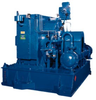
from Voith Turbo Inc.
Step-down gear for low-speed driven machines. The coupling is fitted with a helical reduction gear on the output side. By adding a hydrodynamic brake (optional) with a appropriate braking torque characteristic, the heavy masses of the driven machine can be rapidly decelerated. Benefits: Robust... [See More]
- Output Shaft Position: Horizontal
- Shaft Orientation: Offset Parallel
- Drive Type: Gear Drives / Differentials
- Mounting: Base

from Durst
Torque converter driven transmission. Single or 2-speed. Solenoid operated control valve. Drop-in replacement for C6 transmissions. Important safety features added [See More]
- Output Shaft Position: Horizontal
- Speed Variation: 1.0 to 1.5
- Drive Type: Hydraulic (optional feature)
- Output Torque: 4800

from Conic Systems
The Conic SM is a 1:1 shaft mount harmonic differential for precision rotary positioning and speed trimming. It can replace planetary gearboxes and helical gearing for offers 360 ° continuous adjustment a features a low backlash back-to-back harmonic gear set. We offer standard units but can... [See More]
- Output Shaft Position: Horizontal
- Shaft Orientation: In-line
- Drive Type: Gear Drives / Differentials
- Mounting: Shaft Mount
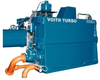
from Voith Turbo Inc.
The coupling is direct driven and adapted to the required speed of the driven machine by the step-up gear located at the output side of the coupling. Suitable for high outputs at extremely high speeds. Benefits: High powers at very high speeds. High gear ratio. Design to API Standard possible. [See More]
- Output Shaft Position: Horizontal
- Shaft Orientation: Offset Parallel
- Drive Type: Gear Drives / Differentials
- Mounting: Base
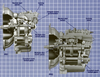
from Durst
On-the-go shifting. Standard and optional valve bodies provide controls tailored to customers application requirements. Available in Single Speed, 2-Speed, and optional 4-Speed. Available in multiple ratios and configurations [See More]
- Output Shaft Position: Horizontal
- Speed Variation: 1.0 to 2.5
- Drive Type: Hydraulic (optional feature); Mechanical
- Shaft Speed: 3000
from Voith Turbo Inc.
A step up gear is integrated both at the input and the output side. The coupling is suitable for particularly high output speeds. Benefits: Very high output speeds. High output at high speeds. High gear ratio. API designs available [See More]
- Output Shaft Position: Horizontal
- Shaft Orientation: Offset Parallel
- Drive Type: Gear Drives / Differentials
- Mounting: Base
from Durst
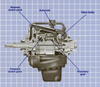
Four speed transmission option. On-the-go shifting. Standard and optional valve bodies provide controls tailored to customers application requirements. In-line configuration offers design flexibility [See More]
- Output Shaft Position: Horizontal
- Shaft Orientation: In-line
- Drive Type: Hydraulic (optional feature); Mechanical
- Speed Variation: -1.0 to 1.0

from Voith Turbo Inc.
A combination of a high-performance gearbox and a variable-speed coupling with high power density; step-up gearing. Modular design; functionally associated components are designed as modules and have standardised interfaces for other modules. Benefits: Increased technical flexibility. Improved... [See More]
- Output Shaft Position: Horizontal
- Shaft Orientation: Offset Parallel
- Drive Type: Gear Drives / Differentials
- Mounting: Base

from Voith Turbo Inc.
Type RW consists of the following components: hydrodynamic variable-speed coupling with lockup clutch, hydrodynamic torque converter, hydrodynamic brake and superimposing planetary gear Owing to the starting and control characteristics of the vrible-speed coupling, type RW is used when a... [See More]
- Output Shaft Position: Horizontal
- Shaft Orientation: In-line
- Drive Type: Gear Drives / Differentials
- Mounting: Base

from Voith Turbo Inc.
The most compact type of the variable planetary gear Vorecon consists of the main components hydrodynamic torque converter, fixed planetary gear and revolving planetary gear. By adjusting the torque converter guide vanes, the speed of the driven machine can be controlled precisely and dynamically. [See More]
- Output Shaft Position: Horizontal
- Shaft Orientation: In-line
- Drive Type: Gear Drives / Differentials
- Mounting: Base