
Voltage Excitation LVDT and RVDT Signal Conditioners
Last Updated: January 16, 2025 Reviewed by: Jon Lowy, consulting engineer
Description
Voltage Excitation LVDT (Linear Variable Differential Transformer) and RVDT (Rotary Variable Differential Transformer) Signal Conditioners are devices designed to process the signals from LVDT and RVDT sensors. These conditioners convert the raw output from the sensors into a more usable form, typically a voltage or current signal, that can be easily interpreted by other systems or devices. They often include features such as signal filtering, amplification, and conversion to digital formats for further processing or analysis.
Working Principle
The working principle of LVDT and RVDT signal conditioners involves exciting the primary coil of the sensor with an AC signal and measuring the output voltage from the secondary coils. As the core of the LVDT or RVDT moves, the coupling between the primary and secondary coils changes, altering the output voltage. The signal conditioner processes this output to determine the position of the core, which is then converted into a signal that can be used by external controllers or systems. This process is crucial for accurate position measurement in various applications, as it allows for precise monitoring and control of mechanical movements.
Applications
LVDT and RVDT signal conditioners are used in a wide range of applications. For example, they are employed in hydraulic systems to control valves and in aircraft to manage control surfaces. They are also used in production lines for automatic gauging, quality sorting, and go/no-go applications. These devices are particularly valuable in environments where robust and frictionless position measurement is required, such as in civil, mechanical, chemical, and production engineering practices.
Advantages over other LVDT and RVDT Signal Conditioners
One of the advantages of using voltage excitation LVDT and RVDT signal conditioners is their ability to provide precise and reliable position measurements in harsh environmental conditions. The absence of sliding contacts in LVDTs and RVDTs contributes to a longer operating life compared to other types of position sensors, such as linear potentiometers. Additionally, some signal conditioners offer programmable and networkable features, allowing for easy integration and control within larger systems.
Limitations
A specific limitation of LVDT and RVDT signal conditioners is the displacement range of the core, which must be maintained to ensure high linearity. This can be a constraint in applications requiring large displacement measurements. Additionally, while these devices are rugged and have a high mean time between failures (MTBF), they may still require careful handling and installation to avoid damage to the coils or core.
Considerations
When considering the use of voltage excitation LVDT and RVDT signal conditioners, it is important to evaluate factors such as initial costs, operating expenses, and maintenance requirements. These devices can have varying costs depending on their specifications and features. Operating expenses may include power consumption and the need for periodic calibration to maintain accuracy. Durability is generally high, with some devices offering MTBFs of up to 3 million hours. However, replacement and maintenance costs should be considered, especially in applications with high wear and tear or extreme environmental conditions.

from Dataforth Corporation
Each DSCA43 general purpose input module provides a single channel of transducer input which is filtered, isolated, amplified, and converted to a high-level voltage output. Signal filtering is accomplished with a five-pole filter which is optimized for step response. An anti-aliasing pole is located... [See More]
- Excitation: Voltage
- Analog Channels: 1
- Form Factor: DIN Rail
- Differential Channels: Yes
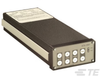
from TE Connectivity
Body Features. Signal Conditioning - LVDT/RVDT Weight (G) : 950. Weight (OZ) : 33.51. Electrical Characteristics. Excitation Voltage (VRMS) : .5, 3.5. Line Power Voltage Requirements (VAC) : 198 - 242, 103.5 - 126.5. Signal Conditioning - LVDT/RVDT Output Type (VDC)... [See More]
- Excitation: Voltage
- Analog Channels: 1

from Dataforth Corporation
Each SCM5B43 general purpose input module provides a single channel of transducer input which is filtered, isolated, scaled, and converted to a high-level analog voltage output. This voltage output is logic switch controlled, which allows these modules to share a common analog bus without the... [See More]
- Excitation: Voltage; Current
- Analog Channels: 1
- Form Factor: Rack Mount; DIN Rail
- Differential Channels: Yes
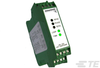
from TE Connectivity
Electrical Characteristics. Excitation Voltage (VRMS) : 3, 1. Voltage Requirements (VDC) : 18 - 30, 10 - 18. Mechanical Attachment. Sensor Mount Type : Standard DIN-3 Rail Mount. Operation/Application. Output Signal Details : 4 - 20 mA. Other. Transducer Type... [See More]
- Excitation: Voltage
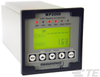
from TE Connectivity
Electrical Characteristics. Excitation Voltage (VRMS) : 3, 1. Voltage Requirements (VAC) : 100 - 240. Industry Standards. Digital Output : RS-232. Mechanical Attachment. Sensor Mount Type : 1/4 DIN Panel Mount. Other. Transducer Type : LVDT or RVDT with 5 or 6... [See More]
- Excitation: Voltage
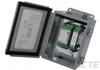
from TE Connectivity
Body Features. Product Weight : 4.04 KG [8.907 LB ]. Electrical Characteristics. Excitation Voltage (VRMS) : 1, 3. Voltage Requirements (VAC) : 85 - 264. Mechanical Attachment. Sensor Mount Type : Bulkhead Flange Mount. [See More]
- Excitation: Voltage
from TE Connectivity
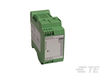
Electrical Characteristics. Excitation Voltage (VRMS) : 3, 1. Voltage Requirements (VAC) : 100 - 240. Industry Standards. Digital Output : RS-232. Mechanical Attachment. Sensor Mount Type : 1/4 DIN Panel Mount. Other. Transducer Type : LVDT or RVDT with 5 or 6... [See More]
- Excitation: Voltage
from TE Connectivity
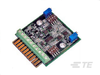
Electrical Characteristics. Excitation Voltage (VRMS) : 3. Voltage Requirements (VDC) : -12 - 12, -15 - 15. Mechanical Attachment. Sensor Mount Type : Printed Circuit Board Edge or Terminal Block. Other. Transducer Type : LVDT or RVDT with 5 or 6 wires. Product Type... [See More]
- Excitation: Voltage
from Macro Sensors
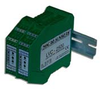
The Macro Sensors LVC-2500 is a single channel signal conditioner that operates on 10-30 Volts DC power to support standard LVDT, RVDT, and VRT half-bridge sensors. Designed expressly for use in 24 Volt systems with PLCs and mini-PLCs, or in 12 Volt mobile and vehicular testing systems, it offers... [See More]
- Excitation: Voltage
- Analog Channels: 1
- Form Factor: DIN Rail
- AC Voltage: 55mV to 5.5V

from OMEGA Engineering, Inc.
The LDX-2 linear displacement transmitter is a two-wire, 4 to 20 mA conditioner for ac LVDT transducers. It is designed for use where long transmission distances are required before the signal can interface with a controller or meter. A feature of two-wire operation is its low susceptibility to... [See More]
- Excitation: Voltage
- Inputs: L/RVDT; Transducer
- Form Factor: DIN Rail
- User Interface: None
from Electro Standards Laboratories
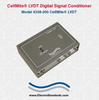
The CellMite ® Model 4338-200 Dual Channel LVDT digital signal conditioner connects directly to two standard AC LVDT (Linear Variable Differential Transformer) transducers and simultaneously generates a serial output for connection to a PC and a +/-10V analog output. The CellMite 4338-200 LVDT... [See More]
- Excitation: Voltage
- Analog Channels: 1
- Form Factor: Stand-alone
- Resolution: 24
from Macro Sensors
- Excitation: Voltage
- Analog Channels: 1
- Form Factor: DIN Rail
- DC Voltage: 15-30V

from OMEGA Engineering, Inc.
The LDX-4 is a dc powered signal conditioning amplifier and power supply for ac LVDT's. Its compact, rugged case can withstand industrial installations and protect laboratory grade electronics. Complete zero and span adjustments allow the LDX-4 to be used with any LVDT with an output between 45 and... [See More]
- Excitation: Voltage; Current
- User Interface: None
- Form Factor: Stand-alone

from Electro Standards Laboratories
The CellMite ® Model 4331-200 connects directly to two standard AC LVDT (Linear Variable Differential Transformer) transducers and simultaneously generates a serial output for connection to a PC and a +/-10V analog output. The CellMite ® LVDT can be operated with a computer or simply setup... [See More]
- Excitation: Voltage
- Analog Channels: 1
- Form Factor: PC Board
- Resolution: 24

from OMEGA Engineering, Inc.
The LDX-D is a DC-powered conditioning module that can accept a wide range of analog inductive transducer types owing to its wide input gain. The signal polarity, span, and offset are adjustable. Output is selectable: ±10 Vdc voltage or ±20 mA current. The housing is a standard DIN... [See More]
- Excitation: Voltage
- DC Voltage: 55-5000 mV
- Form Factor: DIN Rail
- User Interface: None

from Electro Standards Laboratories
The CellMite ® Model 4338 connects directly to a standard AC LVDT (Linear Variable Differential Transformer) transducer and simultaneously generates a serial output for connection to a PC and a +/-10V analog output. The M4338 LVDT can be operated with a computer or simply set up by a computer... [See More]
- Excitation: Voltage
- Analog Channels: 1
- Form Factor: Stand-alone
- Resolution: 24

from Electro Standards Laboratories
The CellMite ® 4336 Quad AC/DC is a 4-channel intelligent digital signal conditioner that connects directly to two AC LVDT transducers and two DC strain gage force transducers and provides direct digital data input into the serial port of a standard PC. Precision AC sine wave excitation voltages... [See More]
- Excitation: Voltage
- Analog Channels: 1
- Form Factor: Stand-alone
- Resolution: 24