
SOIC IC Signal Generators
Description
SOIC IC Signal Generators are integrated circuits designed to produce various waveforms such as sine, square, ramp, and triangle at desired frequencies. These devices are versatile and can be used to generate precise and repeatable test signals, which are essential for validating and calibrating circuits.
Working Principle
SOIC IC Signal Generators function by utilizing internal circuits to produce different waveforms. They often include a combination of oscillators and waveform synthesizers to generate signals across a wide frequency range. The output frequency can be controlled with high precision, and the duty cycle can be varied by applying a control signal. These generators are useful because they provide a reliable source of test signals, which are crucial for testing and aligning receivers and transmitters, as well as for producing alternating current of desired frequency and amplitude.
Applications
SOIC IC Signal Generators are used in a variety of applications, including:
- Testing and troubleshooting electronic circuits by providing controlled test signals.
- Performing stimulus-response testing to understand circuit behavior under different conditions.
- Injecting faults or anomalies into systems to identify potential weaknesses and improve robustness.
Advantages over other IC Signal Generators
One advantage of SOIC IC Signal Generators is their ability to produce a wide range of waveforms with high precision. They offer flexibility in waveform generation, allowing for the selection of different waveforms through select pins. This versatility makes them suitable for a broad range of testing and alignment tasks.
Limitations
Specific limitations of SOIC IC Signal Generators include potential constraints on frequency range and resolution, which may not meet the requirements for all applications. Additionally, the complexity of the internal circuitry can lead to higher initial costs compared to simpler signal generators.
Considerations
When considering SOIC IC Signal Generators, it is important to evaluate factors such as initial costs, operating expenses, and durability. These devices may have higher initial costs due to their complex design and capabilities. Operating expenses can vary based on the frequency of use and maintenance requirements. Durability and accuracy are critical, as these factors influence the reliability of the generated signals. Replacement and maintenance costs should also be considered, as they can impact the overall cost of ownership.
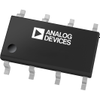
from DigiKey
Pulse Width Modulator (PWM) IC 100kHz 1 Output 8-SOIC [See More]
- Package Type: Surface Mount; SOIC; "8-SOIC (0.154"", 3.90mm Width)"
- Frequency: 0.1000
- Supply Voltage: 2.7 to 5.5
- Operating Temperature: -40 to 85
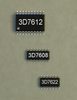
from Data Delay Devices, Inc.
FEATURES. • All-silicon, low-power CMOS technology. • TTL/CMOS compatible inputs and outputs. • Vapor phase, IR and wave solderable. • Programmable via latched parallel interface. • Increment range: 0.25ns through 800us. • Pulse width tolerance: 1% (See Table 1). •... [See More]
- Package Type: SOIC
- Supply Voltage: -0.3000 to 7
- Bus Interface: CMOS; Parallel; TTL
- Operating Temperature: -40 to 85