
Surface Mount Technology (SMT) Supercapacitors
Last Updated: February 12, 2025
Description
Surface Mount Technology (SMT) supercapacitors are electronic components designed to be mounted directly onto the surface of printed circuit boards (PCBs). They are compact, efficient devices that store and release energy quickly, making them suitable for various electronic applications. SMT supercapacitors are known for their ability to handle high-power pulses and provide energy storage in a small form factor.
Working Principle
SMT supercapacitors operate by creating a very thin double layer of charge between two plates. These plates have a large surface area and are made from porous materials soaked in an electrolyte. This configuration allows them to store more charge compared to traditional capacitors. The high energy storage capacity and ability to handle high-power pulses make them useful for applications requiring quick energy discharge and recharge cycles. Their design also allows for a wider operating temperature range and longer cycle lifetimes, enhancing their reliability and efficiency in various environments.
Applications
SMT supercapacitors are used in a variety of applications. They are particularly beneficial in space applications, such as geostationary Earth orbit subsystems and power bus voltage regulation. Additionally, they are being explored for hybridization with lithium-ion batteries to extend the lifetime of energy storage systems. In the realm of consumer electronics, they are ideal for wearables and IoT devices due to their flexibility and ability to maintain performance even when bent multiple times.
Advantages over other Supercapacitors
One of the key advantages of SMT supercapacitors over other types is their compact size, which allows for integration into smaller devices without sacrificing performance. They also offer a price advantage when combined with power management ICs, as they eliminate the need for stacking multiple supercapacitors in series to achieve higher voltages. Furthermore, SMT supercapacitors have lower equivalent series resistance (ESR) and leakage currents, contributing to their efficiency and longevity.
Limitations
Despite their advantages, SMT supercapacitors have limitations, including lower energy storage capacity compared to batteries. This limitation necessitates the use of batteries in applications requiring significant energy storage. Additionally, while they offer quick charging times, their energy density is not as high as that of some other energy storage solutions, which can limit their use in certain high-energy applications.
Considerations
When considering SMT supercapacitors, it is important to evaluate initial costs, which can be higher due to their advanced technology and materials. Operating expenses may be lower due to their long cycle life and low maintenance requirements. Durability is generally high, but the specific application environment should be considered to ensure optimal performance. Replacement and maintenance costs are typically low, given their robust design and long lifespan. However, careful consideration of the specific application requirements and environmental conditions is essential to maximize their benefits.
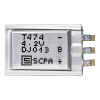
from SCHURTER Inc
Description. Prismatic ultra-thin supercapacitors. Single or double cell version. Ultra-compact design. High pulse power. Unique Selling Proposition. World thinnest supercapacitors. High power density. Low ESR with high current handling. Very low self discharge. Applications. Sensors. Small mobile... [See More]
- Lead Style: Surface Mount (SMT)
- WVDC: 4.2 to 5.5
- Capacitance Range: 200000 to 1.00E6
- Rated Current: 10 to 30
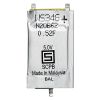
from SCHURTER Inc
Description. Prismatic ultra-thin supercapacitors. Single or double cell version. Ultra-compact design. High pulse power. Unique Selling Proposition. Excellent low temperature performance. High power density. Low ESR with high current handling. Very low self discharge. Applications. Sensors. Small... [See More]
- Lead Style: Surface Mount (SMT)
- WVDC: 2.5 to 5
- Capacitance Range: 90000 to 2.40E6
- Rated Current: 30

from KEMET Electronics Corporation
Applications. Real-time clock backup. Embedded RAM and flash hold-up. Motor drivers, servo motors high power LEDs, buzzers. Features & Benefits. Surface mount and radial form factors. Maximum operating temperature of +85 C. Wide operating voltage range (3.3 V - 12V). Enables backup times from... [See More]
- Lead Style: Surface Mount (SMT); Axial
- Capacitance Tolerance: 20
- Capacitance Range: 0.0470 to 1.5
- ESR: 100