
UL Audio Transformers
Description
UL Audio Transformers are designed to convert electrical signals that carry sound. They are essential components in audio systems, ensuring that sound signals are transmitted effectively between different audio components by adjusting impedance levels to match the requirements of the connected devices.
Working Principle
Audio transformers operate on the principle of electromagnetic induction. They consist of primary and secondary coils that are magnetically linked but not electrically connected. When an alternating current (AC) passes through the primary coil, it creates a varying magnetic field that induces a voltage in the secondary coil. This process allows the transformer to adjust the impedance levels between audio components, ensuring optimal power transfer and sound quality. Audio transformers are particularly useful because they can block direct current (DC) while allowing AC signals to pass, which is crucial for maintaining sound integrity in audio systems.
Applications
Audio transformers are widely used in various audio applications. For example, they are employed in sound systems to connect amplifiers to speakers, ensuring that the impedance levels are matched for optimal sound quality. They are also used in recording equipment to eliminate DC signals and enhance sound clarity. Additionally, audio transformers are found in telecommunications, where they facilitate voice and data transmission by converting electrical signals to audio frequencies.
Advantages over other Audio Transformers
One of the key advantages of UL Audio Transformers is their ability to handle a wide range of frequencies, from 20 Hz to 100,000 Hz, which allows them to accommodate different audio components with varying impedance levels. This flexibility ensures that they can provide high-quality sound across a broad spectrum of audio applications. Furthermore, their design minimizes insertion loss and total harmonic distortion, which enhances sound quality compared to other types of audio transformers.
Limitations
Despite their advantages, audio transformers have some limitations. They can introduce insertion loss, which is the measured loss of power through the device. Additionally, they are not suitable for applications requiring the transmission of DC signals, as they are designed to block DC while allowing AC to pass. This limitation can restrict their use in certain electronic circuits where DC transmission is necessary.
Considerations
When selecting UL Audio Transformers, several factors should be considered. Initial costs can vary depending on the specifications and quality of the transformer. Operating expenses are generally low, but it's important to consider the potential need for replacement or maintenance over time. Durability is a key factor, as high-quality transformers are designed to withstand regular use without significant degradation. Accuracy in impedance matching is crucial for maintaining sound quality, so it's important to choose a transformer that meets the specific requirements of the audio system. Replacement and maintenance costs should also be factored into the overall cost of ownership, as these can impact the long-term affordability of the transformer.

from DigiKey
600 Impedance Primary Ohms 287 Impedance Secondary Ohms 1:1 Audio Transformer 200Hz ~ 4kHz Surface Mount [See More]
- Agency: UL
- Packing Method: Cut Tape (CT)
- Package Type: Connectorized; Surface Mount
- Operating Frequency: 200 to 4000
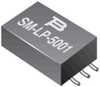
from RS Components, Ltd.
Bourns SM-LP-5001E Audio Transformer [See More]
- Agency: RoHS; UL; Ul 60950
- DCR: 115
- Encapsulated: Encapsulated Transformers
- Operating Temperature: -20
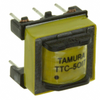
from DigiKey
600 Impedance Primary Ohms 600 Impedance Secondary Ohms 1:1 Audio Transformer 200Hz ~ 4kHz Through Hole [See More]
- Agency: RoHS; UL
- Packing Method: Bulk
- Package Type: Connectorized; Through Hole Plug-in
- Operating Frequency: 200 to 4000
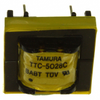
from DigiKey
600 Impedance Primary Ohms 470 Impedance Secondary Ohms 1:1 Audio Transformer 300Hz ~ 3.5kHz Through Hole [See More]
- Agency: RoHS; CSA; UL
- Packing Method: Bulk
- Package Type: Connectorized; Through Hole Plug-in
- Operating Frequency: 300 to 3500
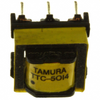
from DigiKey
600 Impedance Primary Ohms 348 Impedance Secondary Ohms 1:1 Audio Transformer 200Hz ~ 4kHz Through Hole [See More]
- Agency: RoHS; UL
- Packing Method: Bulk
- Package Type: Connectorized; Through Hole Plug-in
- Operating Frequency: 200 to 4000
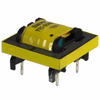
from DigiKey
600 Impedance Primary Ohms 260 Impedance Secondary Ohms 1:1 Audio Transformer 200Hz ~ 4kHz Through Hole [See More]
- Agency: RoHS; CSA; UL
- Packing Method: Bulk
- Package Type: Connectorized; Through Hole Plug-in
- Operating Frequency: 200 to 4000
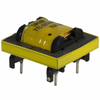
from DigiKey
600 Impedance Primary Ohms 301 Impedance Secondary Ohms 1:1 Audio Transformer 300Hz ~ 3.5kHz Through Hole [See More]
- Agency: RoHS; CSA; UL
- Packing Method: Bulk
- Package Type: Connectorized; Through Hole Plug-in
- Operating Frequency: 300 to 3500
from Standex-Meder Electronics
TAP Series Telecomm Transformers are audio matching telecommunications line frequency magnetics designed for PC board (PCB) mount and feature an economical open P.C. frame mounting with bifilar winding for capacitive and resistive balance. Frequency response 200Hz to 15KHz and insertion loss less... [See More]
- Agency: CSA; UL
- Operating Frequency: 200 to 15000
- Package Type: Through Hole Plug-in
- Insertion Loss: 1.5