
-
Catalyst Supports and Carriers - Low Surface Area (LSA) Catalyst Carrier -- SA Series Alumina/SilicaSupplier: Saint-Gobain Innovative Materials
Description: materials include silica, alumina-silica, zirconia, titania, silica, and silicon carbide. Saint-Gobain NorPro also offers a range of attrition-resistant, porous, low-surface area fluidizable aluminas as the basis of active and stable fluid bed catalysts.
- Specific Surface Area: 0.02 to 1.5 m²/g
- Pore Size: 0.7 to 150 nm
- Material: Aluminum Oxide, Silica / Glass
- Carrier Shape: Balls / Spheres, Extrudate / Pellet, Honeycomb / Structured Material, Rings
-
Supplier: Saint-Gobain NorPro
Description: play a vitally active role in many catalytic reactions. Other low-surface area catalyst carrier materials include silica, alumina-silica, zirconia, titania, silica, and silicon carbide. Saint-Gobain NorPro also offers a range of attrition-resistant, porous,
- Diameter: 0.1181103 to 19.68505 inch
- Density: 0.6099218299481003 to 1.9997437047478697 g/cc
- Width / O.D.: 0.1181103 to 19.68505 inch
- Mechanical Qm: 0
-
Supplier: ASTM International
Description: This method is for determining the total inorganic chloride content of fresh or spent alumina and silica-alumina catlysts or catalyst supports. The range of quantitation is 0.01 to 10 mss-%.
-
-
Supplier: ASTM International
Description: This method is for determining sulfate in alumina or silica-alumina base catalysts in the range of 0.01 to 0.1 mass-percent. Catalysts containing higher amounts of sulfate can be analyzed by UOP Method 742.
-
Supplier: ASTM International
Description: This method is for determining the total inorganic chloride content of fresh or spent alumina and silica-alumina catalysts or catalyst supports. The range of quantitation is 0.01 to 10 mass-%.
-
Supplier: Accuris
Description: Standard Test Method for Gamma Alumina Content in Catalysts and Catalyst Carriers Containing Silica and Alumina by X-ray Powder Diffraction
-
Supplier: Accuris
Description: Standard Test Method for Gamma Alumina Content in Catalysts Containing Silica and Alumina by X-Ray Powder Diffraction
-
Supplier: Accuris
Description: Standard Test Method for Gamma Alumina Content in Catalysts and Catalyst Carriers Containing Silica and Alumina by X-ray Powder Diffraction - INCLUDES STANDARD + REDLINE (PDF)
-
Supplier: ASTM International
Description: 1.1 This test method covers the determination of gamma alumina and related transition aluminas in catalysts and catalyst carriers containing silica and alumina by X-ray powder diffraction, using the diffracted intensity of the peak occurring at about 67 °2θ
-
Supplier: Saint-Gobain NorPro
Description: Some catalyst carriers in this series are available in monomodal or bi-modal pore options. Saint-Gobain NorPro provides a range of formed, higher surface area catalyst carrier. Surface areas from 10 m2/g to 400 m2g are typically based on high-purity raw materials. When needed,
- Specific Surface Area: 160 to 400 m²/g
- Pore Size: 8 to 500 nm
- Material: Silica / Glass
- Features: Specialty / Other
-
Supplier: Saint-Gobain Innovative Materials
Description: macroporosity. In recent years, we have developed strong, impact-resistant rings with outside diameters as small as 3 mm. Saint-Gobain NorPro manufactures its intermediate and high-surface area alumina catalysts in special shapes. Pentarings and short pentarings (wagon wheels) offer
- Specific Surface Area: 160 to 400 m²/g
- Pore Size: 8 to 500 nm
- Carrier Shape: Balls / Spheres, Extrudate / Pellet, Honeycomb / Structured Material, Rings
- Material: Silica / Glass
-
Supplier: Saint-Gobain NorPro
Description: flow distribution for use in slurry or moving bed reactors, especially where coking and constant catalyst generation is required. Accu spheres are available in multiple formulations, compositions and properties, including an expanded variety of chemistries and mixed oxides (alumina,
- Carrier Shape: Balls / Spheres
- Material: Silica / Glass, Titania, Zirconia
- Features: Specialty / Other
-
Supplier: Saint-Gobain Innovative Materials
Description: Denstone® 99 high-alumina support media are 99+% alpha alumina and a maximum of 0.2 wt% SiO2. This high degree of purity makes Denstone 99 alumina balls ideal for high-temperature systems with an influx of steam such as secondary reformers in ammonia plants where leached
- Diameter / OD: 0.1181103 to 2.9527575 inch
- Features: Alumina, Specialty / Other
- Ball Type: Ceramic Balls
-
Supplier: Saint-Gobain NorPro
Description: Denstone® 99 high-alumina support media are 99+% alpha alumina and a maximum of 0.2 wt% SiO2. This high degree of purity makes Denstone 99 alumina balls ideal for high-temperature systems with an influx of steam such as secondary reformers in ammonia plants where leached
- Diameter / OD: 0.1181103 to 2.9527575 inch
- Features: Alumina, Specialty / Other
- Ball Type: Ceramic Balls
-
Supplier: Saint-Gobain Innovative Materials
Description: Denstone® deltaP™ 99 technology utilizes the revolutionary, patent pending Saint-Gobain NorPro Denstone deltaP bed support technology and combines it with a high alumina, low silica composition to produce a media that is engineered to withstand the most severe environments while
- Diameter: 0.1181103 to 1.968505 inch
- Density: 1.5217530595245723 to 1.8901774844621004 g/cc
- Width / O.D.: 0.1181103 to 1.968505 inch
- Mechanical Qm: 0
-
Supplier: Inorganic Ventures
Description: 500mL size, Designed for the preparation and measurement of samples containing silica mixed with fluoride insoluble elements, including: zeolites, alumina and/or silica based catalysts, sand, limestone, coal fly ash, and talc. The dissolution of these types of materials
- Form & Features: Inorganic Chemical / Salt, Liquid / Solution
-
Supplier: Inorganic Ventures
Description: 500mL size, Designed for the preparation and measurement of samples containing silica mixed with fluoride insoluble elements, including: zeolites, alumina and/or silica based catalysts, sand, limestone, coal fly ash, and talc. The dissolution of these types of materials
- Form & Features: Inorganic Chemical / Salt, Liquid / Solution
-
Supplier: Inorganic Ventures
Description: 500mL size, Designed for the preparation and measurement of samples containing silica mixed with fluoride insoluble elements, including: zeolites, alumina and/or silica based catalysts, sand, limestone, coal fly ash, and talc. The dissolution of these types of materials
- Form & Features: Inorganic Chemical / Salt, Liquid / Solution
-
Supplier: CoorsTek
Description: Advanced ceramic supports from alumina, cordierite, silicon carbide, and mullite materials provides superior chemical, corrosion, and thermal shock resistance. CoorsTek flat and corrugated ceramic supports are optimized for harsh chemical processing environments. High-Performance Ceramic
- Material Type: Alumina / Aluminum Oxide, Cordierite, Mullite, Silica / Silicate Materials
- Applications: Chemical / Materials Processing, Corrosion Protection
- Shape / Form: Fabricated / Custom Shape
- Features: Specialty / Other
-
Supplier: Gelest, Inc.
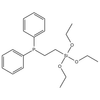
Description: Additional Properties Hydrolytic Sensitivity 7: reacts slowly with moisture/water Application Adhesion promoter for gold substrates in microelectronic applications.1 Forms stable bonds to silica and basic alumina suitable for catalyst immobilization.2 Forms luminescent gels on
- Flash Point: 273.2 F
- Purity: 97 %
- Features: Metalloids (B, Si, Ge, etc.), Non-Metals (C, N, O, P, S)
-
Supplier: Micromeritics
Description: Temperature-programmed desorption (TPD) is one of the most widely used and versatile techniques for characterizing the acid sites on oxide surfaces1-5. Determining the quantity and strength of the acid sites on alumina, amorphous silica-alumina, and zeolites is crucial to
- Delivery: Classroom (On Campus / Trainer's Facility)
- Type: Course, Product Training
- Technology / Subject Expertise: Testing / Test Methods





Find Suppliers by Category Top
More Information Top
 Indicates content that may require registration and/or purchase.

-
Handbook of Industrial Catalysts
5.3.2 Synthetic Silica Alumina Catalysts .
-
Catalysts
Gasolines produced by zeolite-containing catalysts generally contain more paraffins and aromatics, and fewer olefins than those produced by amorphous silica alumina catalysts ; however, reducing olefinicity generally reduces octane.
-
Liquid phase decomposition of t ‐butyl derivatives over solid acidic catalyst
We investigated the cleavage of the t- butyl group from several mono-substituted-t-butylbenzenes in the vapor phase on an amorphous silica alumina catalyst .
-
Hydrocracking
Prior to the development of zeolitic hydrocracking catalysts, amorphous silica alumina catalysts were the basis for the design of hydrocracking units.
-
Styrene
Michael, M. W., et al. (to American Cyanamid), "Process for Preparing Silica Alumina Catalyst and Catalyst Prepared Thereby," US 3,201,266 (Oct. 5, 1965) .
-
Handbook of Petroleum Processing
In 1986 (Gagnie`re 2013), IFP (now Axens) commercialized Polynaphtha, a C3–C4 condensation process for gasoline which employs a regenerable silica alumina catalyst in their Polynaphtha process.
-
Grid Enabled Remote Instrumentation
The early hydrocrackers used amorphous silica alumina catalysts .
-
Effect of acid strength distribution on de‐ t ‐butylation rate and catalyst fouling rate
Takahashi, T. and K. Sakawaki, “Deactivation of Silica Alumina Catalyst in Decomposition of r-Butylbenzene”, J. Japan Petrol.
-
Handbook of Petroleum Processing
The early hydrocrackers used amorphous silica alumina catalysts .
-
Gas phase formation of methyl and ethyl iodides
These results show that the gas phase formation of ethyl iodide from ethanol vapor and metal iodides is essentially cata- lytic in nature and is unique to the silica alumina catalyst support.