
-
Supplier: RS Components, Ltd.
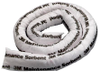
Description: 3M MM 1001 Spill Absorbent
- Type: Absorbent
- Absorbate: Oil / Grease
- Features: Other
- Application: Spills Control / Containment
-
Supplier: New Pig Corporation
Description: Absorbs Oils; Coolants; Solvents; Water; Universal Absorbs up to 8 gal. 1 bag Silica-free loose absorbent pulls most common industrial liquids from your floor — it's easier to lift, lighter to carry, and 3X more absorbent than clay! Unlike clay, which is simply
- Type: Absorbent
- Absorbate: Oil / Grease, Water / Moisture
- Features: Other, Specialty / Other
-
Supplier: New Pig Corporation
Description: One-Time Use for Large Volumes of Water Absorbs up to 1.75 gal. per sock Includes (40) 3" x 48" socks Super absorbent sock absorbs and locks in large volumes of water-based leaks and spills quickly. Pulls in large volumes of water on contact to confine/contain pools and puddles and prevent
- Type: Absorbent
- Features: Other
- Absorbate: Water / Moisture
-
-
Supplier: New Pig Corporation
Description: 3" x 48" Absorbs up to 95 oz. per sock 40 socks Our heaviest absorbent sock is filled with vermiculite to form a barrier and prevent spills from spreading. The heaviest sock we make features extra-dense construction to hug floors and stay in place while containing spills Fine-grade
- Type: Absorbent
-
Supplier: DigiKey
Description: 3M MARINE OIL & FUEL ABSORBENT B
- Type: Absorbent
-
Supplier: New Pig Corporation
Description: 3" x 48" Absorbs up to 1 gal. per sock 12 socks The best outdoor sock you can buy for oily spills on land – UV resistant up to one year. Outlasts other outdoor socks with the most UV resistant construction you can buy. Period. Moldable socks hug corners and surround machine bases to absorb machine
- Type: Absorbent
- Absorbate: Oil / Grease, Water / Moisture
- Features: Other
-
Supplier: GFS Chemicals, Inc.
Description: ITEM#:2700 CAS#:1343-88-0 F.W.: NFPA#: Specific Gravity: DOT:NR Descriptions: Suitable as adsorbent in gas chromatography. Magnesium Silicate Activated at 650 C. Specification TEST Properties No properties.
- Type: Adsorbent
- Material Type: Clay / Silicates, Silica Gel / Silicon Dioxide
-
Supplier: Brady Corporation
Description: The MAXX Universal Pad's combination of quality, performance, and price is taking on all challengers. Using ASTM guidelines, SPC pads made with MAXX absorb up to 23 times their own weight in oil! 1-ply, gray, economy pad. It is also engineered to minimize waste and disposal costs. Its 1-ply, white,
-
Supplier: NPS Corporation
Description: fast-wicking filler. Contain spills and prevents migration. Compact design to absorb spills in tight spaces. Place in assembly and production areas. Contained absorbent makes cleanup quick and easy.
- Type: Absorbent
-
Supplier: MaxFlo® an Agrilectric Research Brand
Description: MaxSorb Absorbents are designed with the customer in mind. MaxSorb absorbents are designed and engineered for the customer who is looking for a rapid absorption of liquids with a "Green", renewable, sustainable product, capable of quick absorption of both low and high viscosity
- Type: Absorbent
- Form: Bulk / Raw Material, Pouch / Sack
- Absorbate: Oil / Grease, Water / Moisture
- Application: Remediation / Restoration, Spills Control / Containment
-
Supplier: DME Company
Description: Perfect for soaking up oil around or under leaking machinery or for cleaning up oily tools. Use on benches for assembly or disassembly of pumps, gears and dirty or oily pieces.
- Type: Absorbent
- Absorbate: Oil / Grease
- Application: Spills Control / Containment
-
Supplier: TransPak
Description: rates. Activated clay desiccant filling is a free flowing granular material with high moisture adsorbing ability from 20-80% relative humidity under normal packaging and storage conditions. Meets FDA specifications for direct contact with food and drugs. Protects 3.33 Cubic Feet. 500 Per 34
- Material Type: Clay / Silicates
- Type: Desiccant
-
Supplier: Wiper Master, Inc.
Description: Powerful enough to handle acids (including hydrofluoric acid), bases and coolants without reacting to most hazardous chemicals. Absorb petroleum-based fluids, non-aggressive chemicals and aqueous-based solutions, reducing the need for different sorbent types. High-capacity chemical sorbent pads
- Type: Absorbent
- Features: Other
-
Supplier: H2O Control Products, Inc.
Description: 2" x 5" Moisture Absorbing Packet w/ Tape
- Type: Absorbent, Desiccant
- Application: Electronics, Moisture / Humidity Control
- Form: Pouch / Sack
- Absorbate: Water / Moisture
-
Supplier: Brady Corporation
Description: This is an all natural corncob product that quickly absorbs cutting oils, grease, water, and other liquids. Not for use with aggressive fluids. Pallet includes 40 bags
-
Supplier: NPS Corporation
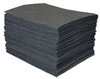
Description: coolants, etc. Available in two weights for multiple use applications. Center perfed for a customized fit. Keeps floors clean and dry. Place under and around machinery, use to line shelves, and for clean-up applications. Use as a rag for quick wipe-ups. Gray color blends well into
- Type: Absorbent
-
Supplier: H2O Control Products, Inc.
Description: We all know where water likes to collect in a fuel or oil storage tank... right at the bottom. This common problem can rust the steel tank and damage the equipment attached to the tank. The question is, what to do about it? Often siphoning cannot get all the water, and wastes some of the stored
- Type: Absorbent
- Application: Dewatering, Moisture / Humidity Control
- Form: Pouch / Sack
- Absorbate: Water / Moisture
-
Supplier: TransPak
Description: rates. Activated clay desiccant filling is a free flowing granular material with high moisture adsorbing ability from 20-80% relative humidity under normal packaging and storage conditions. Meets FDA specifications for direct contact with food and drugs. Protects 0.14 Cubic Feet. 1,200 Per 5
- Material Type: Clay / Silicates
- Type: Desiccant
-
Supplier: DME Company
Description: Use rolls on all sizes of oily spills and non-aggressive liquid discharges. Rolls can be cut to cover small areas such as under leaking machinery.
- Type: Absorbent
- Absorbate: Oil / Grease
- Application: Spills Control / Containment
-
Supplier: Wiper Master, Inc.
Description: Has a scrim on one side to increase strength and help eliminate linting. Dispensed from a carrying/dispenser box on a perforated roll. Utilizes folded sorbent technology and can be used as a pillow, pad, roll or boom. Each box absorbs approximately 10 1/2 gals.
- Type: Absorbent
-
Supplier: GFS Chemicals, Inc.
Description: ITEM#:2703 CAS#:1343-88-0 F.W.: NFPA#: Specific Gravity: DOT:NR Descriptions: Suitable as adsorbent in gas chromatography. Magnesium Silicate Activated at 650 C. Specification TEST Properties No properties.
- Type: Adsorbent
- Material Type: Clay / Silicates, Silica Gel / Silicon Dioxide
-
Supplier: Reid Supply
Description: Universal absorbents contain, absorb and clean up coolants, oils, paints, solvents and water. . 36" Sticky Mat Roll
- Type: Absorbent
- Absorbate: Oil / Grease, Water / Moisture
- Features: Other
- Application: Spills Control / Containment
-
Supplier: Southland Equipment Service
Description: Virtually unlimited uses as a dry absorbent that is safe in all applications. Picks up all liquids, of any viscosity, off any hard surface, leaving that surface clean and dry. Extraordinary versatility in absorbing any kind of liquid or semi-liquid on contact and permanently
- Type: Absorbent
-
Supplier: NPS Corporation
Description: Tech Specs PackagingHeat-Sealed Bag - 48/pallet Width| Length| Thickness| Weight6lbs | 3kg Usage Ready-to-Use Truk-Kit® is designed to fit behind the back seat of a truck. Kit is packaged in a heat-sealed polyethylene bag. ABSORBS UP TO 6 GALLONS/25 LITERS PER KIT Components | (3) 3"x4' Socks
- Type: Absorbent
- Application: Spills Control / Containment
-
Supplier: Brady Corporation
Description: Rag Rug is an absorbent and durable roll, made of recycled cotton and polyester fibers. Economical and versatile, it soaks up all liquids making it ideal for maintenance, repair, and industrial environments.
-
Absorbents and Adsorbents - 5" x 8" x 1 1/8" Tyvek®quo; - Clay Desiccants - 34 Gallon Drum -- DES131Supplier: TransPak
Description: rates. Activated clay desiccant filling is a free flowing granular material with high moisture adsorbing ability from 20-80% relative humidity under normal packaging and storage conditions. Meets FDA specifications for direct contact with food and drugs. Protects 6.67 Cubic Feet. 300 Per 34
- Material Type: Clay / Silicates
- Type: Desiccant
-
Supplier: Wiper Master, Inc.
Description: Petroleum sorbents repel water while absorbing oil and petroleum-based liquids from oil spills and effluent discharges. Booms are scrim-encased tubes of particulate sorbent material secured by UV-resistant netting. T-280 is double-constructed with (2) 4" booms secured in UV-resistant netting.
- Type: Absorbent
- Absorbate: Oil / Grease
-
Supplier: Fortrans Inc.
Description: required for transport and labor. Use Sludge Set to Rapidly Dry Sludge at Wastewater Treatment Plant Operations Sludge Set gets the job done on your site. Why is it better than the alternative sludge-drying products out there? Its superiority comes from its ability to work fast to dry
- Type: Absorbent
- Form: Bulk / Raw Material
- Application: Dewatering
- Features: Other
-
Supplier: Brady Corporation
Description: MAXX means greater performance without the extra weight. Specially developed chemical sorbent, yellow color-coded for safety and easy separation of hazardous waste, medium-weight pad. Does not react with aggressive fluids. Perfed every 15" and up the center.
-
Supplier: SEE
Description: Our absorbent pads and case liners are regarded as the food industry's finest and are backed by our commitment to maintain a leadership role in serving your packaging needs.
- Type: Absorbent
- Features: FDA Compliant
- Form: Pouch / Sack
- Application: Product Protection / Packaging, Sanitary / Food Grade
-
Supplier: TransPak
Description: rates. Activated clay desiccant filling is a free flowing granular material with high moisture adsorbing ability from 20-80% relative humidity under normal packaging and storage conditions. Meets FDA specifications for direct contact with food and drugs. Protects 0.83 Cubic Feet. 300 Per 5
- Material Type: Clay / Silicates
- Type: Desiccant
-
Supplier: GFS Chemicals, Inc.
Description: ITEM#:2702 CAS#:1343-88-0 F.W.: NFPA#: Specific Gravity: DOT:NR Descriptions: Suitable as adsorbent in gas chromatography. Magnesium Silicate Activated at 650 C. Specification TEST Properties No properties.
- Type: Adsorbent
- Material Type: Clay / Silicates, Silica Gel / Silicon Dioxide
-
Supplier: IBT Industrial Solutions
Description: IBT Industrial Solutions offers a full line of safety supplies. We have everything you need to provide world-class safety in your workplace. Our complete selection of products represents the latest in technology, performance and quality for every safety category. Industrial health and safety is one
- Type: Absorbent, Adsorbent
-
Supplier: Reid Supply
Description: Universal absorbents contain, absorb and clean up coolants, oils, paints, solvents and water. . Camouflage Heavyweight Roll - Fine Fiber
- Type: Absorbent
- Absorbate: Oil / Grease, Water / Moisture
- Features: Other
- Application: Spills Control / Containment
-
Supplier: Composition Materials Co., Inc.
Description: Corn Cob Blasting Media & Corn Cob Grit are used in blasting, tumbling and vibratory finishing, polishing, deburring, deflashing and drying operations. Corn Cob is very effective for blasting wood, aluminum, fiberglass, buildings, boats, and excellent for log cabin restoration. Corn Cob is also
- Type: Absorbent
- Application: Drying / Dehydration
- Material Type: Polymer / Organic
- Absorbate: Water / Moisture















Find Suppliers by Category Top
More Information Top
 Indicates content that may require registration and/or purchase.

-
http://ajbasweb.com/old/ajbas/2011/October-2011/584-590.pdf
Clay is used as a building material, it is used in the form of brick, either sun- dried or fired. … great industrial importance e.g. in the manufacture of tile for wall and floor coverings, and of … The less absorbent bentonites are used chiefly in the oil industry, e.g. as filtering and deodorizing agents in the refining of petroleum (Grim, 1986).
-
The Diquat incident at Woodkirk Yorkshire - issue 132
The floor was eventually dug-up and the concentrated liquor was pumped out continuously until heavy rain … Eventually, the flues were partly filled with a Bentonite clay slurry to absorb the Diquat and Paraquat, and this was topped up with rubble and concreted over. … many months, which resulted in a Diquat concentration of 10mg/l in Hey Beck in dry weather conditions .
-
Ceramic tiles from raw materials found in the Armenian SSR
The drying and firing times were 55 rain, and the firing temperature 1070-1080~ the water absorption was 3.570, the loss of weight during abrasion 0.06 g/cm 2, and According to preliminary calculations the savings from replacing Fedorov clay by local materials for making floor tiles on a continuous line with a capacity of 400,000 m2/yr at Erevan is about 15,000 rubles. Thus, Noemberyansk bentonite is a valuable ceramic raw material suitable for prodming floor tiles; it can be …
-
Coordination of scientific-research work in the ceramics industry
… for the drying operation by 8%; and increases the produc- tivity of the spray driers by 8%. An automatic device is being designed which wilI measure the water absorption of ceramic tiles. … is engaged on the problem of planning complex equipment for grading and stacking floor tiles to be … … studies on the use of local raw materials in the ceramic industry (on clays , volcanic rocks, stags … … Institute of Ceramics and Glass has obtained good results in the use of bentonite from the Noemberyansk …
-
Classic and Advanced Ceramics
… as nontronite, Fe3+ [( OH )2 Al 0.5Si3.5O10 ] Na 0.5 ⋅ 4H2O and 2 phillipsite, KCa[Al3Si5O16]·6H2O; terrestrial weathering of rhyolitic volcanic tuffs to form bentonites (Wyoming, Saskatchewan, Turkey); neoformation … … and at the ocean floor ; and layer transformation of … … easily hydrated, minerals of the smectite group such as montmorillonite are able to absorb not only large … The d(001) basis distance of air- dried montmorillonite is about 1.4 to 1.5 nm … 2.1 Natural Clay Minerals BEIDELLITE Al3+ .
-
Production of pulverised fuel ash tiles using conventional ceramic production processes
All these phenomena are the reasons why in red floor tile compositions and in the PFA tile, the bloating starts at temperatures lower than those required to achieve water absorption below 0?5%. MgO and iron oxides.25227 It would also be beneficial to replace bentonite with a higher proportion (40250 wt-%) of clay . This would improve the pressing characteristics, improve dry bulk density and reduce firing shrinkage.
-
Influence of gap size on carbon and nitrogen biogeochemical cycling in Northern hardwood forests of the Upper Peninsula, Michigan
A layer of bentonite clay was deposited 5 cm from the soil surface to prevent water from running down the outside of the collector. Throughfall, forest floor leachate, and mineral soil water leachate samples were frozen until analysis. Ammonium and nitrate concentrations were determined colorimetrically by ab- sorbance on a microplate reader at 650 nm (Sims et al. 1995; Drinkwater et al. 1996; Mulvaney 1996). Within the chambers, open mason jars (270 cm3 ) filled with 25 g dry soda lime were placed …
-
The continuous mechanized production of facing tiles by the conveyer-casting method
… of mosaics, assembled for the facing surface of walls, in the same way as mosaics for floors . … of pro- duction must satisfy rigid requirements in relation to their capacity for absorbing water, and must … Firstly, it ensures the necessary bonding of the cast to the bat during drying and in the … The separating layer consists of a mixture of bentonite (or other plastic clays ) with ground lime or chalk.
-
CERAMIC ABSTRACTS
… good quality must have (1) uniform sintering, (2) dense structure with a small absorption of water, (3 … Two kinds of clays used for clinker are refractory clays and clays having a low sintering point. There are two methods for preparing clinker, the wet process and the dry process. … a compressive strength of about 2000 lbs./sq. in., are made by mixing clay, bentonite , and lignite. … lessens the cost of construction, and has great possibilities for reenforced brickwork for floors , walls, wall copings …
-
TALC IN WHITEWARE *
Body 3 pressed well and the bisque (light ivory) absorbed 5.7% water. … after heating at 115O0C, was light gray, vitrified, and had the appearance of a good floor tile. They were dried on open racks and bisqued at l150°C. Because of the low clay content, body 5 was “short” and difficult to jigger. It is probable that 2 or 3% of bentonite incorporated in the batch mix would improve the …