
-
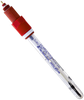
Supplier: Emerson Automation Solutions – Rosemount
Description: longer life in applications where poisoning ions are present. CERAMIC BODY AND HIGH TEMPERATURE CABLE permits autoclave sterilization up to 130°C. FITS STANDARD INSERTION HARDWARE for convenient replacement. The Rosemount Analytical 328A Steam Sterilizable Sensor is specifically built
- pH Range: 0 to 13 ph
- Operating Temperature: 32 to 266 F
- Electrode Configuration: Combination
- Junction Type: Double Junction
-
Supplier: Master Bond, Inc.
Description: EP3HTND-2Med Black is a one part system that combines easy processing with excellent bonding properties. It cures in 20-30 minutes at 250°F or 5-10 minutes at 300°F and adheres well to a wide variety of substrates including glass, metals, ceramics and most plastics. This paste compound meets
- Applied Thickness / Gap Fill: 0.004 to 0.006 inch
- Use Temperature: -60 to 400 F
- Tensile Strength (Break): 5,000 to 6,000 psi
- Dielectric Constant (Relative Permittivity): 3.9
-
Supplier: Master Bond, Inc.
Description: Master Bond EP41S-5Med is a two part epoxy system that meets the requirements of ISO 10993-5 for non-cytotoxicity and can be used for bonding, sealing, and coating in medical devices. This epoxy was tested against many sterilization methods, such as autoclaving, STERRAD®, Cidex® and Steris®,
- Applied Thickness / Gap Fill: 0.004 to 0.006 inch
- Viscosity: 25,000 to 30,000 cP
- Use Temperature: -80 to 450 F
- Coeff. of Thermal Expansion (CTE): 19.444444444444443 to 22.22222222222222 µin/in-F
-
-
Supplier: Master Bond, Inc.
Description: Master Bond EP62-1HTMed is a two part epoxy that meets the requirements of ISO 10993-5 for non-cytotoxicity and therefore can be utilized in many medical device applications.
- Use Temperature: -60 to 450 F
- Tensile Strength (Break): 2,600 psi
- Elongation: 3 to 5 %
- Dielectric Constant (Relative Permittivity): 4.2
-
Supplier: Master Bond, Inc.
Description: UV10TKMed is USP Class VI approved and meets ISO10993-5 for cytotoxicity requirements. It is used in the assembly of medical devices and is capable of withstanding repeated sterilizations, including radiation, ethylene oxide, chemical sterilants and especially autoclaving. This higher
- Viscosity: 35,000 to 45,000 cP
- Use Temperature: -60 to 450 F
- Coeff. of Thermal Expansion (CTE): 27.779999999999998 to 30.560000000000002 µin/in-F
- Tensile Strength (Break): 7,000 to 8,000 psi
-
Description: What are Zirconium Oxide Ceramic Sand Mill Mixer? The Zirconium Oxide Ceramic Sand Mill Mixer redefines mixing and grinding technology. Crafted from high-performance ZrO2 ceramic, this innovative mill excels in demanding applications where conventional mixers fall short. Its
- Features: Specialty Ceramic
- Specialty Ceramic Type: Zirconia
-
Supplier: 3X Ceramic Parts Company Limited
Description: contact with stainless steel to prevent corrosion of stainless steel parts. (2) during cleaning, do not pull the ceramic metering parts in hot water exceeding 40 ℃. The ceramic plunger and ceramic sleeve shall be cleaned separately. (3) during sterilization, the rotary
- Media Temperature: 50 to 104 F
- Pump Type: Metering Pumps, Positive Displacement Pumps
-
Description: Introduction The Aluminum nitride ceramic pulse heater is a heating element made of aluminum nitride (AIN) ceramic material, designed specifically for pulse heating applications. Pulse heating achieves rapid heating through short time, high energy electric pulses, and is suitable for
- Features: Other
-
Supplier: 3X Ceramic Parts Company Limited
Description: High Precision Ceramic Pump for Pharmacy Characteristics of ceramic pump for pharmacy : 1. Using high purity alumina material , formed with cold isostatic pressing and sintered in high temperature , with high density . 2. High dimension precision and assemble with metal part perfectly
- Pump Type: Piston / Plunger Pumps, Positive Displacement Pumps
-
Supplier: CoorsTek
Description: Coorstek ceramic hollow fiber membrane modules offer superior, cost-effective performance for fluid filtration applications. With an innovative design comprised of groupings of hollow fiber tubes, filtered fluids discharge through porous ceramic membranes while waste materials and
- Application / Industry: Biopharmaceutical, Food and Beverage, Medical
- Filter Medium Material: Ceramic
- Additional Features: FDA Compliant
- Configuration: In-line
-
Supplier: Matexcel
Description: Application: Ceramics, Glaze Components: Zirconium phosphate Silver ions, Zinc ions. Product overview: Characteristic: 1. Permanent antimicrobial effect with broad spectrum sterilization capabilities, and present no hazards to users or manufacturing process. 2. Stable physicochemical
-
Supplier: Watts
Description: Cleanable self-sterilizing elements can be used over and over to reduce filtration costs. Capable of removing 99.9999% of suspended solids and 100% of Cryptosporidium, Giardia Lamblia cysts and bacteria. Designed to comply with the most stringent potable water standards.
- Features: Filter Element / Cartridge
- Filtration Product: Water
-
Supplier: Matexcel
Description: Storage: Store at room temperature and keep dry Components: CaMgSi2O6 Purity: >95% Product overview: This product can be used as a biochemical reagent, a catalyst, a high-efficiency adsorbent, and additives such as cosmetics and toothpaste. After the product is sterilized, it can also be used as a
- Shape / Form: Powder / Aggregate (Grain / Grog)
-
Supplier: Matexcel
Description: Storage: Store at room temperature and keep dry Components: Ca7MgSi4O16 Purity: >98% Product overview: This product can be used as a biochemical reagent, a catalyst, a high-efficiency adsorbent, and additives such as cosmetics and toothpaste. After the product is sterilized, it can also be used as
- Shape / Form: Powder / Aggregate (Grain / Grog)
-
Supplier: Matexcel
Description: Application: Textile, shoe materials, plastics, ceramic, coating and medicine etc. Product overview: Characteristic: 1. Permanent antimicrobial effect with broad spectrum sterilization capabilities, and present no hazards to users or manufacturing process. 2. Stable physicochemical
-
Supplier: Cole-Parmer
Description: • Chemical-resistant pipettor even handle solvents • Fully autoclavable • UV resistant for flexible sterilization • One-touch calibration • Enhanced ergonomics Ceramic plunger Chemical-resistant PTFE O-rings and seals allows these pipettors to be used with solvents. Fully autoclavable,
- Pipette Volume: 199.9788796366389 µl
- Configuration: Pipettor
-
Supplier: Cole-Parmer
Description: • Autoclavability and enhanced UV resistance provides added protection from biohazardous elements • Locking lever prevents accidental volume change • Self-lubricating PTFE seal-ring eliminates routine lubrication • Sterilize by autoclave or 254 nm UV light Ceramic plunger This lightweight,
- Pipette Volume: 200 µl
- Configuration: Pipettor
-
Supplier: Cole-Parmer
Description: • Autoclavability and enhanced UV resistance provides added protection from biohazardous elements • Locking lever prevents accidental volume change • Self-lubricating PTFE seal-ring eliminates routine lubrication • Sterilize by autoclave or 254 nm UV light Ceramic plunger • Built-in filtered
- Pipette Volume: 5,000 µl
- Configuration: Pipettor
-
Supplier: Cole-Parmer
Description: • Autoclavability and enhanced UV resistance provides added protection from biohazardous elements • Locking lever prevents accidental volume change • Self-lubricating PTFE seal-ring eliminates routine lubrication • Sterilize by autoclave or 254 nm UV light Ceramic plunger • Built-in filtered
- Pipette Volume: 1,000.0000000000001 µl
- Configuration: Pipettor
-
Supplier: Trent, Inc.
Description: Maximum Temperature: 1000 °F / 538°C TRENT Pit Type Ovens are designed for those applications where radiant heat is required and temperature in the chamber is limited to 1000°F. Folded and Formed® heating elements are mounted to ceramic retainers which are in turn mounted to aluminized steel
- Temperature Range: 1,000 F
- Capacity: 2.5553358088742493 cubic feet
- Application: Aging, Annealing, Baking, Brazing / Soldering, Curing, Drying, Firing / Sintering, Heat Treating, Industrial, Sterilizing
- Atmosphere: Air / Oxidizing
-
Supplier: Azbil Corporation
Description: model Resin control valve with a body made of rigid PVC or polypropylene. HIT model Resin control valve with a body made of PTFE. HMC model Control valve with a ceramic body. It is suitable for microflow control. HIC model Control valve with a ceramic body. EGVM/EAVM model
- Valve Type: Angle Valves, Butterfly Valves, Control Valves
-
Supplier: Dymax
Description: Dymax MD® 1040-M is a versatile autoclave resistant adhesive, coating and encapsulant resistant to 100+ cycles of sterilization. It offers extremely low water absorption (0.5%) making it ideal for surgical tools and devices that are subjected to numerous instances of sterilization,
- Viscosity: 775 cP
- Elongation: 8 %
- Substrate Compatibility: Ceramic / Glass, Dissimilar Substrates
- Features: Other
-
Supplier: HiTemp Technology Corporation
Description: Rotary Kiln Systems that will operate at 12 to 100 tons per day. All system components are factory-built and tested. By using a 309 stainless steel liner and ceramic fiber insulation, we can shop assemble the largest systems without exceeding the weight and size restrictions of standard
- Temperature Range: 1,400 to 2,200 F
- Capacity: 128 to 1,152 cubic feet
- Burn Rate: 25 to 4,000 lbs/hr
- Features: Air Filtration, Industrial, Logging / Recorder Options, Sterilizing
-
Supplier: ASTM International
Description: metallic, polymeric, ceramic, or any combination of these. 1.4 The digestion procedures to be used and issues of sterilization of retrieved particles are not the subject of this practice. 1.5 A classification scheme for description of particle morphology is included in Appendix X3. 1.6
-
Supplier: Techsil Limited
Description: Vitralit® 4731 is a medium viscosity, flexible adhesive designed for plastic and plastic/glass bonding; it offers a good adhesion to a wide range of other materials including ceramics and metals. Vi 4731 is a UV light curable material with USP Class VI and ISO 10993-5 approvals; making it
- Cure / Technology: UV / Radiation Cured (EB, Light)
-
Supplier: Techsil Limited
Description: Vitralit® 4731 is a medium viscosity, flexible adhesive designed for plastic and plastic/glass bonding; it offers a good adhesion to a wide range of other materials including ceramics and metals. Vi 4731 is a UV light curable material with USP Class VI and ISO 10993-5 approvals; making it
- Cure / Technology: UV / Radiation Cured (EB, Light)
-
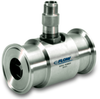
Supplier: Flow Technology, Inc.
Description: LPM) Materials of Construction: 316 SS housing and 430F SS rotor Housing Surface Finish: Electropolished – 25Ra End Fittings: Sanitary Tri-Clamp Bearings: Ceramic journal Withstands clean-in-place (CIP) and sterilize-in-place
- Media Temperature Range: 350 F
- Liquid Volumetric Flow Rate: 0.1 to 250 GPM
- Operating Pressure: 250 psi
- Operating Temperature: 350 F
-
Supplier: Mettler-Toledo Technologies GmbH
Description: diagnostics to reduce maintenance and simplify calibration. Sterilizable and Autoclavable This sensor provides fast and precise pH and ORP measurement, even after repeated autoclaving and sterilization cycles. Analog or ISM ISM Measurement parameter pH and ORP pH membrane glass type High
- pH Range: 0 to 14 ph
- Operating Temperature: 32 to 212 F
- Operating Pressure Range: 0 to 87 psi
- Features: Food / Sanitary
-
Description: Dispense volume per stroke 0-0.2ml Intelligent digital volume control Extremely high hardness(Mohs hardness rating of 9---next to diamond)and high density special ceramics. Multi stage high precision polishing processing. High efficiency and high precision. (±0.3% CV). Maintenance free
- Pump Type: Injection Pumps, Metering Pumps, Positive Displacement Pumps, Rotary Vane Pumps
-
Description: bio-medical reagent filling and other high precision low volume fluid application. FSH-SK08 includes a digital controller, a single end or dual end high precision digital controlled automated volume change mechanism, and special high precision ceramic pump modules. The system has solved the
- Pump Type: Injection Pumps, Metering Pumps, Positive Displacement Pumps, Rotary Vane Pumps
-
Supplier: ASTM International
Description: This specification covers material requirements for chemical composition of anorganic xenogeneic or allogeneic bone (apatite) intended for surgical implants. This specification specifically excludes synthetic hydroxylapatite, hydroxylapatite coatings, ceramic glasses, tribasic calcium
-
Supplier: Schott Japan
Description: inorganic and therefore non-aging materials with glass or ceramic as the insulator. The use of proven Glass-to-Metal-Sealing or Ceramic-to-Metal Sealing technologies can consistently prevent the permeation of moisture or gases which could cause internal corrosion, degradation of the












Find Suppliers by Category Top
Featured Products Top
-
 applications, maintaining a vacuum is essential for sterilization and other processes. Circular Type Multipin Vacuum Feedthroughs provide the necessary electrical connections while preserving the vacuum environment (read more)
Browse Industrial Ceramic Materials Datasheets for Xiamen Innovacera Advanced Materials Co., Ltd. -
UV Sensor SMD packages available are: Ceramic SMD Package with UV Quartz Window and UV sensor for high energy, robust applications that require lower cost (read more)
Browse UV Sensors Datasheets for Electro Optical Components, Inc. -
measurement, which separates the sensor from the medium. This reduces cleaning and sterilization effort, prevents leaks and simplifies the replacement of disposable tubing systems. Peristaltic pumps are used in numerous applications with high requirements for sterility and dosing accuracy (read more)
Browse Pressure Sensors Datasheets for Endress + Hauser – Sensors & Components -
, sometimes with a disposable for the separation of the pressure sensor from the media. Further requirement could be, that cleaning and sterilization should be avoided, no medium should leak out and the hose should be easy to replace. One field of such an application are medical devices, e (read more)
Browse Pressure Sensors Datasheets for Endress + Hauser – Sensors & Components -
As a silicone, MasterSil 910Med delivers high flexibility and has an elongation of 400-600%. This imparts reliable thermal cycling and mechanical shock resistance. Bond strength to metals, composites, glass ceramics, rubbers, plastics and other silicone substrates is excellent. It is serviceable (read more)
Browse Silicone Adhesives and Sealants Datasheets for Master Bond, Inc. -
21LSCL-2Med bonds well to a wide variety of substrates including metals, glass, composites, ceramics as well as many rubber and plastic materials. EP21LSCL-2Med is a superb electrical insulator. This property, combined with its low exotherm, makes it highly effective in larger potting and (read more)
Browse Industrial Adhesives Datasheets for Master Bond, Inc. -
Conductivity sensor Innovative Sensor Technology IST AG has combined thin- and thick-film technologies to develop ceramic-based conductivity sensors that include a resistive temperature sensor (Pt1000 IEC 60751 F0.3), thus allowing for accurate compensation at the (read more)
Browse Datasheets for Innovative Sensor Technology IST USA Division -
imaging and sterilization systems. Infrared Domes – Designed for thermal imaging, heat-seeking missiles, and infrared sensors, using materials such as: Sapphire Germanium Zinc Selenide (ZnSe) Silicon Infrared (read more)
Browse Optical Lenses Datasheets for Avantier Inc.
More Information Top
 Indicates content that may require registration and/or purchase.

-
Surface Activities of Bioactive Glass, Aluminum Oxide, and Titanium in a Living Environment a
Comparison of the tissue at the interface of a glass- ceramic sterilized by dry heat, autoclaving, and ethylene oxide gas showed that the best results for bone development were obtained by autoclaving (water .
-
Microfiltration cell‐recycle pilot system for continuous thermoanaerobic production of exo‐β‐amylase
The design of a pilot- scale system that included an in situ steam- sterilizable ceramic filter proved practical, and the use of computer- controlled instrumentation was prerequisite for continuous operation under reproducible conditions.
-
Propagule banks, herbivory and nutrient supply control population development and dominance patterns in macroalgal blooms
Six sterilized ceramic tiles (10×10 cm) were fastened to six steel rods and exposed vertically in the water column 0.5 m above the sediment surface (water depth was 0.7 m) for 24 h.
-
Operational patterns affecting lactic acid production in ultrafiltration cell recycle bioreactor
Mechanically stable and steam sterilizable ceramic membranes were used through- out.
-
On‐line monitoring of glucose in mammalian cell culture using a flow injection analysis (FIA) mediated biosensor
The culture sample was peristaltically withdrawn from the bioreactor and after cell separation by a steam sterilizable ceramic microfilter, the filtrate was continuously fed to the FIA mediated‐biosensor system at 4 mLh−1, whereas the cell‐containing retentate was recirculated to the bioreactor.
-
Variable and complementary effects of herbivores
on different life stages of bloom-forming
macroalgae
We ex- posed 1 sterilized ceramic tile (5 X 10 cm) per plot as a settlement substratum in cages (closed, open) and on uncaged plots (n = 16).
-
Myocardial tolerance to ischemia–reperfusion injury, training intensity and cessation
Left ventricle frozen tissue (=100 mg) was reduced to powder by sterilized ceramic mortar and pestle, lysed for 10 min in 10 mM Tris–HCl, 1 mM Na2EDTA, 0.1% Tri- ton X-100, protease inhibitors cocktail (Roche), pH 7.4, and centrifuged…
-
Hair Growth and Disorders
The strip must be kept constantly moist, and, after separating the grafts from the strip, the author’s tech- nicians place them in sterilized ceramic escargot dishes filled with saline.
-
Electrochemical Sensors in the Analysis and Control of Bioprocesses
Using flow injection and a sterilizable ceramic plug filter for sampling, a response time for glucose analysis of less than one minute has been reported [52,531.
-
Comparative study of the elimination of toluene vapours in twin biotrickling filters using two microorganisms Bacillus cereus S1 and S2
The start-up procedures were as follows: first, sterile distilled water was passed through the biotrickling filter bed with sterilized ceramic particles installed.