
Products & Services
See also: Categories | Featured Products | Technical Articles | More Information-
Supplier: Cryo H&I Co.,Ltd.
Description: Pulse Tube Cryocooler is a refrigerator that can achieve extremely low temperatures (up to 4K) without moving parts, has almost no vibration, and is highly reliable, making it a technology that is quickly being adopted in the fields of quantum computing, superconductivity, space, and
-
Supplier: Cryo H&I Co.,Ltd.
Description: GM Cryocooler (Gifford-McMahon Freezer) is a cryogenic freezer that uses helium gas as a working medium. It can stably maintain an ultra-low temperature environment below 4K, so it is widely used in various cryogenic applications such as superconductivity, quantum computing, infrared sensors,
-
Supplier: Northrop Grumman Corporation
Description: Keeping It Cool Northrop Grumman has an extensive and highly successful history providing pulse tube cryocoolers for space applications. We have delivered 34 flight cryocoolers, with 16 currently operating on orbit and 18 in spacecraft I&T awaiting launch. Northrop Grumman
-
-
Supplier: Quantachrome Instruments
Description: for a minimum of 50 hours. • Although the CryoSync™ Cryocooler can work without a PC, it is supplied with Windows-compatible software that allows temperature monitoring and recording in real time. • The CryoSync™ Cryocooler, developed by Quantachrome Instruments (patent pending),
-
Supplier: Cryo H&I Co.,Ltd.
Description: This is equipment that compresses and circulates helium gas at high pressure used in cryogenic refrigerators (GM, Pulse Tube, etc.). It is the “heart” of the cryogenic system, and its performance and stability determine the efficiency of the entire cryocooler.
- Discharge / Operating Pressure: 210 to 250 psi
- Flow Capacity: 0.134180790960452 to 0.268361581920904 SCFM
- Horse Power: 3.216528923766768 to 16.08264461883384 HP
- Power Source: AC Single Phase, AC Three Phase
-
Supplier: Cryo H&I Co.,Ltd.
Description: This device removes moisture (H₂O vapor) in vacuum systems and gas lines by condensing and freezing it on a cryogenic surface using a GM Cryocooler. It is particularly effective in blocking moisture contamination and maintaining pump efficiency in semiconductor processes, high-vacuum
-
Supplier: Buck Research Instruments, LLC
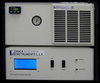
Description: The new CR-3, like the CR-2, utilizes a closed cycle cryocooler, but differs in that it cannot be used on aircraft. The CR-3 is specifically designed for long-term, continuous-use applications where the instrument will mounted in a fixed location such as a laboratory. Cryocooler
- Dew Point Range: -184 to 104 F
- Dew Point Accuracy: 0.27 F
- Operating Temperature: -40 to 140 F
- Electrical Outputs: Analog Current, Analog Voltage
-
Supplier: OMEGA Engineering, Inc.
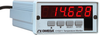
Description: The model CYD211 Temperature Monitor provides the accuracy, resolution, and interface features of a benchtop temperature monitor in an easy to use, compact instrument. With appropriate sensors, the CYD211 measures temperature from 1.4 to 800 K and in difficult sensing conditions, including high
- Number of Digits: 5
- Analog Input Channels: 1
- Width: 96 mm
- Height: 48 mm
-
Supplier: Lake Shore Cryotronics, Inc.
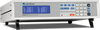
Description: The Model 325 dual-channel cryogenic temperature controller is capable of supporting nearly any diode, RTD, or thermocouple temperature sensor. Two independent PID control loops with heater outputs of 25 W and 2 W are configured to drive either a 50 Ω or 25 Ω load for optimal cryocooler
-
Supplier: Lake Shore Cryotronics, Inc.
Description: The Model 325 dual-channel cryogenic temperature controller is capable of supporting nearly any diode, RTD, or thermocouple temperature sensor. Two independent PID control loops with heater outputs of 25 W and 2 W are configured to drive either a 50 Ω or 25 Ω load for optimal cryocooler
- Number of Zones (if applicable): 10 zones
- Features: Chart Recorder
- Interface: Computer Programmable, Digital Front Panel
- Control: PID Control
-
Supplier: Lake Shore Cryotronics, Inc.
Description: The Lake Shore Model 224 temperature monitor offers precision measurement in a wide range of cryogenic and higher-temperature applications with the ability to easily monitor up to 12 sensor channels. It provides better measurement performance in applications where researchers need to ensure
-
Supplier: Micromeritics
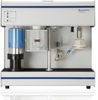
Description: spectrometer. Optional Vapor Generator permits analysis using vaporized liquids in an inert carrier stream. Optional CryoCooler enables the start of an analysis at sub-ambient temperature. Hardware Advantages The AutoChem II features stainless-steel construction, fully automated flow and
- Properties Analyzed: Adsorption / Desorption (Chemisorption/ Physisorption), Surface Area - Total
- Display & Special Features: Analog Meter
- Test Media: Chemicals, Metals
- Mounting / Loading Options: Laboratory / Batch
-
Supplier: SAE International
Description: multilayer insulation (MLI) blankets, thermal straps, and surface coatings to manage the transfer of waste energy from sources through structures and ultimately to radiators. Two detectors are cooled to 120 K and the third to 180 K by means of a mechanical pulse tube cryocooler. The optical
-
Supplier: Northrop Grumman Corporation
Description: integrated circuits, cryogenic heat switches, wavefront sensing and control, large precision cryogenic structure, and the MIRI cryocooler.






Find Suppliers by Category Top
Featured Products Top
-

Cryogenic refrigeration technology is one of the core technologies of refrigeration equipment
(read more)
Browse Cryogenic Equipment Datasheets for Cryo H&I Co.,Ltd. -
using multiple sensors and sensor types. Used with silicon diodes, it provides accurate measurements in cryo-cooler and cryo-gas production applications from 1.4 K to above room temperature. Connected to PTC RTDs (platinum and rhodium-iron sensors), the Model 224 works well in cryogenic applications at liquid nitrogen temperatures. (read more)
Browse Cryogenic Equipment Datasheets for Lake Shore Cryotronics, Inc.
Conduct Research Top
-
What are the Differences Between Pulse Tube and Gifford-McMahon Cryocoolers?
It 's a question we get often from customers who are evaluating their options for sample cooling: What are the main differences between pulse tube (PT) cryocoolers and Gifford-McMahon (GM) cryocoolers To begin with, three differences have to do with price, intended orientation, and maintenance
More Information Top
 Indicates content that may require registration and/or purchase.

-
Miniature Joule-Thomson Cryocooling
Various books on the general topic of cryogenics and even those focused on cryocoolers include at most…
-
Cryogenic Engineering
…Technology (NIST) and Ball Aerospace and Technologies, with major emphasis on pulse-tube, Stirling, and Joule–Thomson cryocoolers .
-
Spacecraft fabrication and test MODIL. Final report
I. Cryocooler Thrust .
-
Advanced cryogenic technology for space based infrared surveillance and stored cryogens
space cryocooler developments have achieved performance and capability that have made the use of active refrigeration in…
-
Refrigeration for superconductors
Keywords—Applications, cooling, cryocoolers , cryogenics, su- perconducting devices, superconducting magnets, superconducting power systems, superconductors.
-
Microscale Heat Transfer Fundamentals and Applications
Space applications also benefit from a reduction in the size of cryocoolers , which has brought about considerable…
-
An Introduction To Closed Cycle Cryogenic Coolers
…of each electro- optical system it is generally necessary to custom design the cryocooler to fit the…
-
Overview of Air Force Research Laboratory cryogenic technology development programs
This paper will describe the range of Stirling, pulse tube, Reverse Brayton, Joule-Thomson, and Sorption cycle cryo- coolers currently under development to meet current and future Air Force and DoD requirements.