
Products & Services
See also: Categories | Featured Products | Technical Articles | More Information-
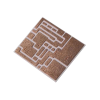
Description: DBC (Direct Bonded Copper) is comprised of an insulating layer of ceramic substrate such as Al2O3 (aluminum oxide) and AlN (aluminum nitride) and copper connections to ensure electrical conductivity at high temperatures. For maximum reliability and performance, modules must exhibit
- Features: Alumina / Aluminum Oxide, Specialty Ceramic
- Specialty Ceramic Type: Aluminum Nitride
- Applications: Battery / Fuel Cell, Construction & Building / Architectural, Electrical / HV Parts, Electronics / RF-Microwave
- Performance Features: Metallized / Silvered (Electrode, Mirror)
-
Description: traditional ceramic is alumina Al2O3. Alumina has excellent electrical insulation properties, as well as high chemical resistance and low thermal expansion. Alumina ceramic substrates can withstand high temperatures while retaining their strength and hardness. Alumina ceramic
- Features: Alumina / Aluminum Oxide
- Specialty Ceramic Type: Aluminum Nitride
- Shape / Form: Plate / Board (e.g., Fiberboard)
-
Description: AlN substrate possesses a wide range of superior physical properties, including high breakdown electric field strength, thermal conductivity, resistivity, and so forth. In fields like LED packaging, power modules, wafer bonding, power resistors, and metalized substrates (such as thin
- Density: 3.2499979488370605 to 3.349997885724355 g/cc
- Max Use / Curie Temperature: 1,200 C
- Dielectric Strength: 17,000,000 V/m
- Specialty Ceramic Type: Aluminum Nitride
-
-
Description: DBC ceramic substrate, short for Direct Bonded Copper Ceramic Substrate, is an advanced material composed of a ceramic substrate (typically Al2O3 or AlN) and copper, tightly joined together through a hypo-eutectic process. This unique combination of materials results in a
- Performance Features: Metallized / Silvered (Electrode, Mirror)
- Features: Other, Specialty / Other, Specialty Ceramic
-
Description: Direct Plated Copper (DPC) is a newest development in the field of Ceramic Substrate PCBs, its process is by magnetron sputtering technology to deposit a metal layer (Ti/Cu target) on the surface of the ceramic substrate which result in copper thickness' ranging from 10um to 130um, and
- Features: Other, Specialty / Other, Specialty Ceramic
-
Supplier: 3X Ceramic Parts Company Limited
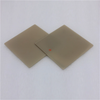
Description: Thickness 0.15mm 0.25mm 0.5mm Aluminum Nitride Substrate The Advantage of Aluminum Nitride Substrate : 3X Ceramic Parts company use tape casting to produce high thermal conductivity aluminum nitride substrates . * High Thermal Conductivity ≥170 W/ m.k * Meet Variesties of
- Density: 3.3299978983468956 g/cc
- Thermal Conductivity: 170 W/m-K
- MOR / Flexural Strength: 58,014.7357428788 psi
- Dielectric Constant (Relative Permittivity): 8.8 #
-
Supplier: MacDermid Alpha Electronics Solutions
Description: Product Overview With proven reliability in Electric Vehicle (EV) and rail traction applications, ALPHA Argomax 5022 Paste is specifically designed for low-pressure sintering die attachment on dried paste applied to copper-finished Direct Bonded Copper (DBC) substrates. It is
- Joining Process / Product Form: Paste
-
Supplier: Isabellenhutte USA
Description: Features Heavy copper connectors Excellent long-term stability Ideal suited for mounting on DBC / IMS substrate Max. solder temperature up to 350°C / 20 min. RoHS 2011/65/EU compliant Applications Current sensor for power hybrid applications High current applications for the automotive
- Resistance Range: 0.000525 to 0.003 ohms
- Tolerance: 1 to 5 +/- %
- Temperature Coefficient (TCR): 60 to 320 ±ppm/°C
- Power Rating: 13 watts
-
Supplier: FX PCB Co., Ltd.
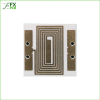
Description: about this technology, you can read here DBC and DPC have high thermal conductivity, as the copper foil is bonded or plated to the ceramic directly without any middle layer, However, DBC will have the problem of the microbubbles between the ceramic substrate and copper. FX PCB
- Thickness: 0.00984251968503937 to 0.014960629921259842 inches
- Electrical Resistivity: 10 ohm-cm
- Features: Specialty / Other
-
Supplier: Isabellenhutte USA
Description: Excellent long term stability High application temp. range - 55 to +170 °C Max. solder temp. up to 350 °C / 30 sec AEC-Q200 qualification Ideal suited for mounting on DBC / IMS substrate
- Resistance Range: 0.0002 to 0.005 ohms
- Tolerance: 1 to 5 +/- %
- Temperature Coefficient (TCR): 20 to 50 ±ppm/°C
- Power Rating: 3 to 12 watts
-
Supplier: Wolfspeed
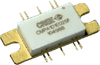
Description: or GaN-on-Si, including higher breakdown voltage, higher saturated-electron-drift velocity and higher thermal conductivity. This Ku Band MMIC is available in a 10-lead, 25-mm x 9.9-mm, metal/ceramic flanged package for optimal electrical and thermal performance. PAVE = 42 dBm, IM3 = -30 dBc,
-
Supplier: Richardson RFPD
Description: device is manufactured using 0.25µm Power pHEMT process, including, via holes through the substrate and air bridges. It is available in chip form.
- Frequency Range: 8,500 to 11,500 MHz
- Maximum Gain: 27.5 dB
- Minimum Operating Voltage: 8 volts
- Maximum Operating Voltage: 8 volts
-
Supplier: Marki Microwave LLC
Description: The MFBP-00160GSM1 surface-mount bandpass filter is an ideal solution for extremely small form factor, high rejection filtering. The MFBP-00160GSM1 features a 2.9-4.7GHz 1dBc passband and 1.2dB center frequency insertion loss. Its advanced glass substrate technology allows production of
- Frequency (Fc): 2,900 to 4,700 MHz
- Filter Type: Bandpass
- Features: Other
- Filter Technology: Passive Filter
-
Supplier: Marki Microwave LLC
Description: The MFLP-00046GSM2 surface-mount lowpass filter is an ideal solution for extremely small form factor, high rejection filtering. The MFLP-00046GSM2 features a 2.3 GHz 3 dBc cutoff and 23 dB passband return loss. Its advanced glass substrate technology allows production of smaller filter
- Frequency (Fc): 0 to 2,300 MHz
- Filter Type: Low Pass
- Features: Other
- Filter Technology: Passive Filter
-
Supplier: Marki Microwave LLC
Description: The MFLP-00044GSM2 surface-mount lowpass filter is an ideal solution for extremely small form factor, high rejection filtering. The MFLP-00044GSM2 features a 3.0 GHz 3 dBc cutoff and 24 dB passband return loss. Its advanced glass substrate technology allows production of smaller filter
- Frequency (Fc): 0 to 3,000 MHz
- Filter Type: Low Pass
- Features: Other
- Filter Technology: Passive Filter
-
Supplier: Marki Microwave LLC
Description: The MFHP-00022GSM2 surface-mount highpass filter is an ideal solution for extremely small form factor, high rejection filtering. The MFHP-00022GSM2 features a 1.5GHz 3dBc passband and 20dB passband return loss. Its advanced glass substrate technology allows production of smaller filter
- Frequency (Fc): 1,500 to 30,000 MHz
- Filter Type: High Pass
- Features: Other
- Filter Technology: Passive Filter
-
Supplier: MacDermid Alpha Electronics Solutions
Description: and ease of use. The paste has specifically been developed for large packages (or components) on gold- and silver-finished substrates (like DBC, Aluminum and Copper coolers). Argomax 2141® paste offers exceptional performance and is aligned with the Argomax range. High Thermal and








Find Suppliers by Category Top
Featured Products Top
-
 conductive DBC substrate. Permanent power up to 20 W Constant currents up to 140 A Mounting: Reflow-, IR-soldering or bonding on substrate 4-terminal-connection technology Conductive DBC-/IMS-soldering assembly Nickel-plated/Au-plated bond (read more)
Browse Power Resistors Datasheets for Isabellenhutte USA -
Post?processing Plating: Available nickel, gold, silver, or tin plating to enable brazing with copper, Kovar, stainless steel, etc. Applications: Power Electronics: Packaging for IGBT modules, DBC/AMB substrates (read more)
Browse Industrial Ceramic Materials Datasheets for Shenzhen Great Precision Ceramic CO., LTD.
Conduct Research Top
-
The Differences Between DBC and DPC Ceramic Substrates
For electronic packaging, ceramic substrates play a key role in connecting the internal and external heat dissipation channels, as well as both electrical interconnection and mechanical support. Ceramic substrates have the advantages of high thermal conductivity, good heat resistance, high
-
Direct Bonded Copper Ceramic Substrates
DBC ceramic substrate, short for Direct Bonded Copper Ceramic substrate, is an advanced material composed of a ceramic substrate (typically Al2O3 or AlN) and copper, tightly joined together through a hypo-eutectic process. This unique combination of materials results in a substrate with exceptional
-
AMB Alumina Copper-Clad Plate
Compared with traditional DBC substrate, ceramic substrate prepared by AMB technology not only has higher thermal conductivity, better copper layer bonding, but also has the advantages of lower thermal resistance, higher reliability. Alumina base plate is the most cost-effective AMB ceramic base
More Information Top
 Indicates content that may require registration and/or purchase.

-
http://etd.auburn.edu/bitstream/handle/10415/473/LIU_YI_31.pdf?sequence=1
Direct Bond Copper ( DBC ) substrates have been used for power electronics for many years because of the following advantages: .
-
Power Electronic Packaging
Chapter 7 discusses the material characterization for power packaging including the polyimide coating behavior on MOSFET die; die attach delamination characterization; EMC characterization; the mechanical and thermal behavior of ceramic and direct bond copper ( DBC ) substrates ; solder material characterization; lead frame material …
-
Hybrid Solid- and Liquid-Cooling Solution for Isothermalization of Insulated Gate Bipolar Transistor Power Electronic Devices
However, these high heat flux cooling solutions, when applied on the back side of the direct-bonded copper ( DBC ) substrate and designed for thermal management of the entire IGBT module, cannot remove the nonuniform temperature distribution on the individual IGBT chips.
-
Investigation of a Sic Module with a High Operating Temperature for Power Applications
The module was designed to have a temperature distribution of 200 ºC at the chip joint, 150 ºC at the DBC substrate joint and 65 ºC at the heatsink.
-
Impact of joint materials on the reliability of double-side packaged SiC power devices during high temperature aging
In the present study, we use the SBB tech- nology andvacuum reflow process to bondtheAl electrodeof power devices to a direct bonded copper ( DBC ) substrate .
-
High-Temperature High-Power Packaging Techniques for HEV Traction Applications
The most popular DBC substrate utilizes copper layers ranging from 0.2–0.4 mm in thickness in conjunction with AlN substrates.
-
High-Temperature High-Power Packaging Techniques for HEV Traction Applications
The most popular DBC substrate utilizes copper layers ranging from 0.2–0.4 mm in thickness in conjunction with AlN substrates.
-
Reliable and repeatable bonding technology for high temperature automotive power modules for electrified vehicles
Proof-of-concept fabrication was demonstrated using silicon die and conventional direct bonded copper ( DBC ) substrates , which are generally used for conventional power modules.
-
A Novel Three-Dimensional Packaging Method for Al-Metalized SiC Power Devices
Al-metalized elec- trodes of a SiC power chip can be robustly assembled to a direct bonded copper ( DBC ) substrate with this method.
-
Design trade-offs and reliability of power circuit substrates with respect to varying geometrical parameters of direct copper bonded Al2O3 and BeO
They are adhesion test, thermal cycle and thermal shock evaluation and bond integrity after solder and braze cycling of the DBC substrates .