
Products & Services
See also: Categories | Featured Products | Technical Articles | More Information-
Supplier: Zimmer Group
Description: End of Arm Tools
-
Supplier: Impaqt Robotics Private Limited
Description: End of Arm Tools
-
Supplier: Devonics, Inc.
Description: End of Arm Tools
-
-
Supplier: OnRobot A/S
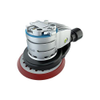
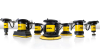
Description: compressor for this economical electric sander. Use this flexible tool for a wide range of part geometries and materials to get greater consistency, higher finish quality, and lower scrap rate. You’ll reduce workplace dust due to the use of standard 3M clean sandpaper discs and reduce
-
Supplier: RAD
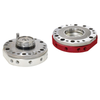
Description: damage to the robot arm or tooling in the event of a crash and maximizes uptime by automatically returning to within 0.0005″ (0.013mm) of its starting position once it has been separated from the source of the crash. The Ultimatic™ Collision Sensor is RAD’s
-
Supplier: Amtru Business AG
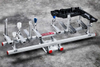
Description: The Tool changing system Tool-Changer 200 provides a complete system of matching components for the automatic tool change, suitable for the various tools and applications. The changer base plate (together with the tools) gives the possibility to dock the tools in the horizontal position. This
-
Supplier: SMARTSHIFT robotics
Description: System, which offers universal compatibility for lightweight industrial and collaborative robots and various tools. One of the standout features of the SMARTSHIFT Robotics Manual Tool Changer is its ease of use. It is ready for easy mounting and tool changing in all applications
- Tool Weight: 0.33075 lbs
- Pay Load or Weight: 110.25 lbs
- Applications: Material Handling, Pick and Place
-
Supplier: Colombo Filippetti Spa
Description: The new generation VTC vertical tool changer by COLOMBO FILIPPETTI spa carries out VTC typical movements with very limited overall dimensions; it allows the tool exchange in shorter times and with greater stiffness. For now, only avaliable in size 40.
-
Supplier: Millibar, Inc.
Description: into place. Even if your facility has a variety of robot brands, the Millibar Manual Tool Changer ecosystem allows tools to be moved between robots.
- Pay Load or Weight: 110.25 lbs
-
Supplier: ABB Process Automation Division
Description: End of Arm Tools
-
Supplier: Bota Systems AG
Description: into existing systems. Additionally, the sensor comes with complete installation kits for use with Kinova Jaco, making integration with this popular robotic arm easy. One of the significant advantages of Robuki's Rokubi FT sensor is its open-source software compatibility, which
- Applications: Assembly, Medical / Sterile
-
Supplier: Mirka (UK) Ltd.
Description: Mirka robotic sanding heads can be fitted to most robot arms on the market. Compact and lightweight, they are specifically designed for robot sanding and built for continuous use, suitable to mounting on low payload robot arms. A Mirka robotic sander comes with a standardized ISO
-
Supplier: AGS Automation Greifsysteme Schwope GmbH
Description: AGS Automation's PreciGrip gripper construction kit is a state-of-the-art solution for creating customizable and flexible gripper systems. The kit is based on years of expertise in gripper construction, and is designed to optimize the orientation of the gripper components at a
- Applications: Assembly, Pick and Place
-
Supplier: Kosmek USA Ltd.
Description: High-accuracy Robotic Hand Changer enables multiple functions of robots and setup time reduction. It enhances the productivity of automated production line.
- Pay Load or Weight: 507.15 lbs
-
Supplier: Nordbo Robotics
Description: The Nordbo Active Compensation unit (NAC) assures a constant applied force, regardless of the complexity of the surface curvature, processing speed and orientation of the tool. Sensors inside the product register the contact with the workpiece, keep the applied force constant
- Pay Load or Weight: 5.733 lbs
-
Supplier: Robotiq
Description: control of your automation project. FEATURES: Compact and lightweight: Designed to reach tight spaces and chamber holes. Adaptable screw feeder: Intuitive adjustment in four quick steps, to fit M2.5 to M5 screws with no need to buy extra parts. 5-min production changeovers: Designed to enable
- Applications: Assembly
-
Supplier: Vectis Automation
Description: fixed work envelope. Move the cobot welder to where the work is. No programming experience necessary. Make your first weld within 10 minutes of plug-in using our intuitive interface, weld templates, and tutorials. DIY install, setup, and training to save you time and money. No need to fly to
- Robot Type: Collaborative / Cobot
- Industry / Application: Welding
-
Supplier: Dynabrade, Inc.
Description: Features & Benefits Easy to set-up Control of sanding process and improved consistency. Control of sanding force, pattern, abrasive changes. Eliminates operator fatigue and potential ergonomic injuries. High durability of pneumatic motor allows continued operation. Tools can be
- Robot Type: Articulated Robot
- Features: Other / Specialty
-
Supplier: GIMATIC S.p.A.
Description: Manual quick changers are very popular in the plastics sector and are used to quickly change EOATs while the mould is being changed. Gimatic’s QC series of quick changers enable a significant reduction of tool change time as they feature built-in air chan.
-
Description: system design that is both compact and simple. The AOK Family is engineered to deliver unmatched performance and durability for industrial use. The end-of-arm-tool is specifically designed to withstand harsh conditions and offers twice the power output of standard devices
-
Supplier: TÜNKERS Maschinenbau GmbH
Description: For side panel tool changer.
-
Supplier: Comau S.p.A.
Description: robots. Its modular design, available in two standard chassis configurations ("C" and "X"), ensures versatility and meets 100% of typical body shop requirements. Standout features of the Compact Welding Gun include its full compatibility with any robot brand, thanks to options for both
- Applications: Welding
-
Supplier: Radwell International
Description: GRIPPER, 2-FINGER, ANGULAR, 4-6 PAR PRESSURE, M5 MOUTNING THREAD. FREE 2 YEAR RADWELL WARRANTY
-
Supplier: Panasonic
Description: Best results utilizing Panasonic MIG/MAG/TIG welding torches through an optimal transition, long lifetime and very slim design to achieve best accessibility.
- Process Capability: MIG (GMAW), TIG (GTAW), Welding Equipment
-
Supplier: DEPRAG, Inc.
Description: Treatment of forms, dies and punches Finishing of different type of cast iron parts, welding seams, deburring of edges or any other surface work in various industries.
- Rotary Speed: 15,300 rpm
- Power: 0.938154269431974 HP
- Power Source: Air / Pneumatic
- Applications / Materials Abraded: Automotive
-
Supplier: Tech Rim Standards, LLC
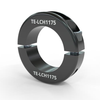
Description: Clamp Collar for TE-LRA Tooling Adapter
- Clamping Mechanism: Lever
- Application: Machine Shop
- Actuation: Manual
-
Supplier: Tech Rim Standards, LLC
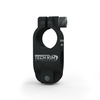
Description: 1.00 inch to 1.00 inch, Cross Clamp
- Clamping Mechanism: Lever
- Application: Machine Shop
- Actuation: Manual
-
Supplier: Tech Rim Standards, LLC
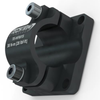
Description: Flange Mount, 1.50 inch diameter
- Clamping Mechanism: Lever
- Application: Machine Shop
- Actuation: Manual
-
Supplier: Tech Rim Standards, LLC
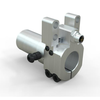
Description: Tooling Adaptor, 1.50 inch, (4) 1/4 inch Ports, 5-Pin M12 Connector
- Clamping Mechanism: Lever
- Application: Machine Shop
- Actuation: Manual
-
Supplier: Industrial Magnetics, Inc.
Description: Our Permatrol Transporter® is used for automated transferring of steel sheets and parts in various industries including Automotive, Appliance and Office Furniture. The Permatrol Transporter® requires only a momentary flow of electric current, instead of shop air, to provide
- Maximum Load Capacity: 0.0885 to 0.5 tons
- Use: Automotive, General Industrial, Sheet / Plate
- Product Type: Magnet Lifter
- Features: Other
-
Supplier: Industrial Magnetics, Inc.
Description: Durable design for long maintenance free operation The Transporter® LP is designed to directly replace vacuum cups with minor tooling and valve adjustments. Powerful Rare Earth magnets positively hold the parts during transfer, greatly reducing the chance of slipping and shifting
- Maximum Load Capacity: 0.0035 to 0.081 tons
- Use: General Industrial, Sheet / Plate
- Product Type: Magnet Lifter
- Features: Other
-
Supplier: Micromega Dynamics
Description: sensor(s) at the end of the working period using a docking station connected to a PC. Software allows automatic computation and display of workers’ exposure to hand arm vibration, and indicates how it compares with limit and action values defined in the vibration
- Acceleration: 2,000 to 50,000 g
-
Supplier: Givens Engineering Inc.
Description: Torque arms support the weight of the end effector / tooling, instead of the operator. The load 'floats', no up/down pushbuttons are required. The arms are lightweight and agile. The axis assemblies are made from anodized aluminum. Softstops at the first and
- Capacity: 30 lbs
- Stroke: 4 inch
- Actuation: Air / Pneumatic
- Type: Manipulator / Lifter
-
Supplier: ARM Inc.
Description: The Internet of Things (IoT) is about devices and services delivering end-to-end solutions. The ARM® mbed„¢ IoT Device Platform is the fastest way to create commercial and interoperable connected IoT devices based on ARM microcontrollers. Interoperability between
-
Supplier: ISYBOT
Description: modes: Assistance, Restitution, Parallelization, and Tele-operation, which provide flexibility for various applications, enhancing the user’s ability to optimize manual operations without extensive retraining. One of the standout features of the SYB3 is its angular velocity of 1
- Number of Axes: 3 #
- Load Capacity: 10 kg
- Reach: 1,600 mm
- Robot Type: Collaborative / Cobot, Swing Arm Robot












Find Suppliers by Category Top
Featured Products Top
-
 Ratchet Arms are ratcheting levers for use in a number of operations; machine tools, positioning tables, military applications, material handling, drilling machines, pipe tapping, paper machines. Handles are available in cast iron (heavy duty) or stamped steel (read more)
Browse Hand Tools Datasheets for Lowell Corporation -
The HPMA-X is the latest addition to the company's family of high-precision tool setting arms and has been engineered to perform in the most challenging turning applications. Learn More (read more)
Browse Machine Alignment Equipment Datasheets for Renishaw -
can work together within a continuous workflow. Rather than acting as standalone tools, these technologies help create a continuous flow of trusted engineering data - from early development through validation and certification (read more)
Browse Data Acquisition Datasheets for Hottinger Brüel & Kjær A/S -
bearings are best suited for applications such as a rocker arm or platform where the arm width is the same as the center sleeve length and both outer sleeves are fixed. The main benefit of double ended bearings is that they are radially stiffer than cantilever bearings where only a single bearing is (read more)
Browse Plain Bearings and Sleeve Bearings Datasheets for C-Flex Bearing Company -
. Because wave springs are coiled rather than stamped, many modifications can be implemented without special tooling, making both standard and custom designs efficient to produce. Multi-Turn Wave Spring End Types (read more)
Browse Washers Datasheets for Rotor Clip Company, Inc. -
, specializing in probing and scanning. The FARO Quantum X FaroArm Series is part of our portfolio of portable measurement arms, offering up to a 15% increase in accuracy over comparable previous generation models. The configurable and scalable arm makes FARO a market leader in accuracy. Quantum X (read more)
Browse Coordinate Measuring Machines (CMM) Datasheets for FARO CREAFORM -
and construction industry with applications in commercial, residential, agricultural and industrial markets. An estimated annual volume in the vicinity of 50,000 lineal feet may justify an investment in new tooling. We work with engineers, designers, product managers and inventors to develop (read more)
Browse Metal Profiles and Structural Shapes Datasheets for MP Metal Products -
To help automotive manufacturers improve their acoustic, vibration and mechanical performance processes, Hottinger Brüel & Kjær (HBK) has combined its NVH end-of-line (EoL) testing tool - Discom NVH production testing systems - with its (read more)
Browse Vibration Sensors Datasheets for Hottinger Brüel & Kjær A/S -
measurement arm Performing inspections with traditional hand tools is time-consuming and creates clutter on the shop floor. The Gage Max FaroArm transforms the process, allowing machine shops and small production lines to meet even the most demanding quality specifications with one (read more)
Browse Coordinate Measuring Machines (CMM) Datasheets for FARO CREAFORM -
's wrenches from Lowell Corporation give high line utility workers multiple options in a single tool for greater flexibility when tackling a variety of common pole fasteners, lag bolts, and clamps. Each wrench has a ratcheting socket at one end and a ratcheting box gear at the other. (read more)
Browse Wrenches Datasheets for Lowell Corporation
Conduct Research Top
-
What are End Effectors and Why are they So Important in Robotics?
The end effector (also referred to as end-of-arm tooling) is one of, if not the, most important component in a robotic arm. Without the end effector, a robotic arm is essentially useless. Whether it 's a gripper, welding torch, camera, or something else entirely, end effectors are the component
-
What Makes a Robot a Cartesian Robot?
First, a Cartesian system is one that moves in three, orthogonal axes - X, Y, and Z - according to the Cartesian coordinates. (Although it should be noted that a rotary axis - in the form of an end effector or end of arm tooling - is sometimes included on the outermost axis of a Cartesian robot.)
-
What is a Cartesian Robot?
First, a Cartesian system is one that moves in three, orthogonal axes -- X, Y, and Z -- according to the Cartesian coordinates. (Although it should be noted that a rotary axis -- in the form of an end effector or end of arm tooling -- is sometimes included on the outermost axis of a Cartesian robot.)
-
Top 10 Questions to Ask When Choosing an EOAT
Without the proper end-of-arm tooling (EOAT), robotics adds little value to a production process. In fact, choosing the wrong EOAT can increase downtime and drive down productivity. Here are the essential EOAT solution questions to ask to ensure you choose an EOAT that maximizes your production
-
EETimes.com | Electronics Industry News for EEs & Engineering Managers
ARM ponders a four-processor core While stressing that his paper at the Multiprocessing System-on-Chip (MPSOC) conference discussed a research project, John Goodacre, multiprocessing core manager at ARM Ltd. (Cambridge, England), disclosed some of the thinking at the company. Tool vendors mulling
-
The Difference Between Cartesian, Six-Axis and SCARA Robots
of the payload, including any tooling, at the end of the robot arm. What limits SCARA and six-axis robots is that they support loads on extended arms. Consider a machining center that makes bearing assemblies of 100 kg or more. That payload exceeds the capabilities of all but the largest SCARA or six-axis
-
EETimes.com | Electronics Industry News for EEs & Engineering Managers
of its Semiconductor Technology group in the fall. ASML in the Netherlands is fully endorsing the move. Tegal sales fall 46% from prior quarter, but backlog uptick seen PETALUMA, Calif.-- Plasma etch tool supplier Tegal Corp. here reported a 46% sequential drop in revenues to $6.2 million
More Information Top
 Indicates content that may require registration and/or purchase.

-
Rob | Arch 2012
This approach is not constrained to just industrial robot arms, but can also be objects in the environment or end arm tooling .
-
http://dspace.mit.edu/bitstream/handle/1721.1/91424/893612785-MIT.pdf?sequence=2
Two robotic end arm tools were developed.
-
International Encyclopedia of Robotics: Applications and Automation Volume 3 Complete Document
The type of robotic end-of- arm tooling ( end -effector) has a strong impact on the performance of a robotic application (1). " .
-
http://search.abb.com/library/download.aspx?documentid=9akk105408a6279&languagecode=en&documentpartid=&action=launch
The vacuum tooling will be a combination of selecting and designing the end of arm tooling , vacuum source and pneumatic controls to actuate vacuum to the end of arm tooling .
-
Robotics Case Studies - PIAB’s Vacuum Gripper System Plays ...
Flexible End of Arm Tooling Cuts Costs and Prevents Injuries .
-
Robotics Case Studies - SCARA Robot Equipped with an Integr...
One attribute of the end of arm tooling is that each ‘‘finger’‘ is independently activated, giving it the ability to singulate tablets at pick up and set down.