Products/Services for Gen 3 Night Vision Binoculars
-
 Binoculars - (64 companies)...for special use. Special use binoculars include those for use in water or at night, or those equipped with photographic equipment. Digital camera binoculars come fitted with a digital camera for taking high-quality photographs. Types Night vision...
 -
 Vision Sensors - (165 companies)Vision sensors are industrial products that automate decisions and processes by the use of video cameras linked to application-specific software on a user interface. These are also known as machine vision systems, and are useful for measurement...
 -
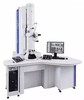
 Machine Vision Systems - (618 companies)Machine vision systems are used for automated inspection and measurement in production environments. They are an integrated camera, image capture, processing, storage, analysis, and control system for automated inspection and measurement...
 -
Machine Vision Software - (77 companies)Machine vision software is used to control and drive machine vision systems. Machine vision (MV) is the application of computer vision to industrial and manufacturing applications. Whereas computer vision is mainly focused on machine-based image...
-
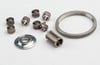
 Vision Calibration Targets - (23 companies)Vision calibration targets are precision test samples or patterns that are printed or etched on a substrate of glass or other material for dimensional calibration and depth-of-field determinations of machine vision systems, cameras or microscopes...
 -
Thermal Imagers - (353 companies)...objects above 0 Kelvin. They detect energy emissions (heat) in the infrared wavelength spectrum of 1 micron to 100 microns. Thermography, thermology, thermal wave imaging, thermovision and thermal infrared night vision use thermal imagers, some...
-
Binocular Repair Services - (3 companies)...proof binoculars need to be sealed and filled with nitrogen to provide internal pressure to help keep water out of the binoculars. Imaging systems: some more advanced military or police binoculars have low-light, night vision, or thermal imaging...
-
Imaging Workstations - (257 companies)Imaging workstations are vision systems used for metrology or image analysis in laboratory and cleanroom settings. Imaging workstations are vision systems with integrated camera, image capture, processing, storage, analysis and control systems...
-
Image Intensifiers - (12 companies)Conventional instrument models provide support in the imaging of X-rays, gamma rays, and infrared light. They are found in many devices such as night vision goggles. Types of Image Intensifiers. Image intensifiers are divided into three primary product...
-
Camera Lenses and Video Lenses - (269 companies)Camera lenses and video lenses attach to video cameras for use in machine vision, quality monitoring, security, and remote monitoring for industrial and commercial operations. This search form does not cover consumer video camera lenses. Camera...
Product News
-
 Rosenberg USA
Gen 3+ Backward-Curved EC Fans Rosenberg USA is introducing backward-curved plug fans featuring new larger size 6 Gen 3+ EC motors. The first of the new fans scheduled to ship from the company 's North Carolina warehouse by late January. The new Gen 3+ fans will come in sizes 450/500/560/630-mm and will offer all the features and benefits of Rosenberg 's innovative Gen 3 motors, plus more power - up to 7 kW. The new motors are 100% speed controllable and are CE, UL and RoHS approved. The first Gen 3+ models to become... (read more)Browse Electronic Cooling Fans Datasheets for Rosenberg USA -
DigiKey
Gen 3 1,200 V SiC Schottky Diodes Vishay's 16 Gen 3 1,200 V silicon-carbide (SiC) Schottky diodes feature a merged PIN Schottky (MPS) design. They also combine high surge current robustness with low forward-voltage drop, capacitive charge, and reverse leakage current to increase efficiency and reliability in switching power designs. The diodes ' MPS structure, which features a backside thinned via laser annealing technology, reduces their forward-voltage drop. The devices ' low typical reverse leakage current reduces conduction... (read more) -
Rosenberg USA
560-mm Gen 3+ Backward-Curved EC Fans Rosenberg's new 560-mm backward curved fans with size 6 Gen 3+ EC motors deliver all the features and benefits of our innovative Gen 3 motors plus more cooling power. The Rosenberg GKHM 560-CIG.160.6NA Gen3+ (PN # N88-56604) comes standard with 7.2kW 3~ 460V EC motor, coupled to a super-efficient impeller. Airflow at 460-Volt exceeds the two "magic numbers " of 6 kW fans for data center cooling and high-efficiency HVAC: 6000 cfm @ 6 " of pressure and 8000 cfm @ 4 " of pressure. The new fans... (read more)Browse Electronic Cooling Fans Datasheets for Rosenberg USA -
Rosenberg USA
High efficiency, low noise Gen 3 EC plug fans Rosenberg new high efficiency, low noise I-Series Gen 3 EC plug fans deliver up to 70% efficiency. Our Gen 3 EC motor operates at high efficiency, even in partial loads, and is paired with our new, advanced-design aluminum I-impeller, featuring five backward-curved, profiled blades and an efficiency-optimized circumferential diffuser. Noise levels range from a high of just 89 dB to a low of 68 db while creating up to 12% more air than earlier models. N88-56700 560MM, 230 or 460V, up to 8000 CFM... (read more)Browse Fans and Blowers (industrial) Datasheets for Rosenberg USA -
Rosenberg USA
ECFanGrid Now Available with New "Gen 3 " EC Fans radial fans for air handling units. Thanks to its modular design, the ECFanGrid can be assembled on site, whether in retrofit or new project applications. The ECFanGrid 's flat profile also creates up to 50% space savings. Compared to old-style radial fan units, the ECFanGrid is easier to install, provides higher volume and more uniform airflow with less low-frequency noise and built-in redundancy for greater reliability. Rosenberg's Gen 3 EC motor makes the ECFanGrid even more reliable... (read more)Browse HVAC Fans and Blowers Datasheets for Rosenberg USA -
Pleora Technologies Inc.
Feature-rich GigE & USB3 Vision Software Dev Kit avoiding supporting multiple APIs from different vendors. Compared to camera vendor provided SDKs, eBUS frees developers from being tied to a specific camera, and instead can they choose the device that is best for the application. eBUS SDK complies fully with the GigE Vision, USB3 Vision and GenICam standards. It interoperates seamlessly with Pleora 's extensive portfolio of video interface products, as well as with standards-compliant products from other manufacturers. Purchasing the eBUs SDK... (read more)Browse Image Analysis Software Datasheets for Pleora Technologies Inc. -
Suzhou Ele Mfg Co., Ltd.
Tamper-Resistant Night Light Wall Outlets ELEGRP night light wall outlets combine everyday power access with low-level pathway illumination for residential and light commercial spaces. The series includes ERL251530 with 3000K light, ERL251540 with 4000K light, and ERL251560 with 6000K light. Each model is designed for applications such as bedrooms, hallways, bathrooms, and other areas where convenient nighttime orientation is useful. Key Features & Benefits: Tamper-Resistant Outlet: Adds receptacle protection for everyday residential... (read more)Browse Electrical Receptacles Datasheets for Suzhou Ele Mfg Co., Ltd. -
MarShield
MarShield at OCNI Bruce County Industry Night MarShield will attend OCNI Bruce County Industry Night on Wednesday, May 27, 2026, at the Bruce County Museum & Cultural Centre in Southampton, Ontario. The event brings together professionals and leaders from across the nuclear energy sector for industry dialogue, networking, and peer connection. Walter Silva, Vice President of MarShield, will represent the company at the event. As Canada continues to examine the role of nuclear power in meeting energy needs, conversations around safety... (read more)Browse Radiation Shielding Datasheets for MarShield -
Richardson RFPD
Wolfspeed Gen 4 MOSFETs 1200V GEN 4?. Improved switching performance. Robustness & reliability. One portfolio-all markets. Compatibility. Thermal performance. Higher power density. Industrial 1200V GEN 4 Alternatives for GEN 3 Devices. The 1200 V MOSFETs are designed for ultra-low RDS(ON) and increased CGS/CGD ratio for improved hard-switching performance with lower turn-on losses possible within the safe operating area. Soft-switching applications can also benefit from the more linear COSS behavior. The efficiency... (read more)Browse Power MOSFET Datasheets for Richardson RFPD -
Portescap
Next-Gen M-Sense22 Encoder Unlocking High-Precision Motion Control with the Next-Gen M-Sense22 Encoder. At Portescap, we pride ourselves on pushing the boundaries of motion control; the M-Sense22 encoder is a prime example of that innovation. Originally introduced in 2022 and now fully industrialized, the M-Sense22 offers an advanced magnetic encoder solution tailored for our 22mm to 40mm BLDC slotless motor platform. Engineered to deliver unmatched precision, flexibility, and seamless integration, this encoder... (read more)Browse Rotary Encoders Datasheets for Portescap
More Information
 Indicates content that may require registration and/or purchase.

-
PN-9K night-vision binocular
The PN-9K night - vision binocular are designed to use either Gen 2+ or Gen 3 image intensifiers.
-
AN/PVS-23 (F5050) night-vision binocular
The AN/PVS-23 (F5050) night - vision binocular has standard aviation optics and uses a high-resolution Gen 3 F9800 II tube, common to the ANVIS system.
-
Poland receives first third-generation night-vision monocular for Pope visit
Elements of the MU-3 have also been used to create a prototype of the NPL-2 single-tube night - vision goggle, using a Gen 3 II tube together with prisms and lenses to provide the user with simulated binocular vision.
-
MU-3/MU-3M night-vision monocular
The MU-3 is a single-tube Gen 3 (or compatible) night - vision monocular that can be used in the helmet-mounted application (intended fit to all helmet types) or in binocular configuration.
-
Dedal-370 night-vision sight
… Lens 165 mm f/2.0 for scopes D-370» (Gen 2+) DL167 - Night Vision Objective Lens 165 mm f/2.0 for scopes D-370» ( Gen 3 ) DL250 - Night Vision Objective Lens 250 mm … … of two sights in binocular configuration PR370 - Adapter (damping …
-
TURNING THE NIGHT INTO DAY
… Viper 1 and Viper 2 (helmet mounted display systems developed under GEC‐Marconi are CRT‐based visor‐projected systems, Viper 3 (developed under Delft leadership) does not include any electronics other than the power supply associated with its standard ANVIS‐type 18mm Gen 3 I2 tubes. Viper 3 is a binocular 40° FOV, visor‐projected, ejection‐safe night vision helmet.
-
AN/PVS-15 (M953)
The company was awarded a further five-year contract, valued at USD48.9 million, in January 2009 to supply an unspecified quantity of Gen 3 AN/PVS-15 Submersible Binocular Might Vision Systems (SBNVS). … life cycle support of the AN/PVS-15 (and the AN/PVS-18) series of night -vision devices used …
-
Night Vision Equipment Company NVEC-850 Generation III dual-tube night vision goggle
The objective lenses are compatible with the × 3 magnification afocal objective magnifiers allowing the NVEC-850 night vision goggles to be utilised as a long-range night-time binocular . This Gen III dual-tube goggle is ideal for vehicle drivers who must depend upon true stereoscopic …
-
BINIMON (A) (formerly NL-93A) aviator's night-vision binocular
The BINIMON (A) aviator's night - vision binocular is a dual-eyepiece, stereoscopic (dual-tube) NVG designed to deliver outstanding performance and depth perception ( 3 -D) under a wide range of lighting and environmental conditions. It can accommodate 18 mm-diameter Gen 2+, Gen 2 Super, XD4, XR5 or Gen 3 standard …
-
Klára night-vision goggles
The Klára night - vision goggle is configured with a single objective lens and uses an XD-4 (equivalent to Gen 3 ) or XD-5 (equivalent to Gen 3+) image intensifier tube. The intensified image is transmitted via a beamsplitter to two eyepiece lenses to provide binocular viewing.