
-
Description: Triethylene glycol (TEG) dehydration is the most common method of removing water from natural gas. The TEG can be up to 240 F, which is very demanding on the components within the system. Cat Pumps’ specially-modified pumps using a proprietary seal design are engineered to run in the
- Maximum Discharge Flow: 25 GPM
- Maximum Discharge Pressure: 1,000 psi
- Media Temperature: 240 F
- Horsepower: 17.1 HP
-
Supplier: Accuris
Description: Methodology for Estimating Incremental Benzene Exposures and Risks Associated with Glycol Dehydrators
-
Supplier: Accuris
Description: Specification for Glycol-Type Gas Dehydration Units
-
-
Supplier: Accuris
Description: Standard Guide for Collection of Multi- Media Field Emission and Discharge Data Associated with Glycol Dehydration Units
-
Supplier: ASTM International
Description: process description of glycol dehydration units. Section 5 is a discussion of the waste streams associated with glycol dehydrators. Section 6 presents the Approaches for Collecting Air Emission Data, while Sections 7 and 8 present the approaches for collecting liquid and solid
-
Supplier: Process Sensing Technologies USA
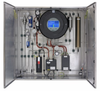
Description: Remote global access options Sour gas compatible Field calibration maintenance Applications: Natural gas glycol dehydration Offshore export pipeline natural gas Transmission pipeline monitoring Hydrogen production, storage and transportation including natural gas injection LNG
- Instrument Type: Analyzer
- Display: Digital
- Features: Self Calibration
- Measurement Type: Trace
-
Supplier: Process Sensing Technologies USA
Description: Gas transmission and storage Refinery catalytic reforming — recycle gas monitoring Ethylene and propylene production LNG production / revaporization Glycol dehydration of natural gas
- Instrument Type: Analyzer
- Features: Self Calibration
- Measurement Type: Trace
-
Supplier: Process Sensing Technologies USA
Description: moisture measurement built into the design Applications: Natural gas glycol dehydration Natural gas transmission monitoring Custody transfer Natural gas storage Offshore export pipeline natural gas LNG receiving / re-gasification plants Vaporized NGL Biomethane
- Instrument Type: Analyzer
- Features: Self Calibration
- Measurement Type: Trace
-
Supplier: Bryan Research & Engineering, Inc.
Description: widely recognized by the industry for their accuracy and efficiency. With ProMax, BR&E has continued to build on its reputation as a leading provider of simulation technology by focusing on several key processes. These processes include amine sweetening, glycol dehydration, equipment
- Use: Educational
-
Supplier: TCI America
Description: the polymer-supported catalysts has also been carried out. Yao has developed a polyethylene glycol-bound Grubbs catalyst analog for olefin metathesis reactions.3) After the reaction, this catalyst was precipitated by the addition of diethyl ether as a poor solvent. It can be recovered and
-
Supplier: TCI America
Description: research for development of the polymer-supported catalysts has also been carried out. Yao has developed a polyethylene glycol-bound Grubbs catalyst analog for olefin metathesis reactions.3) After the reaction, this catalyst was precipitated by the addition of diethyl ether as a poor solvent.
-
Supplier: TCI America
Description: active research for development of the polymer-supported catalysts has also been carried out. Yao has developed a polyethylene glycol-bound Grubbs catalyst analog for olefin metathesis reactions.3) After the reaction, this catalyst was precipitated by the addition of diethyl ether as a poor
-
Supplier: TCI America
Description: development of the polymer-supported catalysts has also been carried out. Yao has developed a polyethylene glycol-bound Grubbs catalyst analog for olefin metathesis reactions.3) After the reaction, this catalyst was precipitated by the addition of diethyl ether as a poor solvent. It can be









Find Suppliers by Category Top
Conduct Research Top
-
COMPARISON OF IDEAL STAGE AND MASS TRANSFER MODELS FOR SEPARATION PROCESSES WITH AND WITHOUT CHEMICAL REACTIONS
area. The primary emphasis of this paper will be on the application and comparison of the ideal stage and mass transfer models to systems with and without chemical reactions such as amine treating, glycol dehydration, reactive distillation and hydrocarbon separation columns. The advantages
More Information Top
 Indicates content that may require registration and/or purchase.

-
Federal Register > Thursday, August 16, 2012 > [77 FR 49490] Oil and Natural Gas Sector: New Source Performance Standards and National Emission Standards for H...
This action also revises the NESHAP for glycol dehydration unit process vents and leak detection and repair (LDAR) requirements.
-
Federal Register > Thursday, June 17, 1999 > [64 FR 32610] National Emission Standards for Hazardous Air Pollutants: Oil and Natural Gas Production and Nationa...
Condensate tank batteries, glycol dehydration units, natural gas processing plants, and natural gas transmission and storage facilities.
-
Federal Register > Friday, February 6, 1998 > [63 FR 6288] National Emission Standards for Hazardous Air Pollutants: Oil and Natural Gas Production and Natural...
Condensate tank batteries, glycol dehydration units, natural gas processing plants, and natural gas transmission and storage facilities.
-
Code of Federal Regulations > Title 40 - Protection of Environment > Clean Air Act / Air Programs (CAA) > [40 CFR Part 63] National Emission Standards for Haza...
Glycol dehydration unit process vent standards .
-
Federal Register > Tuesday, August 23, 2011 > [76 FR 52738] Oil and Natural Gas Sector: New Source Performance Standards and National Emission Standards for Ha...
The Oil and Natural Gas Production NESHAP (40 CFR part 63, subpart HH) contains standards for HAP emissions from glycol dehydration process vents, storage vessels and natural gas processing plant equipment leaks.
-
GAS INDUSTRY GROUNDWATER RESEARCH PROGRAM
No estimates were available on the total number of glycol dehydration units operating in Canada, but they are very commonly used in Canadian gas fields.
-
States > Texas > State > Register > 2011 > [TexReg 2011-0218is] 02/18/2011
… and gases, produced and salt water, and slop/sump oil; liquid and gas truck loading and pipeline transfer facilities; separators (free-water knockouts, gunbarrels, oil/wa ter separators, or membrane units); condensers; treatment units (heat exchangers, refrigeration units, glycol dehydration units, amine units and …
-
Cytochemical and ultrastructural studies on the synaptonemal complex of rat spermatocytes
Three modifications of the hexylene glycol dehydration procedures (see Mate- rials and Methods for details) were tested (results not shown).
-
Glycol Used for Natural Gas Dehydration: Evaluation of Subsurface Transport and Fate Issues
No estimates were available on the total number of glycol dehydration units oper- ating in Canada, but they are very commonly used in Canadian gas fields.
-
Federal Register > Friday, June 29, 2001 > [66 FR 34548] National Emission Standards for Hazardous Air Pollutants From Oil and Natural Gas Production Facilitie...
Condensate tank batteries, glycol dehydration units, natural gas processing plants, and natural gas transmission and storage facilities.