
-
Supplier: SpeedFam Corporation
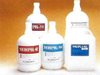
Description: polishing compounds available are Polipla, Glanzox, Insec. All polishing compounds are non-toxic & non-hazardous. Applications: Plastic Lens, Silicon Wafers, GGG, GaAs Transistors IC
-
Supplier: Advanced Abrasives Corp.
Description: Premalox Cer-Preme 100 Cerium Oxide Compound Powder Cer-Preme 100 Cerium Oxide Compound Powder was developed using our Cer-Preme 99.95% pure cerium oxide powder. It is ideally suited for polishing ophthalmic lenses and optical glass. With a particle size between 0.5 and 1.5
- Type / Shape: Abrasive Grain / Grit, Crushed / Irregular
- Material: Cerium Oxide
- Grading System: Micron Graded
- Applications: Polishing
-
Supplier: Advanced Abrasives Corp.
Description: Premalox Cer-Preme 35 Cerium Oxide Compound Powder Cer-Preme 35 Cerium Oxide Compound Powder was developed using our Cer-Preme 99.95% pure cerium oxide powder. It is ideally suited for polishing ophthalmic lenses and optical glass. With a particle size between 0.5 and 1.5
- Type / Shape: Abrasive Grain / Grit, Crushed / Irregular
- Material: Cerium Oxide
- Grading System: Micron Graded
- Applications: Polishing
-
-
Supplier: Advanced Abrasives Corp.
Description: Premalox Cer-Preme 25 Cerium Oxide Compound Powder Cer-Preme 25 Cerium Oxide Compound Powder was developed using our Cer-Preme 99.95% pure cerium oxide powder. It has been engineered to perform as an economy grade cerium oxide at an economy grade cost. With a particle size between 6
- Type / Shape: Abrasive Grain / Grit, Crushed / Irregular
- Material: Cerium Oxide
- Grading System: Micron Graded
- Applications: Polishing
-
Supplier: Advanced Abrasives Corp.
Description: Premalox Cer-Preme 20 Cerium Oxide Compound Powder Cer-Preme 20 Cerium Oxide Compound Powder was developed using our Cer-Preme 99.95% pure cerium oxide powder. It has been engineered to perform as an economy grade cerium oxide at an economy grade cost. With a particle size between 6
- Type / Shape: Abrasive Grain / Grit, Crushed / Irregular
- Material: Cerium Oxide
- Grading System: Micron Graded
- Applications: Polishing
-
Abrasive Compounds and Abrasive Slurries - Rough-surface Monocrystalline Diamond Slurry (RCD Slurry)Supplier: Beijing Grish Hitech Co., Ltd.
Description: GRISH Rough-surface Monocrystalline Diamond Slurry (RCD Slurry) is made by adding RCD powder into water/oily carrier liquid through scientific proportioning. It is mainly used for polishing of sapphire materials, optical lenses, crystals and other superhard materials because of its uniform
- Grit Size: 3 to 17
- Compound / Abrasive Type: Diamond
- Grading System: Micron Graded
- Materials / Substrates Finished: Ophthalmic / Optical Materials
-
Supplier: SpeedFam Corporation
Description: Cerium Oxide Powder is specially compounded for critical polishing applications. It is suspension treated with PH inhibitor. It can be used in low concentrations for improved efficiency. It works well with all commonly used polishing medias like felt, pellon, pitch, polyurethane, etc.
- Type / Shape: Abrasive Grain / Grit
-
Supplier: SPIE
Description: and compound prismatic and reflective optical components are emerging in the fields of metrology, polarization control, projection systems, illumination, and display lighting, among others. State-of-the-art multilayer optical coatings have enabled novel prism and reflector geometries to be
-
Supplier: Shanghai Optics
Description: cleaned using reagent-grade acetone, ethanol, isopropyl alcohol or methanol and lint-free germanium lens wipes. Nitric acid may also be used for germanium, but care should be taken as it may corrode neighboring optics or mounts. An alternate way to clean germanium windows is with liquid CO2
- Window Material: Germanium



Find Suppliers by Category Top
Featured Products Top
-
 APEL is a cyclic olefin copolymer used in the camera lenses of smartphones. With a high refractive index and low birefringence, APEL can be used in place of glass for optical lens applications, facilitating the design of smaller, lighter products APEL also has excellent moisture-proof properties, resistance to chemicals and non-attachment characteristics, it is used for medical packaging material. (read more)
Browse Resins and Compounds Datasheets for Mitsui Chemicals America, Inc. -
plastics, APEL has a lower birefringence and the highest refractive index (1.54) among commercialized COCs and other cyclo olefin polymers, making it ideal for use in high performance film, optical lens and packaging applications such as DVD players, recorders and SACD players, shrink film and in pharmaceutical packaging such as blister packs. For more information, please visit: www.mitsuichemicals.com/apel.htm (read more)
Browse Resins and Compounds Datasheets for Mitsui Chemicals America, Inc. -
In high-precision optical equipment, temperature control directly affects imaging quality, alignment accuracy, and long-term stability. Traditional silicone thermal pads offer good thermal conductivity but may release silicone oil, which can contaminate lenses (read more)
Browse Thermal Compounds and Thermal Interface Materials Datasheets for Dongguan Sheen Electronic Technology Co., Ltd. -
silicone-based thermal interface materials (TIMs) pose a significant hidden risk. Over time and under heat, they release volatile silicone vapors that condense on delicate lenses and laser emitters within the LiDAR assembly, leading to clouding, signal scattering, and measurement drift. This (read more)
Browse Thermal Compounds and Thermal Interface Materials Datasheets for Dongguan Sheen Electronic Technology Co., Ltd.
More Information Top
 Indicates content that may require registration and/or purchase.

-
Traceability-making Decisions With Uncertain Data
Improvementsin cam- era-lenspreparation(a lens polishing compound )reduce or preventadherenceof oil to the light source and cameralens, eliminating the need for a complete sweep of oil and thereby permitting logging in flowing wells (Allen et al., 1993).
-
A Real-Time Fiber Optic Downhole Video System
Improved lens polishing com- pounds permit lengthy encounters with oils and condensation with no buildup.
-
Automated detection of anomalous shipping manifests to identify illicit trade
The same holds for passive interrogation methods, for which false alarms are triggered by commodities such as fertilizer, ceramic glazed materials, aircraft parts, camera lenses , polishing compounds and abrasives, fluorescent lamp starters, welding rods, propane tanks, kitty litter, road salt, ore and …
-
Naturally occurring radioactive materials in cargo at US borders
… materials in cargo, and the types of products that may be frequently observed to be somewhat radioactive, especially in bulk quantities, include agricultural pro- ducts, ceramic glazed materials including antique pottery and dental ceramics, camera lenses , polishing compounds and abrasives, propane tanks …
-
Naturally occurring radioactive materials and medical isotopes at border crossings
The types of products that may be frequently observed include: agricultural products like fertilizer, ceramic glazed materials including antique pottery and dental ceramics, aircraft parts and counter weights, camera lenses , polishing compounds .
-
Polishing compound for plastic surfaces
Water-based polishing compounds for plastic lenses contain an aluminum oxalate or aluminum lactate abrasive (Miyazaki et al., U.S° 10 .
-
Polishing compound for plastic surfaces
Water-based polishing compounds for plastic lenses contain an aluminum oxalate or aluminum lactate'abrasive (hjiyazaki, et al., U.S. Patent No. 4,935,639), calcined alumina (Koshiyama, et al., U.S. Patent NO. 4,225,349), or powdered cerium oside (Dauguet?et …
-
Precision Grinding With Pellets And High-Speed Polishing By Means Of Synthetic Material
Lens -diameter: Polishing compound : Polishing material of plastics: Exactitude: 50 mm Water zirconoxide, 10% etanol .
-
Sterile hypopyon following intraocular lens surgery.
It is suggested that some cases of sterile hypopyon following intraocular lens surgery may be caused by residual polishing compound present on the lens surface.
-
JAMA Network | JAMA Ophthalmology | Sterile Hypopyon Following Intraocular Lens Surgery
It is suggested that some cases of sterile hypopyon following intraocular lens surgery may be caused by residual polishing compound present on the lens surface.