
Products & Services
See also: Categories | Featured Products | Technical Articles | More Information-
Supplier: Kistler Group
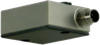
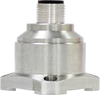
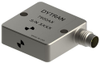
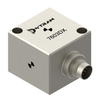
Description: The Type 8316A... capacitive accelerometer family utilizes a silicon Micro-Electro Mechanical System (MEMS) variable capacitance sensing element. Each axis consists of a very small inertial mass and a flexure element cantilever positioned between two plates. As the mass deflects under
- Acceleration: 2 to 200 g
- Frequency Range: 0 to 7,000 Hz
- Maximum Shock: 6,000 g
- Maximum Vibration: 20 g
-
Supplier: Kistler Group
Description: the sensor using one of the off-ground accessories or by adhesively mounting the sensor to the test object using the side of the sensor with the integral hard anodized plate.
- Acceleration: 2 to 200 g
- Frequency Range: 0 to 7,000 Hz
- Maximum Shock: 6,000 g
- Maximum Vibration: 20 g
-
Supplier: Qorvo
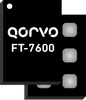
Description: The Qorvo FT-7600 MEMS Force sensor represents the World’s smallest force sensor and the easiest sensor to integrate, as it only requires attachment to the under-side of a sensing surface. At 0.8mm x 1.2mm, it is designed to fit into small form factor and to serve a broad
- Operating Temperature: -4 to 158 F
- Output: Analog Voltage
- Application: Other, Weigh Scales
- Device: Sensor Element / Chip
-
-
Supplier: Aratas America LLC
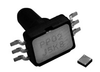
Description: MEMS Gauge Pressure Sensor Featuring Small Size and Low Power Consumption Ultra-miniature 6.1 × 4.7 × 8.2 mm (L × W × H). Superior electrical characteristics to capacitive type pressure sensors. 0 to 37 kPa pressure range. Offset voltage of -2.5±4 mV Span voltage of
- Measurement Type: Gauge
- Sensor Technology: MEMS
- Device Category: Sensor
-
Supplier: Shenzhen Rion Technology Co., Ltd
Description: to a different address code, long distance series with multiple sensors to facilitate multi-point measurement and data analysis.AKE392B-Wireless is a monocrystalline silicon capacitive sensor, composed by a silicon chip of micro-mechanical treatment, low power ASIC for the
- Acceleration: 1 to 40 g
- Frequency Range: 5 to 300 Hz
- Operating Temperature: -40 to 185 F
- Sensor Technology: MEMS
-
Supplier: Shenzhen Rion Technology Co., Ltd
Description: stability .etc characteristics to guarantee the reliability of outstanding output. AKE390B is a monocrystalline silicon capacitive sensor, composed by a silicon chip of micro-mechanical treatment, low power ASIC for the signal adjustment, a microprocessor for storing compensation value
- Acceleration: 1 to 40 g
- Operating Temperature: -40 to 185 F
- Sensor Technology: MEMS
- Device Category: Sensor / Transducer
-
Supplier: Shenzhen Rion Technology Co., Ltd
Description: stability .etc characteristics to guarantee the reliability of outstanding output. AKE398B is a monocrystalline silicon capacitive sensor, composed by a silicon chip of micro-mechanical treatment, low power ASIC for the signal adjustment, a microprocessor for storing compensation value
- Acceleration: 1 to 40 g
- Operating Temperature: -40 to 185 F
- Sensor Technology: MEMS
- Device Category: Sensor / Transducer
-
Supplier: Jewell Instruments, LLC
Description: Jewell Instruments AKA Series Accelerometers are an excellent choice for cost to performance trade-off. The AKA is based on silicon micro-machined MEMS Capacitive Accelerometer technology and designed for low power and high stability. • Triaxial Configuration • Measuring ranges of ±2G
- Acceleration: 2 to 40 g
- Frequency Range: 500 Hz
- Maximum Shock: 100 g
- Maximum Vibration: 20 g
-
Supplier: Jewell Instruments, LLC
Description: Jewell Instruments DKA Series Accelerometers are an excellent choice for cost to performance trade off. The DKA is based on silicon micro-machined MEMS Capacitive Accelerometer technology and designed for low power and high stability. • Triaxial Configuration • Measuring ranges of ±2G
- Acceleration: 2 to 40 g
- Frequency Range: 500 Hz
- Maximum Shock: 100 g
- Maximum Vibration: 20 g
-
Supplier: SICK
Description: Inclination sensors take a non-contact measurement of the inclination angle of an object in relation to the earth's gravity. Thanks to the use of capacitive MEMS technology, inclination sensors are both highly precise and extremely reliable. One-dimensional sensors
- Tilt Angle: 10 to 360 degrees
- Number of Axes: 1 to 2
- Accuracy: 0.01 to 0.1 degrees
- Output: Analog
-
Supplier: ES Systems S.A.
Description: steel. The module can be fitted on a larger housing with a pressure port either by welding or by fitting and O-ring sealing. The ESCP-MIS2 sensor incorporates the ES Systems capacitive MEMS sensor which is based on ES’ proprietary SOI micro-fabrication TM30 process for
- Working Pressure Range: 0 to 435.1131 psi
- Accuracy: 0.5 ±% FS
- Operating Temperature: -4 to 122 F
- Measurement Type: Absolute
-
Supplier: First Sensor AG
Description: First Sensor features a highly innovative technology platform for manufacturing high-precision inertial sensors for geoengineering, condition monitoring or navigation applications. The MEMS sensors allow for flexible customization to fit your individual application
- Tilt Angle: -90 to 90 degrees
- Supply Voltage: 2.7 to 5.2 volts
- Operating Temperature: -40 to 248 F
- Type: Capacitive
-
Supplier: Hottinger Brüel & Kjær A/S
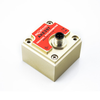
Description: measurements. Tailored for zero-to-medium frequency applications. This module contains a MEMS capacitive sensing element, a custom integrated circuit amplifier, low noise electronics and differential output, with a 4-pin 1/4-28 radial connector and various mounting capabilities. Units
- Acceleration: 50 g
- Frequency Range: 0 to 1,200 Hz
- Operating Temperature: -67 to 257 F
- Sensor Mounting: Adhesive Base
-
Supplier: ES Systems S.A.
Description: The MEMS pressure sensor dies are underpinned by ES Systems’ innovative microfabrication process for silicon capacitive sensors. The capacitive pressure sensor dies integrated into the medium isolated pressure systems provide state-of-the-art accuracy and
- Working Pressure Range: 145.04 to 5,076.32 psi
- Accuracy: 0.25 ±% FS
- Operating Temperature: -40 to 257 F
- Measurement Type: Absolute
-
Supplier: Silicon Designs, Inc.
Description: 1527 MEMS DC Accelerometer combines two patented capacitive silicon sense elements and a precision, custom CMOS integrated circuit in a hermetically sealed LCC package. The differential output voltage of the MEMS accelerometer is converted on the PCB into a current proportional
- Acceleration: 10 to 50 g
- Frequency Range: 0 to 4,200 Hz
- Maximum Shock: 5,000 g
- Operating Temperature: -67 to 257 F
-
Supplier: Silicon Designs, Inc.
Description: MEMS DC accelerometer combines two patented capacitive silicon sense elements and a precision, custom CMOS integrated circuit in a hermetically sealed LCC package. The differential output voltage of the MEMS accelerometer is converted on the PCB into a current proportional to
- Acceleration: 2 to 50 g
- Maximum Shock: 5,000 g
- Operating Temperature: -67 to 257 F
- Sensor Outputs: Acceleration
-
Supplier: Hottinger Brüel & Kjær A/S
Description: incorporates MEMS capacitive sensing elements and an advanced ASIC to simulate piezoresistive bridge operation, as well as an integrated VC accelerometer chip with high drive, low impedance buffering. Units respond to both DC and AC acceleration. On board- regulation minimizes supply
- Acceleration: 400 g
- Frequency Range: 0 to 1,600 Hz
- Operating Temperature: -67 to 257 F
- Features: Linear Accelerometer, Other
-
Supplier: ES Systems S.A.
Description: ES Systems has developed a series of board mountable pressure sensors targeting a variety of markets requiring high resolution and accuracy for absolute, gauge or differential pressure measurements. The ESCP-BMS1 is a MEMS capacitive pressure sensor with state-of-the-art
- Working Pressure Range: 1 to 160 psi
- Accuracy: 0.15 ±% FS
- Operating Temperature: -4 to 185 F
- Measurement Type: Absolute, Differential, Gauge
-
Supplier: PCB Piezotronics, Inc.
Description: 3-channel, line-powered, signal cond. for single-ended MEMS and capacitive sensors, 4-pin input conn.
-
Supplier: LufftUSA
Description: protection for measuring: Air temperature, relative humidity, air pressure and radiation. One external temperature or rain sensor is connectable. Parameters measured: Temperature, relative humidity, air pressure, radiation Measurement technology: NTC/T, Capacitive/RH, MEMS
- Height: 13.0708732 inch
- Weight: 3.3075 lbs
- Operating Temperature: -58 to 140 F
- Weather Component Sensed: Measures Barometric Pressure, Measures Relative Humidity, Measures Solar Radiation, Measures Temperature
-
Supplier: HUBER+SUHNER AG
Description: Features reliable 1 ms speed latching capacitive state sensor 2x2, 2x1, 1x1 variants Applications Protection Switching Reconfiguration WDM
-
Supplier: LufftUSA
Description: WS3100-UMB Reference Weather Sensor for reference measurement of air temperature, relative humidity, air pressure and global radiation. Relative humidity is measured by means of a heated capacitive sensor element; a precision PT100 measuring element is used to measure air
- Height: 18.503947 inch
- Weight: 11.025 lbs
- Operating Temperature: -40 to 140 F
- Weather Component Sensed: Measures Barometric Pressure, Measures Relative Humidity, Measures Temperature, Senses Wind Direction, Senses Wind Speed
-
Supplier: RS Components, Ltd.
Description: Sick TMM88 series inclination sensors use capacitive MEMS technology to take a non-contact measurement of the inclination angle of an object in relation to the earth‘s gravity. TMM88 two-dimensional sensors take measurements with an accuracy of up to +/- 0.02°. With the
- Features: DC Powered
- Sensor Technology: Hall Effect Position Sensor
- Body Shape: Rectangular
-
Supplier: Rieker, Inc.
Description: DESCRIPTION The H6 inclinometer provides dual axis inclination sensing in a rugged environmentally protected housing. This unit incorporates a MEMS sensing element referenced to gravity with integrated temperature compensation over the industrial operating range of -40° to +85°C. The H6 prov
- Tilt Angle: -60 to 60 degrees
- Number of Axes: 1
- Supply Voltage: 11 to 36 volts
- Operating Temperature: -40 to 185 F
-
Supplier: Rieker, Inc.
Description: Description The highly accurate H4360 inclinometer provides 360 degree total measurement along a single axis in a rugged environmentally protected metal housing. The sensing package incorporates a MEMs sensing element and integrated temperature compensation over the industrial operating range
- Tilt Angle: -180 to 180 degrees
- Number of Axes: 1
- Accuracy: 0.1 degrees
- Supply Voltage: 12 to 28 volts
-
Supplier: ABB Measurement & Analytics
Description: Various communication protocols available SmartSensor – All digital solution – Installation flexibility – Meter intelligence located in the sensor SensorApplicationMemory – Maximum data security – Plug and play electronics replacement ABB common look and feel – Easy Set-up – Operation through
- Media Temperature Range: -50 to 205 F
- Mass Flow Rate Range: 0 to 3,160.5 lbs/min
- Operating Temperature: -4 to 158 F
- Mass Flow Rate: 0 to 3,160.5 lbs/min









Find Suppliers by Category Top
Featured Products Top
-
 The 8MPP2 low-pressure sensor utilizes Sensata’s field-proven automotive Micro-Electro-Mechanical-Systems (MEMS) technology that outputs fully conditioned pressure values via the digital I²C bus. The 8MPP2 features best-in-class performance including high accuracy, low power (read more)
Browse Pressure Sensors Datasheets for Sensata Technologies -
other Hydrogen (H2) gas sensing applications where cost or size may be an issue, look at the Robust Thin Film, Electrochemical and MEMS Solutions available. (read more)
Browse Gas Sensors Datasheets for Electro Optical Components, Inc. -
Dexter Research Center announces the availability of its new ST60 High Temperature Detectors. The specially constructed MEMS based thermopiles (read more)
Browse Noncontact Infrared Temperature Sensors Datasheets for Dexter Research Center, Inc. -
Sense the (EVS-GTR) pressure? Churod Sensing’s Gen II Battery Pressure Sensor combines the accuracy of its Gen I sensor with a cost-driven design. The Gen II is a MEMS-based, PCB-mounted solution (read more)
Browse Pressure Sensor Chips Datasheets for Churod Americas, Inc. -
MEMS, MOS and Catalytic H2 Sensors offer smaller options for monitoring the environment around Hydrogen applications. They also have a wide range of sensitivity. (read more)
Browse Gas Sensors Datasheets for Electro Optical Components, Inc. -
-operated and mobile sensor applications. The patented nanostructured radiation element technology makes these emitters high efficiency (up to 30% compared to 3 to 5% of MEMS). They offer up to 500% more output power than comparable technologies and (read more)
Browse Gas Sensors Datasheets for Electro Optical Components, Inc. -
. Photoacoustic NDIR Principle: MEMS-based sensor with no traditional optical path for compactness and dust resistance (read more)
Browse Gas Sensors Datasheets for Win Source Electronics -
The Series 89 is a miniature and robust pressure transducer with calibrated and temperature compensated output . It incorporates MEMS sensing chip which is oil-filled and SS (read more)
Browse Pressure Sensors Datasheets for Angst+Pfister Sensors and Power -
embedded applications. Power can be supplied via USB Type-C® or through the M.2 connector, offering flexibility in system design. The B-WBA5M-WPAN includes onboard MEMS sensors (temperature, 3D accelerometer, and gyroscope), a user LED, and push buttons for user interaction. It is (read more)
Browse Sensor Transmitters Datasheets for DigiKey -
Sensor-based condition monitoring & predictive maintenance Discover Infineon’s XENSIV™ sensor and IoT product portfolio for (read more)
Browse Magnetic Sensor Chips Datasheets for Infineon Technologies AG
Conduct Research Top
-
MEMS Capacitive vs Piezoresistive Pressure Sensors - What are Their Differences?
industry, automation, hydraulics, as well as aeronautics. The majority of the pressure sensors currently installed in the field are based on MEMS technology and utilize either piezoresistive or capacitive measurement principle. In this article, we will be discussing their main differences and we
-
When to Use MEMS Capacitive Pressure Sensors
Various technologies are used to make pressure sensors. 2 of the most common include piezoresistive and capacitive pressure sensors. Both can be used for gauge, differential, or absolute pressure measurement. While piezoresistive is found in low-cost sensors, there are situations where a capacitive
-
The Differences Between Capacitive & Piezoresistive Pressure Sensors
The majority of the pressure sensors currently installed in the field are based on MEMS technology and utilize either piezoresistive or capacitive measurement principle. In this article, we will be discussing their main differences and we will be highlighting the advantages of each. The term
-
AKF392B MEMS Digital Accelerometer
to a different address code, long distance series with multiple sensors to facilitate multi-point measurement and data analysis. AKE392B-Wireless is a monocrystalline silicon capacitive sensor, composed by a silicon chip of micro-mechanical treatment, low power ASIC for the signal adjustment
-
MSilica Nanoparticles Treated by Cold Atmospheric-Pressure Plasmas Improve the Dielectric Performance of Organic-Inorganic Nanocomposites
chamber geometries by. imposing a dielectrophoresis (DEP) force on the beads. In cDEP the electrodes are not in. direct contact with the fluid sample but are instead capacitively coupled to the mixing. chamber through thin dielectric barriers, which eliminates many of the problems. encountered
More Information Top
 Indicates content that may require registration and/or purchase.

-
A dual-axis MEMS capacitive inertial sensor with high-density proof mass
…to the high density of gold for proof mass material, the actual BNs in Z- and X-axis directions has shown the capability of sensing sub-1G acceleration typically below mG accel- eration, while silicon MEMS capacitive sensors with the same proof…
-
Wideband Continuous-time ΣΔ ADCs, Automotive Electronics, and Power Management
Section 12.2 describes the basic operating principle of a MEMS capacitive sensor , as well as the possible AFE circuit topologies that can be used for reading out the sensor capacitance variations.
-
A MEMS-based, high-resolution Electric-Field meter
2 MEMS Capacitive Sensor .
-
Development of a wireless intra-ocular pressure monitoring system for incorporation into a therapeutic glaucoma drainage implant
The resolution of the current system is limited by the sensitivity and Q of the MEMS capacitive sensor .
-
Development of a CMOS MEMS pressure sensor with a mechanical force-displacement transduction structure
[18] Tsai M-H, Sun C-M, Liu Y-C, Wang C and Fang W 2009 Design and application of a metal wet-etching post-process for the improvement of CMOS- MEMS capacitive sensors .
-
Pick-and-place process for sensitivity improvement of the capacitive type CMOS MEMS 2-axis tilt sensor
Various approaches have been investigated to improve the performance of CMOS MEMS capacitive sensors [15, 16].
-
Design of a CMOS readout circuit for wide-temperature range capacitive MEMS sensors
Many previous works in high temperature bulk CMOS electronics, in particular for MEMS capacitive sensors readout interfaces, have used feature sizes of 1µm or more, and power supplies of 5 V or more [8, 11, 12].
-
Interface electronics for MEMS-based wireless sensing applications
Though stand-alone MEMS capacitive sensors are insensitive to temperature variations, the packaged devices can exhibit temperature dependence due to thermal mismatch between the sensor, package, and strained surface.
-
2009 Index Journal of Microelectromechanical Systems Vol. 18
Nanoprecision MEMS Capacitive Sensor for Linear and Rotational Positioning; JMEMS June 2009 660-670 Lee, W. C., see Lee, J. Y., JMEMS Aug. 2009 792-798 Leong, T. G., see Tyagi, P., JMEMS Aug. 2009 784-791 Lewis, G. N., Moktadir, Z…