
Products & Services
See also: Categories | Featured Products | Technical Articles | More Information-
Supplier: Sauereisen, Inc.
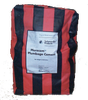
Description: Sauereisen Electrical Refractory Cement No. 75 is a castable, hydraulically-setting cement used as a bonding mortar or refractory coating for high-temperature assembling, encapsulating and potting applications. No. 75 may also be cast or gunite applied to protect concrete
- Max Use Temperature: 1,426.6666666666667 C
- MOR / Flexural Strength: 800 psi
- Compressive / Crushing Strength: 3,500 psi
- Max Use: 1,426.6666666666667 C
-
Supplier: Sauereisen, Inc.
Description: Sauereisen Electric Refractory Cement No. 350 is a chemically-setting inorganic cement specified for high temperature bonding applications. The product is supplied as a two-component sodium silicate cement consisting of a Powder and Liquid which are mixed together as
- Use Temperature: 1,700 F
- Thermal Conductivity: 0.53364323 W/m-K
- Tensile Strength (Break): 500 psi
- Dielectric Strength: 0.0008890000000000019 to 0.0010668000000000023 kV/in
-
Supplier: Accuris
Description: GENERAL PURPOSE REFRACTORY CEMENT
-
-
Supplier: Accuris
Description: Chemical Analysis of Aluminous Cement for Refractories
-
Supplier: Accuris
Description: Alumina Cements for Refractories (Errata 2/2000)
-
Supplier: Accuris
Description: Refractories and refractory materials - Physical test methods, Method 4.2: Preparation of test pieces - Low-cement castable refractories
-
Supplier: Sauereisen, Inc.
Description: Electrical Potting Cement No. 76 is a castable, hydraulically-setting cement used as a bonding mortar or refractory coating for high-temperature assembling, encapsulating and potting applications.
- Max Use Temperature: 1,426.6666666666667 C
- MOR / Flexural Strength: 800 psi
- Compressive / Crushing Strength: 3,500 psi
- Max Use: 1,426.6666666666667 C
-
Supplier: Sauereisen, Inc.
Description: Sauereisen TempSeal Cement No. 3 is an inorganic adhesive paste offering high temperature resistance combined with with a sealing capability superior to other refractories. TempSeal Cement No. 3 overcomes the inherent permeability of ceramic materials by permitting only a remarkably
- Max Use Temperature: 1,204.4444444444443 C
- MOR / Flexural Strength: 3,000 psi
- Compressive / Crushing Strength: 6,000 psi
- Max Use: 1,204.4444444444443 C
-
Supplier: Mid-Mountain Materials, Inc.
Description: Manufactured from bulk refractory fibers, THERMOSEAL® Refractory Cements, Moldables and Coatings are excellent for use in high- temperature resistant sealing and thermal insulation applications. All of our THERMOSEAL® products are carefully formulated to withstand thermal
- Max Use Temperature: 1,095 C
- Max Use: 1,095 C
- Technology / Cure Type: Air Setting
- Cement / Raw Material Form: Cement / Binder
-
Supplier: Wahl Refractory Solutions, LLC
Description: Cement free castables designed for generating high refractoriness. These castables are resistant to reaction and corrosion by molten metal and slags.
-
Supplier: Rath USA Inc.
Description: RATH’s refractory bricks are stable up to 1800°C and can be used in almost all areas of industrial furnace construction. Typical applications For any application, optimum durability can be achieved by a suitable combination of raw materials. The dense bricks are usually dry-pressed or
- Max Use / Curie Temperature: 1,800 C
- Material Type: Alumina / Aluminum Oxide
- Shape / Form: Block
- Applications: Ceramics / Glass Manufacturing, Chemical / Materials Processing, Foundry / Metal Processing, Refractory / High Temperature Materials, Thermal Insulation / Fire Proofing
-
Supplier: CoorsTek
Description: Glassun refractories are manufactured from high-purity fused silica materials. There are four categories of Glassun refractories, including: Glassun Series, shaped by slip casting Glassun Castable monolithic refractories Glassun Cement Glassun refractories can be fabricated into various sizes
- Applications: Refractory / High Temperature Materials
- Features: Silica / Fused Silica
- Material Type: Silica / Silicate Materials
-
Supplier: Resco Products, Inc.
Description: Monolithic refractories are utilized across numerous industries including steel, aluminum, cement, lime, HPI/petrochem, etc. It is considered an "unshaped" mix with a particular percentage of water for optimal properties. How much water is too much? Molds are used shaping the monolithic for
- Features: Alumina / Aluminum Oxide, Other, Specialty Ceramic
- Specialty Ceramic Type: Magnesia / Magnesite
- Shape / Form: Powder / Aggregate (Grain / Grog)
-
Supplier: Wahl Refractory Solutions, LLC
Description: Premium line of products designed for exceptional abrasion resistance in extremely abrasive environments such as cement, coal or material handling. GemStone® is extremely dense and non-wetting to aluminum and offers unrivaled resistance to thermal shock and alkali attack up to 2500 F.
-
Supplier: Wahl Refractory Solutions, LLC
Description: Low and Ultra-Low Cement Self-Flowing Castable designed to be fired quickly after drying to reduce overall downtime during maintenance. This material can also be shotcreted using Wahl-brand accelerators or vibration cast at lower water percentages. Applications include repairs or new linings
-
Supplier: Morgan Advanced Materials
Description: Morcem 2 is a two-part Phosphate bonded cement developed for use in a wide range of refractory applications that have contact with molten metal up to 1650C including jointing, coating and sticking. Morcem 2 is quick to prepare and sets without need for drying or heating. It has a high
- Bond / Binder: Phosphate
-
Supplier: Wahl Refractory Solutions, LLC
Description: Low and ultra-low cement castables, characterized by high density and exceptional strength. Command„¢ castables can be vibration cast at very low water contents. The Command„¢ family includes high alumina, mullite, fused silica, spinel, zirconia, chromic oxide, and silicon carbide containing
-
Supplier: Rath USA Inc.
Description: Rath’s refractory castables offer a wide range of materials with the highest technical standards. Depending on the application, the concretes can withstand up to 1800°C Typical applications Whether dense and insulating castables, low-cement and cement-free castables, vibration
- Max Use: 1,100 to 1,800 C
- Cement / Raw Material Form: Concrete, Mortar
- Shape: Powder / Aggregate
-
Supplier: BNZ Materials, Inc.
Description: No Description Provided
- Max Use Temperature: 1,648.888888888889 C
- MOR / Flexural Strength: 6,100 psi
- Max Use: 1,648.888888888889 C
- Technology / Cure Type: Air Setting
-
Supplier: BNZ Materials, Inc.
Description: No Description Provided
- Technology / Cure Type: Air Setting
- Cement / Raw Material Form: Cement / Binder
- Applications: Ceramics / Glass Manufacturing, Chemical / Materials Processing
- Features: Other, Refractory / High Temperatures, Troweling / Patching
-
Supplier: ZIRCAR Refractory Composites, Inc.
Description: serve as a backup insulation for any refractory construction, such as insulating fire brick, dense refractory brick, castable, gunning mix, plastic refractory or ceramic fiber. ZIRCAL-18's high refractoriness and strength help prevent catastrophic failure of the
- Shrinkage: 0 to 1 %
- Max Use: 1,100 C
- Compressive / Crushing Strength: 203 psi
- Max Use Temperature: 1,100 C
-
Supplier: BNZ Materials, Inc.
Description: No Description Provided
- Technology / Cure Type: Air Setting
- Material Type: Calcium Aluminate
- Bond & Processing: Calcium Aluminate Bond, Portland Cement / CaSiO3 Bond
- Cement / Raw Material Form: Cement / Binder
-
Supplier: ZIRCAR Refractory Composites, Inc.
Description: Type ZIRCAL-95 Refractory Board is produced from a combination of natural organic fibers and inert reinforcing fillers in a high density calcium silicate hydrate matrix. Designed as a substitute for asbestos cement boards, ZIRCAL-95 is useful as structural and electrical insulation in
- Shrinkage: 0.13 to 0.5 %
- Max Use: 1,000 C
- Compressive / Crushing Strength: 6,400 psi
- Max Use Temperature: 1,000 C
-
Supplier: Gouda Refractories BV
Description: TypeDescriptionProduct SeriesLow & Ultra Low Cement These low cement and ultra low cement castables are characterized by an extremely low water content to be added resulting in a much more dense and stronger castable with high cold crushing strength. VibronSelf Flowing Low
-
Supplier: ZIRCAR Refractory Composites, Inc.
Description: ZIRCAR Refractory Sheet Type RS-99 is a high density fiber based ceramic material with greater than 99% alumina purity. Type RS-99 has strength equal to asbestos cement and therefore is an excellent replacement for asbestos cement materials. Refractory Sheet Type RS-99 is
- Thickness / Wall Thickness: 0.125 inch
- Length: 24 inch
- Diameter: 48 inch
- Density: 2.1 g/cc
-
Supplier: ZIRCAR Refractory Composites, Inc.
Description: ZIRCAR Refractory Sheet Type RS-99 is a high density fiber based ceramic material with greater than 99% alumina purity. Type RS-99 has strength equal to asbestos cement and therefore is an excellent replacement for asbestos cement materials. Refractory Sheet Type RS-99 is
- Thickness / Wall Thickness: 0.0625 inch
- Length: 24 inch
- Diameter: 24 inch
- Density: 2.1 g/cc
-
Supplier: Thermal Ceramics
Description: into liquid binders for mastics and cements. With this wide range of products, Thermal Ceramics can provide exactly the right product, or engineered system to fit your requirements. Thermal Ceramics has an experienced staff of refractory specialists to assist you in product selection,
- Features: Specialty / Other
-
Supplier: Thermal Ceramics
Description: globally as: Superwool Kaowool These air-setting cement products are used for bonding insulating materials to themselves or other refractory products. They feature a use limit up to 1245°C/2300°F. Cera-Kote® Kaowool Cement B Super STIC TITE® Therm-O-Stix™ Adhesive Coating
- Features: Specialty / Other
-
Supplier: Morgan Advanced Materials
Description: Morgan Thermal Ceramics has a complete line of refractory bulk fibres, each of which offers its own unique combination of properties. Morgan Thermal Ceramics offers a complete range of bulk fibre products each of which offers its own unique combination of properties. These bulk fibres are
- Material: Ceramic
-
Supplier: Morgan Advanced Materials
Description: gives exceptionally high resistance to abrasion by flowing gases. This resistance can be enhanced by spraying the hot-face surface with Cerapreg or Kaowool hardener (up to 40-45m/s) or by coating with Kaowool® White Cement (up to 50-55m/s) The almost monolithic structure obtained after firing
- Material: Ceramic
-
Supplier: Thermal Ceramics
Description: Thermal Ceramics has a complete line of refractory bulk fibres, each of which offers its own unique combination of properties. These bulk fibres are produced by varying composition, fibre length, compressed density, fibre content, fibre diameter, and lubricity to serve a wide range of
- Features: Specialty / Other
-
Supplier: American Welding Society (AWS)
Description: Cobalt-Containing Alloys BHCM6 M-7 Titanium and Titanium Alloys BHCM7 M-8 Refractory Metals, Niobium, Molybdenum, Tantalum, and Tungsten BHCM8 M-9 Magnesium and Magnesium Alloys BHCM9 M-10 Precious Metals: Gold, Silver, Platinum, and Palladium BHCM10 M-11 Alumina BHCM11 M-12 Ceramics BHCM12
-
Supplier: American Welding Society (AWS)
Description: Cobalt-Containing Alloys BHCM6 M-7 Titanium and Titanium Alloys BHCM7 M-8 Refractory Metals, Niobium, Molybdenum, Tantalum, and Tungsten BHCM8 M-9 Magnesium and Magnesium Alloys BHCM9 M-10 Precious Metals: Gold, Silver, Platinum, and Palladium BHCM10 M-11 Alumina BHCM11 M-12 Ceramics BHCM12
-
Supplier: ASTM International
Description: 1.1 This practice covers a procedure for preparing refractory specimens usually containing calcium aluminate cement with or without metal fibers by cold nozzle-mix gunning. Specimens prepared in accordance with this practice are intended for use in standard ASTM test methods required
-
Supplier: ASTM International
Description: 1.1 This practice covers a procedure for preparing refractory concrete specimens containing calcium aluminate cement with or without metal fibers by cold nozzle-mix gunning. Specimens prepared in accordance with this practice are intended for use in standard ASTM test methods required







Find Suppliers by Category Top
Featured Products Top
-
 . Whether you are looking for gaskets or seals that offer resistance against heat and chemicals, or you are looking for versatile materials, like refractory cements, coatings, and moldables, to (read more)
Browse Industrial Fabrics Datasheets for Mid-Mountain Materials, Inc.
Conduct Research Top
-
What is Refractory Cement?
Refractory cement uses binding materials with improved thermodynamic properties to reduce the risk of mechanical failure. Fused minerals like aluminum oxide, or alumina, are used to bind coarse aggregate materials and provide superior temperature resistant properties without reducing
-
Refractory Cement for Critical Component Adhesion
The Adhesive Benefits of Refractory Cement
-
Refractory Cements and Moldables in the Aluminum Industry
Refractory cement and moldables are highly important across a number of industries. This article describes improvements such as the protection against corrosion and the improvement of refractory materials.
-
Using Refractory Cements in High Temperature Applications
Refractory cement is a material that retains its high strength properties at extremely high temperatures. It is often used in applications that require high strength, wear resistance, and thermal resistance.
-
TEMPERATURE MEASUREMENTS IN CEMENT MANUFACTURE
Temperature monitoring in and around the kiln is essential to an efficient process, and to produce cement of consistent quality. It also enables early detection of kiln refractory issues or insufficiently quenched clinker, which could lead to production stoppages if left unchecked.
-
The Significance of Monitoring Rotary Kiln Hot Spots
Rotary kilns play a pivotal role in various industries, including cement, lime production, iron ore pelletisation, waste incineration, and more. These cylindrical furnaces, lined with refractory stones and slightly tilted, continuously process materials as they rotate.
-
DynaGuard Flexible Insulation Used in Rotory Kiln Applications (.pdf)
Producers of lime and Portland cement operate rotary kilns as part of their manufacturing process. These rotary kilns are large horizontal cylinders, slightly elevated at the charge end to permit gravity to propel their product through kiln, which rotates slowly to tumble the product inside
More Information Top
 Indicates content that may require registration and/or purchase.

-
Dictionary of Ceramic Science and Engineering
AIR-HARDENING REFRACTORY CEMENT .
-
Dictionary of Ceramics 3rd Edition
Air-hardening Refractory Cement or .
-
ELECTRIC‐FURNACE ALUMINA CEMENT FOR HIGH‐TEMPERATURE CONCRETE
(a) “French Hydraulic Refractory Cement ,” Refrac.
-
CERAMIC ABSTRACTS
Refractory cement compo- sition, P (1)7b.
-
Evolution of in Situ Refractories in the 20th Century
… 1918.45 In 1902, how- ever, Spackman had produced CACs by heating low-grade alu- minous materials with limestone, but this material was mar- keted as a rapid-hardening additive to portland cement and plaster, not as a refractory cement by itself.
-
Self-formed mullite containing refractory barium silicate cements and their castable applications
Refractory cement products continue to be the most important hydraulically setting cements used for bonding refractory castables (concrete) because they develop high early strength after placement.
-
CR4 - Thread: Refractories - Crushed Firebricks and Portland Cement
Mix your grog with refractory cement and use this to fill in and cover your fire brick lining.
-
Properties of refractories after exposure to high pressure gases: IV-Dependence upon CO /steam ratio
The presence of Si02 in the castables, as a component of the refractory cement or aggregate, wasfound to be beneficial to theirflexural strength after expo- sure to CO-steam mixtures.
-
Properties of refractories after exposure to high pressure gases: III—Effect of percent saturation
The reaction of the CaO from the refractory cements to form CaCO3 and 4CaO 93A1203 9 3H20 (C4A3H3) is less dependent upon the percent saturation of the at- mosphere but is limited by the initial CaO content of the refractories.