
-
Supplier: Accuris
Description: Permittivity (Dielectric Constant) and Loss Tangent (Dissipation Factor) of Materials (Two Fluid Cell Method)
-
Supplier: Accuris
Description: Methods of Testing Vulcanized Rubber Part C3: Determinations of Loss Tangent and Permittivity at Power and Audio Frequencies
-
Description: machinability and fast availability make Boron Nitride an outstanding choice for prototypes to large quantities requiring its unique properties. Typical Features Low density Low thermal expansion Good thermal shock resistance Low dielectric constant and loss tangent Excellent
- Density: 1.4999990533094125 to 1.5999989901967067 g/cc
- Material Type: Aluminum Nitride, Boron Nitride
-
-
Supplier: CoorsTek
Description: Windows are chamber lids designed to transmit RF (radio frequency) and microwave energy into the plasma etch chamber while resisting erosion from the harsh plasma etch environment. An effective window has a low loss tangent (high transmittance) across RF and microwave frequencies.
- Features: Alumina / Aluminum Oxide, Carbide Materials, Specialty Ceramic
- Specialty Ceramic Type: Aluminum Nitride, Silicon Carbide, Yttria
- Applications: Chemical / Materials Processing
- Shape / Form: Fabricated / Custom Shape
-
Description: machinability and fast availability make Boron Nitride an outstanding choice for prototypes to large quantities requiring its unique properties. Typical Features Low density Low thermal expansion Good thermal shock resistance Low dielectric constant and loss tangent Excellent
- Material Type: Aluminum Nitride, Boron Nitride
-
Supplier: CoorsTek
Description: Loss Tangent Alumina PureSiC® CVD Silicon Carbide Exyria™ Yttria & Yttria Coatings Coatings: CVD SiC, ESD-Safe UltraClean™ Recrystallized SiC StatSafe™ ESD-Safe Ceramics Single Crystal Silicon
- Features: Alumina / Aluminum Oxide, Carbide Materials, Specialty Ceramic
- Specialty Ceramic Type: Aluminum Nitride, Silicon Carbide, Yttria
- Applications: Chemical / Materials Processing
- Shape / Form: Fabricated / Custom Shape
-
Supplier: ARC Technologies, Inc.
Description: Multilayer (ML) is a family of lightweight, flexible open cell foam absorption material, designed for broadband applications. The ML absorbers function on an impedance matching principle, with each layer loaded for predetermined loss tangents, providing electrically tapered reflection
-
Supplier: CoorsTek
Description: Alumina Low Loss Tangent Alumina PureSiC® CVD Silicon Carbide Exyria™ Yttria & Yttria Coatings Coatings: CVD SiC, ESD-Safe UltraClean™ Recrystallized SiC StatSafe™ ESD-Safe Ceramics Single Crystal Silicon
- Features: Alumina / Aluminum Oxide, Carbide Materials, Specialty Ceramic
- Specialty Ceramic Type: Aluminum Nitride, Silicon Carbide, Yttria
- Applications: Chemical / Materials Processing
- Shape / Form: Fabricated / Custom Shape
-
Supplier: 3X Ceramic Parts Company Limited
Description: clients’ drawing.We supply various ceramic material to meet different clients’ requirements.Si3N4 silicon nitride ceramic pin,ZrO2 zirconia ceramic pin and Al2O3 aluminum oxide ceramic welding pin,ceramic coated pin and KCF guide pin.Our ceramic pins are widely used on TOYOTA,GM,VW,AUDI etc.
- Density: 3.1999979803934133 g/cc
- Thermal Conductivity: 15 to 20 W/m-K
- Coeff. of Thermal Expansion (CTE): 3.3 µm/m-C
- MOR / Flexural Strength: 87,022.1036143182 psi
-
Supplier: 3X Ceramic Parts Company Limited
Description: 10.2 Specific Heat j/kg*K 400 400 Thermal Shock Resistance °C 350 350 Max UseTemperature °C 1500 500 Electrical Dielectric Strength ac-kv/mm 9 9.4 Dielectric Constant / 29 28 Loss Tangent / 0.001 0.001 Volume Resistivity ohm•cm >1010 >1010
- Density: 6.019996200615109 g/cc
- Coeff. of Thermal Expansion (CTE): 10.2 to 10.3 µm/m-C
- MOR / Flexural Strength: 130,533.1554214773 to 174,044.2072286364 psi
- Compressive / Crushing Strength: 246,562.6269072349 to 362,592.0983929925 psi
-
Supplier: 3X Ceramic Parts Company Limited
Description: Thermal Shock Resistance °C / 230-260 Max UseTemperature °C / 1550 Electrical Dielectric Strength ac-kv/mm 42-44.53 / Dielectric Constant / 10.1-10.6 9.66~10.03 Loss Tangent / 0.0003 / Volume Resistivity ohm•cm >1014 10²-10⁶
- Density: 3.3399978920356252 to 3.359997879413084 g/cc
- Thermal Conductivity: 165 to 185 W/m-K
- Coeff. of Thermal Expansion (CTE): 3 to 4.5 µm/m-C
- MOR / Flexural Strength: 56,564.36734930683 psi
-
Foams and Foam Materials - Closed-cell Polyurethane Dielectric Foam Material -- LAST-A-FOAM® RF-2204Supplier: General Plastics Manufacturing Co.
Description: closed-cell polyurethane foam does not absorb water, ensuring signal performance. Standard densities are available in 3, 4 and 6 pounds per cubic foot, and other densities can be provided to meet specific dielectric constant and loss tangent requirements. These foams’ electrical
- Bulk Density: 4 lbs/ft³
- Tensile Strength: 78 psi
- Thermal Conductivity: 0.23000000000000004 BTU-in/hr-ft²-F
- Form / Shape: Board / Block / Bun, Stock Shape (Bar, Sheet, etc.)
-
Supplier: ASTM International
Description: 1.1 This test method permits the rapid measurement of apparent relative permittivity and loss tangent (dissipation factor) of metal-clad polymer-based circuit substrates in the X-band (8 to 12.4 GHz). 1.2 This test method is suitable for testing PTFE (polytetrafluorethylene)
-
Description: unique features due to its ease of machining and quick availability. Typical Features Low density Low thermal expansion Good thermal shock resistance Low dielectric constant and loss tangent Excellent machinability Chemically inert Corrosion resistant Not wet by most molten metals
- Material Type: Boron Nitride
- Shape / Form: Powder / Aggregate (Grain / Grog), Spout / Nozzle (Launder Pouring / Atomization)
-
Description: shock resistance Low dielectric constant and loss tangent Excellent machinability Chemically inert Corrosion resistant Not wet by most molten metals Extremely high working temperature Applications High-temperature furnace setter plates Molten glass and metal crucibles High-temperature
- Material Type: Boron Nitride
-
Supplier: 3X Ceramic Parts Company Limited
Description: Electrical Dielectric Strength ac-kv/mm / Dielectric Constant / 9.66~10.03 Loss Tangent / / Volume Resistivity ohm•cm 10²-10⁶
- Density: 3.1999979803934133 g/cc
- Thermal Conductivity: 120 W/m-K
- MOR / Flexural Strength: 56,564.36734930683 psi
- Compressive / Crushing Strength: 261,066.3108429546 psi
-
Supplier: ValueTronics International, Inc.
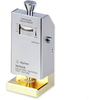
Description: controlled electronic signals. Additional Features: Frequency: 1 MHz to 1 GHz Sample Size (smooth sheets only): thickness: 0.3 mm to 3 mm; diameter: ≥ 15 mm The Agilent 16453A is designed for accurate dielectric constant and loss tangent measurements on the Agilent E4991A/4291A/B. It
-
Supplier: ValueTronics International, Inc.
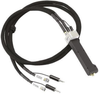
Description: precision SMA cables Soft storage case User manual Three replaceable ground shorting straps Applications: Circuit Board Controlled Impedance Testing (TDR) Loss Tangent Measurements for Differential Transmission Lines Failure Analysis of PCB with or Without Components Mounted Package
- Bandwidth: 18,000 MHz
- Probe Type: Differential
-
Description: 5.14.2 have been added. In Table 8 and Table A.2, test 5.14 has been moved before 5.7.5 (Final inspections and requirements) in Group 1A and in Subgroup C1; - in Subclause 5.15 (Solvent resistance of marking), the Subclauses 5.15.1 and 5.15.2 have been added; - tangent of loss angle
-
Description: moved before 5.7.5 Final inspections in Group 1A and in Subgroup C1; in Clause 5.15 (Solvent resistance of marking), 5.15.1 and 5.15.2 have been added; tangent of loss angle measurement has been added to resistance to soldering heat test; lot-by-lot and periodical inspection tables
-
Description: voltage; the number of test pieces has been increased; tangent of loss angle is added In Group 0 tests, in safety tests only; qualification approval based on safety and performance tests has been removed from the main text to a normative annex; the range of rated voltages is given
-
Description: marking), the Subclauses 5.15.1 and 5.15.2 have been added; - tangent of loss angle measurement has been added to the resistance to soldering heat test; - lot-by-lot and periodical inspection tables including requirements have been moved to Annex A; - revised Inspection Level (IL) of





Find Suppliers by Category Top
Featured Products Top
-
 closed-cell polyurethane foam does not absorb water, ensuring signal performance. Standard densities are available in 3, 4 and 6 pounds per cubic foot, and other densities can be provided to meet specific dielectric constant and loss tangent requirements. These foams’ electrical properties have (read more)
Browse Foams and Foam Materials Datasheets for General Plastics Manufacturing Co. -
stable at a wide range of frequencies and temperatures. While available densities range from 3 to 40 pounds per cubic foot, densities and formulations can be tailored to a customer’s needs and specific dielectric constant and loss tangent requirements. LAST-A-FOAM® (read more)
Browse Foams and Foam Materials Datasheets for General Plastics Manufacturing Co. -
-4101/4103 slash sheets and IPC-TM-650 methods. Dissipation Factor (Df): Also known as the loss tangent, Df measures a material’s ability to minimize energy loss. Lower Df reduces insertion loss, making it essential for high-speed channels. Confirm Df using the same IPC-TM-650 test method (read more)
Browse Printed Circuit Board (PCB) Fabrication Services Datasheets for Summit Interconnect -
sheets and IPC-TM-650 methods. Dissipation Factor (Df): Also known as the loss tangent, Df measures a material’s ability to minimize energy loss. Lower Df reduces insertion loss, making it essential for high-speed channels. Confirm Df using the same IPC-TM-650 test method the laminate (read more)
Browse PCB Design and Layout Services Datasheets for Summit Interconnect -
Dielectric constant ~6.7 with very low loss tangent, ideal for RF and microwave applications. Nuclear Applications (read more)
Browse Industrial Ceramic Materials Datasheets for Shenzhen Great Precision Ceramic CO., LTD. -
In high-frequency applications, including microwave and RF circuits, ceramic substrates are used to maintain signal integrity and reduce signal loss. Their low dielectric constant and low loss tangent are crucial for minimizing signal attenuation and ensuring high performance in (read more)
Browse Industrial Ceramic Materials Datasheets for 3X Ceramic Parts Company Limited
More Information Top
 Indicates content that may require registration and/or purchase.

-
In situ microwave characterisation of medium-k hfo2 and high-k srtio3 dielectrics for metal-insulator-metal capacitors integrated in back-end of line of integr...
In accordance with [20], extraction of the Si3N4 loss tangent gives the values contained between 1025 and 1023 .
-
http://repositories.lib.utexas.edu/bitstream/handle/2152/ETD-UT-2010-05-1142/ZHANG-THESIS.pdf?sequence=1
For Si3N4 , the loss tangent .
-
Landau-Zener population control and dipole measurement of a two level
system bath
Here we describe measurements of the high-frequency ( ω≫ kBT ) loss tangent of amorphous Si3N4 films in a non-equilibrium regime.
-
Steady-State Tests of High-Voltage Ceramic Feedthroughs and Coaxial Transmission Line for ICRF Heating System of the Large Helical Device
The dielectric loss tangent of the Si3N4 composite is very .
-
High-Density Embedded Deep Trench Capacitors in Silicon With Enhanced Breakdown Voltage
It is worth noting that the dielectric loss tangent factor of Si3N4 is ∼0.0004 and .
-
High-Temperature Dielectric Response and Multiscale Mechanism of SiO2/Si3N4 Nanocomposites
The loss tangent of SiO2/ Si3N4 is less than 0.001 at 1300◦ C . and it indicates that SiO2/Si3N4 is a low-loss mate- rial for microwave at high temperature.
-
Properties of Porous Si 3 N 4 /BN Composites Fabricated by RBSN Technique
The low dielectric constant and loss tangent indicate that porous Si3N4 /BN ceramic composites are desirable candidates for microelectronic components, radomes and antenna windows, because it is desirable to have materials with low-dielectric constant and dielectric loss in those ap- plications …
-
High/Low Modulus Si 3 N 4 ‐BN Composite for Improved Electrical and Thermal Shock Behavior
Dielectric constants and loss tangents were determined on Si3N4 +5% C e 0 2 and on Si3N4+6%Ce02 with 10, 20, and 50% BN additions.§§Measurements were made as described previously'' on samples parallel to the hot-pressing direction at 9.375 …
-
Fabrication and Characterization of In Situ Porous S i 3 N 4 ‐ S i 2 N 2 O ‐ BN Ceramic
Dielectric constant and dielectric tangent loss of the por- ous Si3N4 –Si2N2O-BN composite ceramics.
-
Dielectric properties in GHz range of porous Si3N4–BN–SiO2 ceramics with considerable flexural strength prepared by low temperature sintering in air
In addition, the dielectric constants and loss tangents were presented for porous Si3N4 –BN–SiO2 triphase ceramics in the frequency range of 18–40 GHz, and the real part of dielectric constant of the materials reached as low as 2?67 at the porosity …