
-
Description: Specifies a procedure for the determination of the kinematic viscosity of mineral insulating oils, both transparent and opaque, at very low temperatures, after a cold soaking period of at least 20 h, by measuring the time for a volume of liquid to flow under gravity throught a calibrated
-
Supplier: CSA Group
Description: Specifies a procedure for the determination of the kinematic viscosity of mineral insulating oils, both transparent and opaque, at very low temperatures, after a cold soaking period of at least 20 h, by measuring the time for a volume of liquid to flow under gravity throught a calibrated
-
Supplier: ASTM International
Description: 1.1 This test method specifies a procedure for the determination of the kinematic viscosity, ν, of liquid petroleum products, both transparent and opaque, by measuring the time for a volume of liquid to flow under gravity through a calibrated glass capillary viscometer.
-
-
Supplier: ASTM International
Description: 1.1 This test method specifies a procedure for the determination of the kinematic viscosity, ν, of liquid petroleum products, both transparent and opaque, by measuring the time for a volume of liquid to flow under gravity through a calibrated glass capillary viscometer.
-
Supplier: ASTM International
Description: 1.1 This test method specifies a procedure for the determination of the kinematic viscosity, , of liquid petroleum products, both transparent and opaque, by measuring the time for a volume of liquid to flow under gravity through a calibrated glass capillary viscometer.
-
Supplier: AMETEK Spectro Scientific
Description: Nitration, Sulfation, TBN and/or TAN, anti-wear additive depletion, and contamination such as water, soot, and glycol. Viscometer based on patented split cell design used in MiniVisc 3000 Series . It measures kinematic viscosity at 40C. Pore blockage particle counter that measures particle
- Industry / Application: Aerospace, Lube Condition Monitoring (Oil Analysis), Marine
- Technology / Test Method: Capillary
- Display & Special Features: Graphic / Video Display, Handheld / Field
- Features: Specialty / Other
-
Supplier: Cole-Parmer
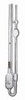
Description: Ubbelohde Viscometers. Use to determine kinematic viscosities of transparent Newtonian liquids. Require an 11-mL sample volume. Precision is
0.2%. - Kinematic Viscosity Range: 2 to 10 cSt
- Accuracy: 0.2 ±% Full Scale
- Technology / Test Method: Capillary
-
Supplier: Cole-Parmer
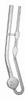
Description: Cannon-Fenske Routine Viscometer. Quickly and easily measure the viscosities of transparent Newtonian liquids in the chemical and petroleum industries. Require a 7-mL sample volume.
- Kinematic Viscosity Range: 500 to 2,500 cSt
- Accuracy: 0.2 ±% Full Scale
- Technology / Test Method: Capillary
-
Supplier: Cole-Parmer
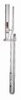
Description: Zeitfuchs
Cross-Arm Viscometers. Use to determine kinematic viscosities of transparent and opaque Newtonian liquids. Require a 1- to 3-mL minimum sample volume. Precision is 0.3%. - Kinematic Viscosity Range: 20 to 100 cSt
- Accuracy: 0.3 ±% Full Scale
- Technology / Test Method: Capillary
-
Supplier: Cole-Parmer
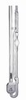
Description: Cannon-Ubbelohde Viscometers. Use to determine kinematic viscosities of transparent Newtonian liquids such as jet and hydraulic lubricants. Especially well suited for temperatures above 200
F. Viscometer constants do not vary with sample temperature. Viscometers are - Kinematic Viscosity Range: 50 to 250 cSt
- Accuracy: 0.2 ±% Full Scale
- Technology / Test Method: Capillary


Find Suppliers by Category Top
Featured Products Top
-
 Engineers in the Biopharmaceuticals industry require precise control of the gases used in bioreactors to optimize microbial growth and ensure proper mixing and distribution of the biomass. In addition, precision burner control is needed in order to produce the glass ampules, vials and bottles (read more)
Browse Mass Flow Meters and Controllers Datasheets for Sierra Instruments, Inc.
More Information Top
 Indicates content that may require registration and/or purchase.

-
Development of viscosity transfer standards from Chitosan/gelatin mixtures
The traceability to NIS viscosity standards is obtained in two ways; The traditional and most accurate method is by calibration of a client's glass capillary viscometer against the working standard viscometers at NIS using liquids as transfer liquids.
-
Technical Standards Document No. 116 - Revision 0 - Motor Vehicle Brake Fluids.
Calibrated glass capillary -type viscometers , ASTM D 2515-66, Standard Specification for Kinematic Glass Viscometers, measuring viscosity within the precision limits of S6.3.7 S6.4.7.
-
Federal Motor Vehicle Safety Standard - 49 CFR Part 571 - FMVSS 116 - Motor Vehicle Brake Fluids.
Calibrated glass capillary -type viscometers , ASTM D446–07, " Standard Specifications and Operating Instructions for Glass Capillary Kinematic Viscometers," measuring viscosity within the precision limits of S6.3.7 of FMVSS No. 116.
-
Federal Register > Wednesday, February 3, 2010 > [75 FR 5553] Federal Motor Vehicle Safety Standards; Motor Vehicle Brake Fluids
Calibrated glass capillary -type viscometers , ASTM D446-07, " Standard Specifications and Operating Instructions for Glass Capillary Kinematic Viscometers," measuring viscosity within the precision limits of S6.3.7 of FMVSS No. 116.
-
Experimental assessment of temperature influence on miriplatin and cisplatin iodized-oil suspension viscosity
This glass capillary tube was calibrated with a reference liquid ( standard liquids for calibrating viscometer JS200 and JS50; Nippon Grease Co. Ltd., Osaka, Japan) and the viscometer constant number was calculated.
-
Evaluation of uncertainty in viscosity measurements by capillary master viscometers
The accredited calibration laboratories will supply viscosity standard liquids calibrated by their own viscosity scales with a series of glass capillary master viscometers and associated measurement systems described in this report and also provide services for the calibration of several types of …
-
A comprehensive program to develop correlations for physical properties of kraft black liquor. Final report
Glass capillary viscometers were used for two purposes: to check standard Newtonian fluids used to calibrate other viscometers and for measurement of viscosity of black liquors at lower solids concentrationsand temperatures where the liquor was Newtonian and well below the normal boiling …