
-
Supplier: Nanoscale Corporation
Description: No Description Provided
- Particle / Feature Size: 10 nm
- Specific Surface Area (SSA): 70 m2/g
- Application: Catalyst, Energy, Optoelectronics / Optical Components
- Material: Ceramic / Carbide, Chemical / Precursor, Nanocomposite
-
Supplier: Nanoscale Corporation
Description: No Description Provided
- Application: Catalyst, Energy, Optoelectronics / Optical Components
- Material: Ceramic / Carbide, Chemical / Precursor, Nanocomposite
- Type: Nano Powder / Particulate
- Features: Other, Specialty / Other
-
Supplier: Nanoscale Corporation
Description: No Description Provided
- Application: Catalyst, Energy, Optoelectronics / Optical Components
- Material: Ceramic / Carbide, Chemical / Precursor, Nanocomposite
- Type: Nano Powder / Particulate
- Features: Other, Specialty / Other
-
-
Supplier: Hydrofarm, Inc.
Description: Rate: Apply at a rate of 5-10ml per gallon of finished spray solution. DERIVED FROM: Urea, Ascophyllum Nodosum Seaweed, Phosphoric Acid, Sulfate of Potash, Zinc Oxide, Iron Oxide and Magnesium Oxide. ALSO NON-PLANT FOOD INGREDIENT: 1% Humic acid (derived from Lignite), 1%
- Features: Agriculture
- Function: Catalyst
- Form & Features: Liquid / Solution, Powder
-
Supplier: Hydrofarm, Inc.
Description: Rate: Apply at a rate of 5-10ml per gallon of finished spray solution. DERIVED FROM: Urea, Ascophyllum Nodosum Seaweed, Phosphoric Acid, Sulfate of Potash, Zinc Oxide, Iron Oxide and Magnesium Oxide. ALSO NON-PLANT FOOD INGREDIENT: 1% Humic acid (derived from Lignite), 1%
- Features: Agriculture
- Function: Catalyst
- Form & Features: Liquid / Solution, Powder
-
Supplier: Hydrofarm, Inc.
Description: Rate: Apply at a rate of 5-10ml per gallon of finished spray solution. DERIVED FROM: Urea, Ascophyllum Nodosum Seaweed, Phosphoric Acid, Sulfate of Potash, Zinc Oxide, Iron Oxide and Magnesium Oxide. ALSO NON-PLANT FOOD INGREDIENT: 1% Humic acid (derived from Lignite), 1%
- Features: Agriculture
- Function: Catalyst
- Form & Features: Liquid / Solution, Powder
-
Supplier: Hydrofarm, Inc.
Description: Rate: Apply at a rate of 5-10ml per gallon of finished spray solution. DERIVED FROM: Urea, Ascophyllum Nodosum Seaweed, Phosphoric Acid, Sulfate of Potash, Zinc Oxide, Iron Oxide and Magnesium Oxide. ALSO NON-PLANT FOOD INGREDIENT: 1% Humic acid (derived from Lignite), 1%
- Features: Agriculture
- Function: Catalyst
- Form & Features: Liquid / Solution, Powder
-
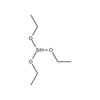
Supplier: Gelest, Inc.
Description: of zinc hydride catalyst Reduces aldehydes and ketones to alcohols via the silyl ethers in presence of fluoride ion Gives 1,2 reduction of enones to allyl alcohols Extensive review of silicon based reducing agents: Larson, G.; Fry, J. L. "Ionic and Organometallic-Catalyzed Organosilane
- Boiling Point: 267.8 to 269.6 F
- Flash Point: 78.8 F
- Dipole Moment: 1.78 D
- Viscosity: 0.6 cps



Find Suppliers by Category Top
More Information Top
 Indicates content that may require registration and/or purchase.

-
Fuel Processing
The hydrogen sulfide formed in the reformer may then be removed by a zinc oxide catalyst /adsorbent between 350 and 400 C: .
-
Handbook of Industrial Catalysts
3.1.11 Copper Oxide/ Zinc Oxide Catalysts .
-
Methanol
Thus, while the high activity of copper- zinc oxide catalysts has long been rec- ognized, ICI apparently has succeeded in applying on a commercial scale conditions that are essential to the maintenance of this activity.
-
Methanol
(58029) found that the addition of aluminum oxide to a copper- zinc oxides catalyst decreases catalyst crystal size and that the catalytic activity and the ratio of surface area of exposed copper to the total surface area of the catalyst are both…
-
Transformation and Utilization of Carbon Dioxide
Ressler T, Kniep BL, Kasatkin I et al (2005) The microstructure of copper zinc oxide catalysts : bridging the materials gap.
-
Kinetic studies on dehydrogenation of butanol to butyraldehyde using zinc oxide as catalyst
A kinetic study for the best zinc oxide catalyst has been carried out and the rate equation has been determined.
-
Dimethyl Ether as Alternate Fuel
Copper- zinc oxide catalysts for methanol synthesis and shift reaction, and gamma-alumina catalysts for methanol dehydration are described in NKK’s patents EP 591538A1, US 5389689 and 5466720, too.
-
Advances in Biodiesel Production
Example 4 of US 6,147,196 describes a 90% reduction in FFA content of the incoming feedstock by reacting it with glycerin at 220˚C (428˚F) for 2 hours at atmospheric pressure over a zinc oxide catalyst .
-
Acetone, MEK and Methyl Isobutyl Ketone
In the vapor phase process, in which a zinc oxide catalyst is used, hydrogen is added to the acetone to increase the conversion and to improve the catalyst life.
-
Methanol synthesis from CO2 hydrogenation over copper based catalysts
Spencer MS (1987) a-brass formation in copper/ zinc oxide catalysts I. Bulk equilibrium concen- trations of zinc under methanol synthesis and water-gas shift reaction conditions.