Call Center Operation: Design, Operation, and Maintenance

Gives complete coverage of the critical issues involved in the design, implementation, organization, and management of a customer call center.
 TABLE OF CONTENTS
 You don't know what you don't know until you know it... the right solution is a continuous search for the right solution.
Dr. Ichak Adizes
The turn of the 20th century was the dawn of a new age in communications. A few decades earlier, in 1876, the telephone had been invented and telephone service was proliferating rapidly. As telephone services expanded, the public began to depend on and even expect reliable service from telecommunication providers.
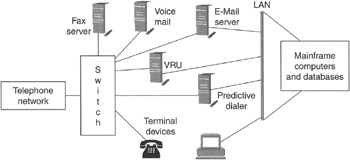
As the subscriber base grew, telephone companies were contending with new resource-planning problems. Automated central offices hadn't yet been invented, so human operators were required to establish connections for callers. One big question was how many telephone operators were necessary to run the switchboard. Too few and service levels would be unacceptable to callers. But too many would be inefficient for telephone companies and would drive up costs for subscribers. Further complicating the issue was the fact that calls arrived randomly, driven by the myriad of motivations individual callers had for placing calls. (see Figure 3.1)
In the years that followed, many bright people would grapple with these resource-management challenges. One of the first was A. K. Erlang, an engineer with the Copenhagen Telephone Company, who in 1917 developed the queuing formula Erlang C. The formula is still widely used today in incoming call centers for calculating staffing requirements and is described in greater detail later in this chapter. Others who followed Erlang focused on developing disciplined...