PEM Fuel Cells: Theory and Practice

A fuel cell is an electrochemical energy converter. Its operation is based on the following electrochemical reactions happening simultaneously on the anode and the cathode:
At the anode:
At the cathode:
More precisely, the reactions happen on an interface between the ionically conductive electrolyte and electrically conductive electrode. Because there are gases involved in fuel cell electrochemical reactions, the electrodes must be porous allowing the gases to arrive to, as well as product water to leave the reaction sites. Note that these are the overall reactions and that in both cases there are several intermediary sequential and parallel steps involved.
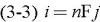
Electrochemical reactions involve both a transfer of electrical charge and a change in Gibbs energy [ [1]]. The rate of an electrochemical reaction is determined by an activation energy barrier that the charge must overcome in moving from electrolyte to a solid electrode or vice versa. The speed at which an electrochemical reaction proceeds on the electrode surface is the rate at which the electrons are released or "consumed," which is the electrical current. Current density is the current (of electrons or ions) per unit area of the surface. From Faraday's Law it follows that current density is proportional to the charge transferred and the consumption of reactant per unit area:
where nF is the charge transferred (Coulombs mol ?1) and j is the flux of reactant per unit area (mols ?1 cm ?2).
Therefore, the reaction rate may be...