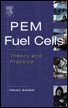
PEM Fuel Cells: Theory and Practice

PEM fuel cells need hydrogen as fuel. Hydrogen is not a source of energy, and hydrogen is not a readily available fuel. Hydrogen is more like electricity an intermediary form of energy or an energy carrier. Just like electricity, it can be generated from a variety of energy sources, be delivered to the end users, and at the user end, it can be converted to useful energy efficiently and cleanly. However, although electricity infrastructure is already in place, hydrogen infrastructure is practically nonexistent. It is this lack of hydrogen infrastructure that is considered one of the biggest obstacles to fuel cell commercialization. Commercialization of fuel cells, particularly for transportation and stationary electricity-generation markets, must be accompanied by commercialization of hydrogen energy technologies, that is, technologies for hydrogen production, distribution, and storage. In other words, hydrogen must become a readily available commodity (not as a technical gas but as an energy carrier) before fuel cells can be fully commercialized. On the other hand, it may very well be that the fuel cells will become the driving force for development of hydrogen energy technologies. Fuel cells have many unique properties, such as high energy efficiency, no emissions, no noise, modularity, and potentially low cost, which may make them attractive in many applications even with a limited hydrogen supply. This creates what is often referred to as a "chicken and egg problem" does the development and commercialization of fuel cells come before development of hydrogen energy technologies or must hydrogen infrastructure be in...